Alcor CEO admits uncertainty as cryonics firm continues storing members in Scottsdale
The nonprofit charges up to $220,000 for whole-body preservation, relying on future medicine to repair tissue cooled to minus 320 degrees Fahrenheit.
By Beatrice Gray ·
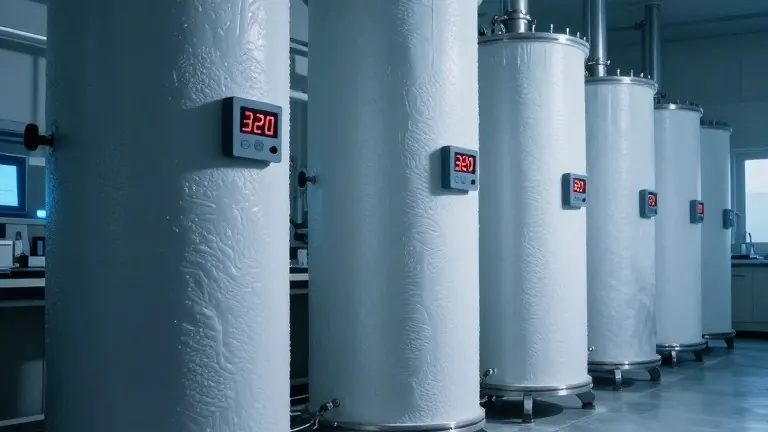
Alcor Life Extension Foundation CEO James Arrowood told a reporter that he does not know if cryonics will ever work. The Arizona-based nonprofit continues to store hundreds of people and pets in liquid nitrogen, banking on future medical advances to revive them.
Alcor operates out of an industrial section of Scottsdale. When a member dies, a rapid response team called DART arrives to begin cooling the body as soon as legally possible. This team includes medically trained personnel, some with military backgrounds. The organization then spends roughly a week replacing blood with preservation solutions and lowering the temperature until the patient can be stored in a dewar.
The core technology is vitrification. Alcor uses a chemical solution known as M22 to prevent ice crystals from forming inside cells. Arrowood described the process as biological antifreeze, similar to fluid used in car engines. He said there is ice outside the stored bodies, but none inside the tissue. This method aims to keep cells intact for potential future repair.
Members choose between two options. Whole-body preservation costs approximately $220,000. Neuro preservation, which stores only the head, costs between $80,000 and $90,000. Alcor argues that memory and identity reside in the brain. A 2-year-old girl from Thailand who died of brain cancer is among the youngest members whose photo now lines the facility walls.
Dr. Arthur Caplan, a bioethicist at NYU Grossman School of Medicine, called the promise of revival preposterous. He pointed to unsolved barriers in maintaining chemical balance and integrating a preserved brain with a new body. Caplan noted that nerves in a new body would send signals the old brain would not process. However, he conceded that using similar preservation techniques to freeze kidneys or heart cells for repair is possible.
Arrowood acknowledged that much of the public skepticism stems from legal disputes and regulatory calls from 30 to 40 years ago. He said recent conflicts are largely logistical, often involving life insurance policies used to fund preservation. He compared the current effort to early heart transplants, where the first patients died within weeks but paved the way for future successes.
Alcor member Rick Lemler, an author, signed up for cryopreservation after legal death. He described his choice as a gamble on possibility rather than certainty. Lemler said he is concerned that the process might fail, but he does not feel he is losing anything in the bargain.
Arrowood said the work at Alcor could eventually impact organ donation and transplantation. Time and tissue degradation currently limit these procedures. By preserving cells without ice crystal damage, the firm hopes to extend the window for medical repair.