Army Detonates Tons of Unstable Lead Near Thanksgiving in Iowa
A rushed five mile evacuation marked the destruction of degraded explosives that residents say arrived with only a week's warning.
By Beatrice Gray ·
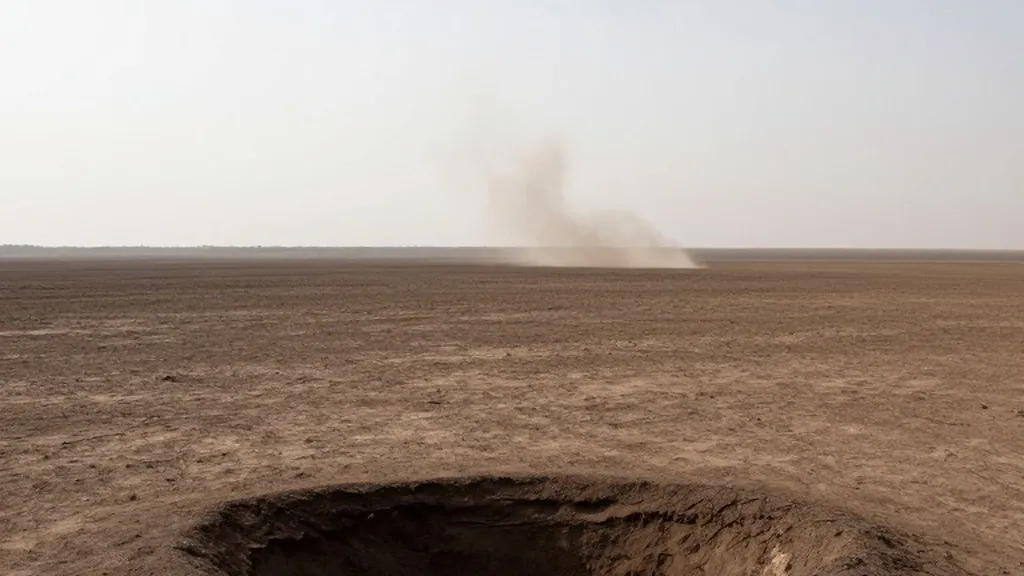
The United States Army selected the day before Thanksgiving to detonate nearly five tons of degraded lead azide. The blast occurred at 9 a.m. Central time on Wednesday, November 25, 2026, at the Iowa Army Ammunition Plant near Middletown. Sixty eight barrels of unstable explosive material filled the site. The Army had stored this hazardous compound since around 2009. It is a white crystalline substance sensitive to shock, heat, and friction. The military stopped using lead azide in the 1980s because it is dangerous. Now, it was exploding in the middle of the Midwest.
The Army used roughly 3,000 pounds of C4 to trigger the detonation. They set it off inside two reinforced, earth covered concrete bunkers. A five mile evacuation zone was established southwest of the plant. National Guard troops knocked on the doors of about 150 households. People as far as 20 miles away were ordered to stay indoors with windows closed. The operation was a controlled explosion of an uncontrolled problem. The Army argued that inaction was no longer an option after the material degraded.
Colonel Aaron Teller stated that the lids of the drums could not even be opened to treat the material. Major General Eric Shirley commanded the operation. He said the falling temperatures raised the risk of a spontaneous explosion. Acting Army Secretary Adam Telle noted that experts agreed a controlled detonation was far preferable to an uncontrolled one. Atmospheric chemist Delphine Farmer called it the best of a bad series of options. The Army did not have a good option. They had a bad one and chose it quickly.
The public was given little time to prepare. The Army announced the date only on November 15, about a week ahead. Iowa Agriculture Secretary Mike Naig said state leaders received about a week notice. He expressed frustration about the late communication. Documents show contractors at the plant tried to neutralize the material nearly six months before March 2026. The Army hired MuniRem Environmental in March 2026 to handle the job. They canceled the contract about two months later citing safety concerns. They provided no public explanation for the cancellation.
The Army held a town hall in Middletown in October 2026. They told residents a November date was likely. The EPA approved an emergency permit on November 13, 2026. The Army announced the detonation two days later. Environmental groups sued to halt the operation. They challenged the EPA emergency permit. A federal appeals court first paused the project. Then a three judge panel of the Eighth Circuit lifted the block on the day of the blast. They were satisfied the Army had not chosen detonation lightly.
President Trump posted that he had ordered the military to wait until the Eighth Circuit agreed. He made the decision fully subject to the incoming governor, Rob Sand, agreeing to it. Sand put the decision back on the administration. He said it should decide from the information its own experts gave it. Outgoing Governor Kim Reynolds declared a disaster emergency for Des Moines, Lee, and Van Buren counties. She backed the plan, saying the danger was immediate. Senator elect Josh Turek said there was no excuse for such a failure of transparency. He vowed to keep asking questions in January.
The Army claimed success on the day of the blast. FEMA Administrator Cameron Hamilton said preliminary evidence showed a 0.0 detection level of lead in the atmosphere. Shirley said all barrels were destroyed with no damage to the installation. Robert Ceckada, director of the Bureau of Alcohol, Tobacco, Firearms and Explosives, said the blast was channeled into the ground. This cut lead exposure, he claimed. Iowa Governor Mike Kehoe said the mitigation measures appeared successful. He stated the explosion was well contained.
Critics argue the 0.0 figure is a narrow test presented as a clean bill of health. It came from preliminary readings taken in the first minutes after the blast. Air monitors measure what is floating past them at that moment. They do not measure lead that has already settled. Soil, garden dust, livestock feed, and wells take weeks to test. Critics note that lead not in the air at the moment of measurement may already be on the ground. The Army's own assessment predicted a transient, localized plume containing lead particulates.
A review found the Army's public plume maps were built on a lower standard than the worst case scenario the EPA requires. A failed containment could have released nearly four times more lead than the public maps showed. The Army's model showed hazardous dust could reach Clark County, Missouri, about 50 miles southwest of Middletown. Its advisory said finer particles could cross U.S. Route 36 in Missouri. The Army's deposition maps changed daily. They shrank the projected impact area in Missouri on the morning of the blast.
The blast site was ringed with earthen barriers pointing the blast into three miles of empty land on the plant's own property. The Army built two walls of 16,000 gallon water tanks. They flooded the ground around the bunkers with a foam made to capture particles. They covered the bunker tops with a tarp and a lead containment screen. The EPA permit required wind between 1 and 15 mph for the blast and the three hours after it. No rain, lightning, or dense fog was allowed. The conditions were met. The blast happened.
The USDA estimates about 350 farms in Iowa and Missouri could be affected. It told producers to keep livestock sheltered. They must consult a veterinarian before selling or slaughtering animals if exposure is suspected. Farmer Jill Holler of Mount Pleasant, about 19 miles away, said there was nowhere for her cows to go. The Army detonated the lead. The dust settled. The bills and the tests are just beginning.
The decision to blow up the material on the eve of a major holiday sparked immediate debate among local leaders. Many residents felt the timing was inconsiderate given the scale of the evacuation. The Army maintained that the weather window was narrow. They needed specific wind speeds to ensure the plume moved away from populated areas. The combination of falling temperatures and the unstable nature of the lead azide created a sense of urgency. Waiting for a more convenient time, officials argued, might have meant waiting too long.
The legal battle added another layer of complexity to the event. The Eighth Circuit Court of Appeals had initially paused the work. This gave the Army a brief window to prepare for a potential delay. When the three judge panel lifted the block, the timeline compressed further. The Army had to finalize its safety protocols and coordinate with the National Guard. This coordination required precise communication with the 150 households in the evacuation zone. The speed of the announcement left little room for error in the logistics.
Local officials expressed mixed feelings about the outcome. While the physical explosion went as planned, the political fallout remained. Governor Kim Reynolds' declaration of a disaster emergency helped streamline the response efforts. It allowed for faster deployment of resources to the affected counties. However, the late notice to state leaders remained a point of contention. Mike Naig's frustration highlighted the disconnect between federal military operations and state agricultural interests. The farms in the path of the plume were particularly concerned about the long term effects on their soil and water sources.
The scientific consensus on the immediate results was generally positive. The 0.0 detection level in the air was a significant data point. It suggested that the containment measures worked as intended. The foam and water tanks helped trap the particulates before they could travel far. The earthen barriers directed the force of the blast into the empty land. This design minimized the risk to the surrounding infrastructure. The Army's model predicted a localized impact. The preliminary data supported this prediction.
More Business · Buyer Beware · Report a business · Got a Story?