Breaking: RTX Pro 6000 Costs 20,000 Dollars as Anthropic Prepares IPO
Wholesale cards cost 3,000 to 4,000 dollars, but heavy users pay 200 dollars monthly to recoup that cost in ten months.
By Beatrice Gray ·
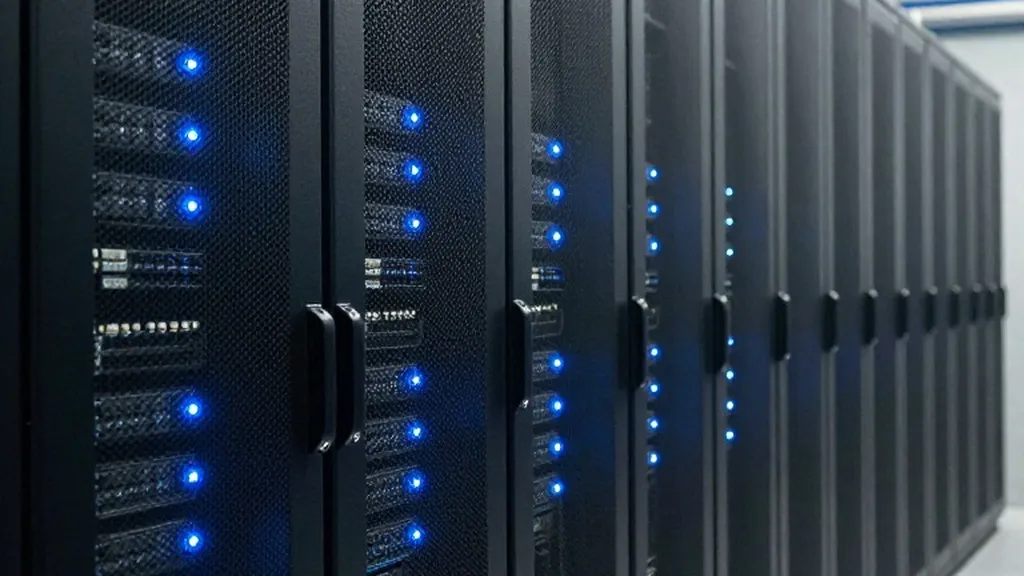
Anthropic is preparing for an initial public offering with a projected valuation between 2.5 trillion dollars and 3 trillion dollars. This figure stands in stark contrast to the company’s current financial reality, which includes a deficit of about 500 billion dollars and annual revenue of less than 20 billion dollars. The company also carries compute commitments to other companies, including Amazon and Google, of up to 900 billion dollars. The gap between the massive projected valuation and the modest revenue stream raises fundamental questions about the sustainability of the current AI infrastructure model.
At the heart of this infrastructure is the Nvidia RTX Pro 6000 graphics card, which currently retails at 20,000 dollars. This price tag does not include the costs of servers, switches, CPUs, or the data center facility and electricity required to run the machines. Buying the cards directly from Nvidia at a wholesale price of 3,000 to 4,000 dollars offers a different perspective on the hardware economics. For a heavy user on the max plan who pays 200 dollars a month, the GPU alone takes about 10 months to pay back. This timeline assumes constant use 24 hours a day, which is a demanding standard for individual developers and researchers.
A single RTX Pro 6000 card can hold about 15 to 20 light users running light compute at about 60 to 70 tokens per second. Alternatively, it can support 1 to 2 heavy coding users running Claude Code at about 40 to 50 tokens per second. Light users pay about 20 dollars a month on average for a base plan. For these users, the breakeven point is also about 10 months, assuming they utilize the full bandwidth of the card. Most light users, however, will not use the chat for more than a few hours a day, which means the bandwidth number can stretch by a factor of ten. Despite this potential for increased utilization, the acquisition cost remains a significant hurdle for those seeking to own their own compute resources.
The compute and GPU bottleneck is a real problem for these companies, and Nvidia is aware of this dynamic. The market leader drives demand up and lowers supply, giving all its supply to the large players like Anthropic, Grok, and OpenAI. The consumer market is left fitting the bill for this imbalance. This dynamic is further complicated by Nvidia’s recent agreement to acquire Hugging Face, the platform where most open AI models are distributed, for 12.9 billion dollars. Hugging Face makes about 150 to 200 million dollars a year in its peak years, making the acquisition price about 70 times its revenue.
The stated reason for the acquisition was CUDA, the software that runs all these models, but the deeper reason was control of the distribution of models on the market. The open source market is being flooded by advanced Chinese models, including Kimi from Moonshot AI, DeepSeek, Qwen from Alibaba, and models from Xiaomi. These companies are willing to give the models over to the public to increase innovation. Kimi K3 started to outperform the Opus 5 models from Anthropic, and it was given to the public. The internet used these large language models, quantized them down, and made them usable on smaller machines like Mac Studios, A100 cards, and RTX Nvidia models.
After Nvidia acquired Hugging Face, advanced models were deleted from distribution. Anything over a quant 4, meaning advanced and capable of beating out Claude's models, was removed. The 4 bit, 6 bit, 8 bit, and 16 bit full sized models were banned from the Hugging Face platform. Developers on Discord rallied to stop the censorship and corporate overreach, and they opened Pirate Face, a place where you can upload and download all models. This effort came, however, not before the large 400 gigabyte models at quant 3 and higher were scrubbed from the network.
In recent months, Anthropic has been suspending users with reasons like abuse, potential fraud, and usage violations. The appeal process is often described as useless because it is fully run by bots, and as soon as they kick you off, they will not reactivate the account. Once Anthropic goes public, the suspensions are expected to multiply 100 times or 1000 times because the company will have deep pockets and access to unlimited funds. The end user will not be important to them, and Anthropic does not make money off of daily users, nor does it make money off of heavy users.
Anthropic will likely create programs where all your ideas will belong to them and all your data will belong to them. If Anthropic sees some great ideas, it gets notified, and it suspends you for some unproven reason and steals your IP and the money and time you invested. This strategy aligns with the comments made by Dario Amodei, the CEO of Anthropic. In an interview, he said that some ideas are worth billions, and that Anthropic will likely have some sort of royalty or partnership program. Under this plan, when a person or company finds the cure for cancer, some of that accreditation and funding will go to Anthropic.
This royalty plan should scare anyone who builds on top of Claude, as the company that hosts your work may claim a share of the prize when your work becomes worth billions. The company’s actions extend to lobbying efforts as well. Anthropic demanded that Congress ban Chinese models because of national security, when the real goal was to control the market. Anthropic recently did a publicity stunt: it released and circulated media that AI will take over the world when one of its disgruntled employees, Jacob Coxon, quit amidst his disappointment in AI. The goal was to get the government to pass bills banning models that were a huge threat to Anthropic's bottom line.