Corpus Christi fast-tracks permits for 20 new wells amid rural concerns
City officials use a council-run district to approve pumping up to 40 million gallons daily, a move experts say risks sinking land and lowering nearby water tables.
By Maya Bauer ·
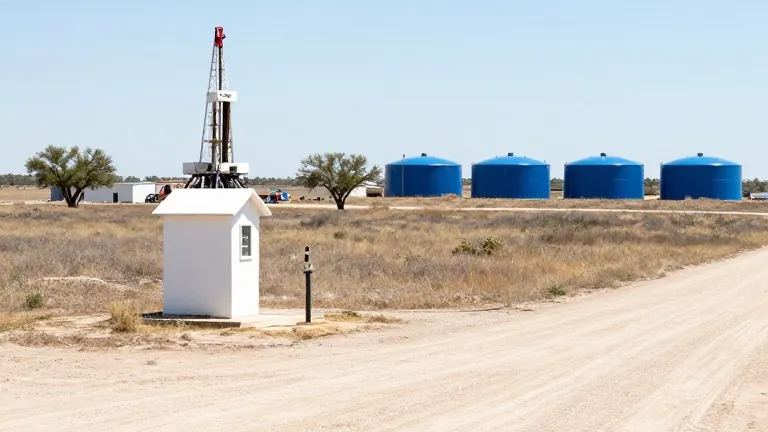
Rural landowners in Nueces County now face the prospect of sinking ground and lower water tables after Corpus City officials secured permits for 20 new wells. The city plans to pump up to 40 million gallons of groundwater per day from the Nueces River area. This volume is roughly three times the city's current average daily draw.
The permits were approved by the Corpus Christi Aquifer Storage and Recovery Conservation District. City Council members appoint the board of directors for this entity, and all staff are city employees. Since last fall, the district has granted every drilling request from the city. Officials bypassed standard regulatory steps that typically slow down permit approvals for other well users.
A study commissioned by the city and released in June by Intera, a private research firm, projected that the western well fields could cause the surrounding ground to sink by 20 inches over the next 30 years. The report also estimated that water levels in nearby wells could drop by as much as 100 feet within five years. Such drops would impact rural residents first, as their wells are shallower than the city's.
Drew Molly, former chief operating officer of the city water department and current chief water officer for Houston, called the allowed pumping volume in such a small area unfathomable. He described the district's approval process as lightning speed. Molly warned that this approach will create ripple effects locally and across the state as population growth intensifies competition for limited groundwater.
The city argues that the district's rules allow the board to approve permits once it has sufficient information. Ashley Marion, strategic business manager for the city water department, stated that city employees on the district board have no personal or financial interest in permitting decisions. She added that the city tracks water levels and adjusts pumping rates based on daily data and long-term modeling.
Robert Mace, executive director of the Meadows Center for Water and the Environment at Texas State University, compared the arrangement to a fox guarding a henhouse. He said the district appears to prioritize Corpus Christi's interests over those of other affected landowners. At least one outgoing state lawmaker and other water experts share this concern about the lack of independent oversight.
The city turned to the storage and recovery district in October 2025 after learning that rural residents were organizing to form a separate groundwater conservation district. Then City Attorney Miles Risley described the residents' effort as a potential danger to the city's plans. Council member Everett Roy asked if the city could regulate its own wells without bias. Esteban Ramos, the city's water resource manager and the district's general manager, answered yes.
The district was created two decades ago to store excess water underground. It never fulfilled that original purpose. Instead, it now serves as the regulator for the city's emergency well fields. The city has not fully satisfied all monitoring and mitigation requirements nine months after the initial approvals. A document prepared by two board members confirmed that the city is still working to meet these conditions.
Scott Barraza, a resident on 20 acres near downtown, recently bought a $9,000 water purification system and a trailer to haul water for his family and neighbors. He views the new city wells as a threat to his long-term water access. The city maintains that the wells are a key component of its strategy to diversify water supplies, though engineers had originally envisioned them as a temporary emergency solution.
The city council has twice declined to advance a desalination plant that could have produced a third of the city's daily demand. State officials approved $757 million in loans for that project. Outgoing Gov. Greg Abbott criticized city leaders for failing to secure reliable water. The city continues to rely on three drought-vulnerable reservoirs for most of its supply while expanding its groundwater operations.
More Business · Buyer Beware · Report a business · Got a Story?