Edinburgh museum displays reinterpreted 1820 bronze leg as part of Roman statue
New exhibition argues the artifact was a deliberate offering from an Antonine equestrian figure, not tribal plunder.
By Bianca Ruiz ·
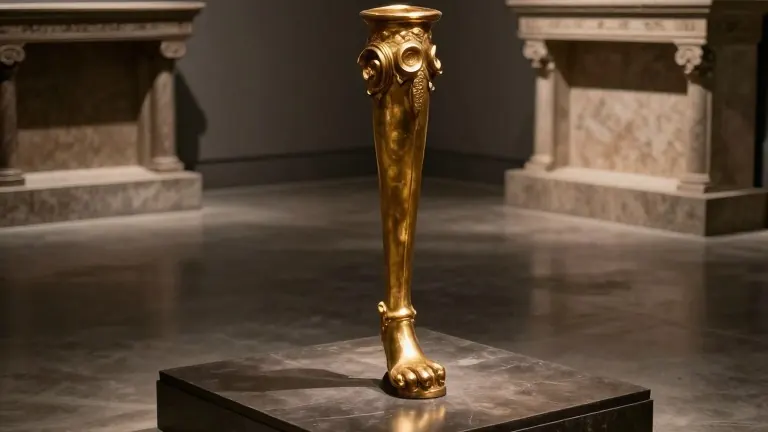
A gilded bronze leg recovered from a Scottish bog in 1820 is now being presented as part of a massive equestrian statue of Emperor Antoninus Pius. The exhibit, Roman Scotland: Life on the Edge of Empire, opens at the National Museum of Scotland in Edinburgh on Saturday. Curators say the display represents the largest collection dedicated to Roman presence in the region.
The artifact, known as the Mislington leg, was previously understood to be spoils of war. Earlier theories suggested Scottish tribes cut the limb from a statue in York and brought it north. The new interpretation places the object’s origin near Hawick, following the Roman capture of southern Scotland around AD 140. The leg remained in the charter room at Dalkeith House near Edinburgh for one hundred years before entering the museum collection.
Dr. Fraser Hunter, the principal curator, states that the leg was likely detached and deposited intentionally rather than hacked off violently. He notes that such monumental sculptures would have had a strong visual impact on Iron Age communities, which rarely depicted humans in a naturalistic style. This perspective shifts the view of the artifact from a trophy of victory to a religious or political offering.
The exhibition also includes a reconstructed earthenware bowl from Inveresk, located east of Edinburgh. Assistant curator Bethany Simpson describes the piece as unique, noting its decorations of dolphins, stags, and a hunting dog have no match in other UK finds. Inveresk contained a major Roman fort and town, which Hunter identifies as a center of imperial authority during the Antonine occupation from AD 142 to 165.
Hunter estimates that approximately 10,000 soldiers, including auxiliaries from modern-day Romania and North Africa, were stationed in southern and eastern Scotland. He believes another 10,000 camp followers, wives, and enslaved people lived in the region during that period. The collection features two stone altars from a Mithras temple at Inveresk, displayed for the first time with lighting that mimics their original painted colors.
One of the altars includes hollowed openings around the head of Mithras, allowing lamplight to shine through the eyes and mouth. The museum also exhibits a complete horse skeleton from a deliberate burial at Inveresk. Hunter describes the careful treatment of the cavalry horse as unusual in Britain, indicating the animal held specific value. Recent scholarship suggests that contact with Roman styles helped inspire native artistic traditions that later produced Pictish standing stones.
The display traces how Roman influence shaped local politics and art. Celtic rulers were drawn to silver, a material previously unknown locally, which Rome used to secure loyalty. By the third and fourth centuries, Pictish tribes began to unite against Roman threats. Hunter argues that these political groupings developed their own symbols and artistic expressions based on interactions with Roman sculpture and writing.
More Culture · World news · Report a business · Got a Story?