Harare demolitions leave residents without homes after years of saving
More than 5,000 houses face demolition in Zimbabwe's capital, prompting disputes over council records and court orders.
By Beatrice Gray ·
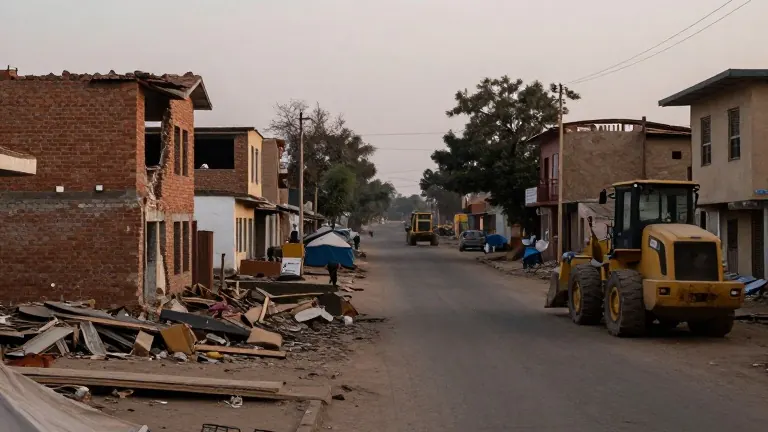
Methro Masunga woke to the sound of machinery on the morning of August 14, 2026. She believed workers were performing road maintenance until she saw municipal police officers directing bulldozers toward her house in St Martins Extension. Masunga, a single mother of three, had worked part-time cleaning jobs for five years to save enough money for a home.
She paid a deposit in 2015 and received a land allocation in 2019. The city council formalized the arrangement in 2020 when residents began receiving official documents. By the time the machinery arrived, years of savings were reduced to rubble.
The demolitions are part of a wider effort by the Harare City Council to enforce planning regulations. Authorities state they are targeting structures built without proper approvals or located on land reserved for public infrastructure. Residents counter that they purchased stands through council-linked processes and received allocation letters and agreements of sale.
City council records indicate that more than 5,000 houses currently face demolition under 37 outstanding High Court orders. A council task force has inspected 22,255 sites to identify structures on prohibited or unauthorised land. While the council says it is addressing illegal construction, residents argue that enforcement has harmed those who followed municipal procedures.
Memory Chengeta, another resident of St Martins, described the operation as confusing because a court order had previously halted demolitions in the area. She stated that municipal authorities arrived without a new order overturning the previous judgement. Chengeta is now homeless and has set up a makeshift shelter in the area rather than returning to rent.
The legal dispute centers on a consent order issued by Justice Happias Zhou on October 29, 2025. In case HCH5444/25, the court barred the City of Harare from evicting named applicants or demolishing their homes without a valid court order. The council maintains that it did not demolish properties protected by that specific order. Stanley Gama, a council spokesperson, told local media that the municipality was targeting structures whose owners had received multiple warnings against illegal construction.
Harare Mayor Jacob Mafume stated on August 15 that residents with approved building plans should produce them during inspections. He declined to comment on the legality of the specific demolitions in St Martins. Edgar Dzehonye, the city’s principal housing director, noted that residents had been warned against building in the area because it lacked adequate servicing.
Precious Shumba, director of the Harare Residents’ Trust, said the demolitions were troubling given the court protections for allocated stands. He claimed that town planning and legal officers issued directives to municipal police to proceed with the destruction. Zimbabwe’s Constitution prohibits eviction or demolition without a court order that considers all relevant circumstances.
David Jenje, chairman of the St Martins Residents Association, said most members paid deposits of $5,000 as far back as 2018. Allocations were made in July 2019, and all allocation letters and agreements of sale were signed in February 2020. Jenje described the demolitions as illegal based on these dates.
Joachim Nhete lost his home after using his retirement package to buy land and build a house. He estimates his investment at more than $10,000. Without home insurance, he said he cannot recover the loss and is looking to the courts for accountability from the council.