Why Sudan's kids are going back to fight instead of school
UN agencies warn that nearly 20 million people face acute hunger as the conflict enters its fourth year.
By Beatrice Gray ·
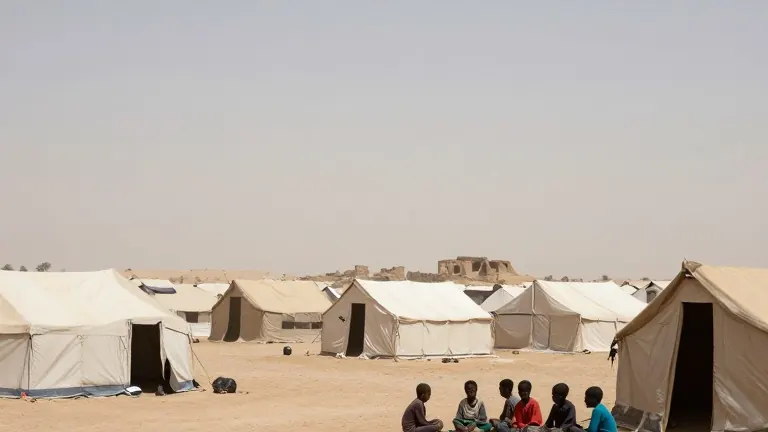
The capital of Sudan, Khartoum, now appears post-apocalyptic to international observers. Dr. Sam Nutt, head of the North American organization War Child, made the assessment upon returning from a recent trip to the country. She reported that the sounds of children playing in displacement camps mask the severity of their circumstances.
The current situation follows three years of civil war that began in April 2023. Fighting erupted between Sudanese government troops and the Rapid Support Forces, a paramilitary group. The U.N. has designated Sudan as the world's worst humanitarian crisis. According to U.N. figures, the conflict has displaced millions of people and killed tens of thousands.
In Tawila, a displacement camp in the North Darfur region, Dr. Nutt stated that every child asked about their displacement raised their hand. When questioned individually about witnessing injuries or deaths resulting from the conflict, all respondents provided the same answer. Many of these children have lost one or both parents.
Laura Mills of Amnesty International noted that the lack of schooling is driving children back into the conflict. She said that because many have not attended school for years, they view fighting as their only option. This dynamic perpetuates the cycle of violence in the region.
The war has spread across the country, with both sides committing atrocities. The Rapid Support Forces are accused of genocide in the western region of Darfur. The United Arab Emirates, a U.S. ally, is accused of backing the RSF, a charge it denies. Iran and Russia are also cited as funding and supporting the conflict from further away.
Nearly 20 million Sudanese people currently face acute hunger. U.N. agencies warn that a super El Niño event could worsen food shortages in the coming months. The strategic location and mineral wealth of Sudan have drawn global interest, with Dr. Nutt describing the conflict as having global tentacles that affect American interests.
Dr. Nutt pointed to the story of an 11-year-old girl in a War Child class. The girl wanted to become a doctor to keep people alive because she had witnessed both of her parents being shot in front of her. This individual case illustrates the wider impact of the war on the next generation.