15 Knesset seats held by Palestinian blocs decide Israel's election outcome
Polls indicate both major Israeli political camps will fall short of a majority, placing the fate of the next government in the hands of 20% of the population.
By Maya Bauer ·
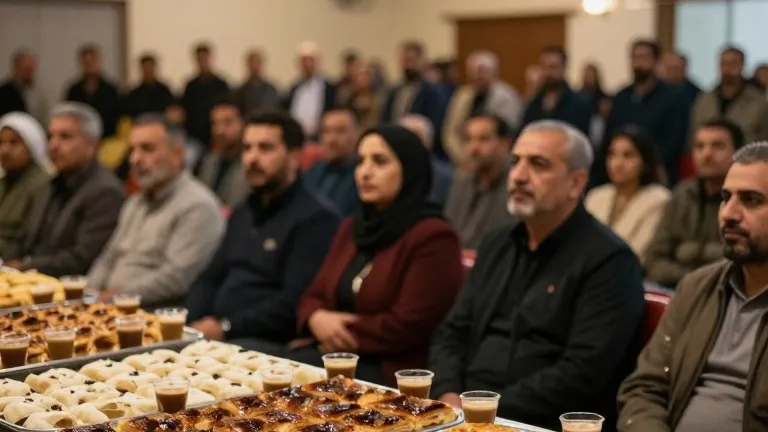
Palestinian citizens of Israel are projected to win between 12 and 15 seats in the 120-seat Knesset, a margin that will determine which party forms the next government. Next week's election is shaping up to be a deadlock between the two main Jewish Israeli blocs, neither of which is expected to secure the 61 seats required to rule.
Current polling data indicates that Benjamin Netanyahu's far-right coalition will lose its current majority. However, the Jewish Israeli opposition bloc is also forecast to fall short of the necessary threshold. This leaves the balance of power to the Arab sector, which comprises roughly 20% of Israel's population. The 12 to 15 seats are expected to be split between the Islamist Ra'am party and the Joint List, an alliance of three smaller parties including Ta'al.
Ahmad Tibi, who heads Ta'al and has served in the Knesset for over 20 years, stated that high turnout among the Arab community is a critical tool for defeating the current administration. "We are determined to do everything in order to bring this government down," Tibi said. Despite this stance, most of the Jewish opposition has previously ruled out forming a coalition with Arab politicians, a position Netanyahu has used to portray such alliances as toxic.
Historical precedent suggests that promises to avoid Palestinian parties are often broken once results are in. In 2021, Ra'am leader Mansour Abbas joined a coalition with Naftali Bennett. More recently, Netanyahu opened coalition talks with Abbas himself. A prospective voter in Kfar Qasim noted that the math of the situation will force the opposition to change its position, comparing the arithmetic to basic addition.
Forming an alliance remains difficult for Palestinian leaders because most opposition parties oppose a two-state solution and support the settlement movement in the West Bank. Tibi described the choice as being between "bad and worse," contrasting the opposition with Netanyahu, Bezalel Smotrich, and Itamar Ben-Gvir. Sami Abu Shehadeh, leader of the Balad party, identified fear as the primary motivation for voters, citing recent destruction in Gaza and rising discrimination within Israel.
Distrust in the system has historically depressed turnout, but specific rulings have intensified it. Last month, Israel's supreme court forced Abu Shehadeh out of the race over an article regarding the October 7 attacks, a move criticized for applying different free speech standards to Jewish and Palestinian citizens. Conversely, a motion to disqualify Ben-Gvir over racist language was not upheld. Some voters, such as journalist Nagham Zbeedat, abstain on principle, refusing to legitimize a system they view as treating their rights as favors.
Amjed Iraqi of the International Crisis Group noted that a returning far-right coalition would have a renewed mandate to accelerate policies of ethnic cleansing and annexation. He described the vote as a choice about mitigation, arguing that Palestinians can distinguish between a right-wing and a far-right government. The election takes place two days before Kfar Qasim marks the 1956 massacre, in which border police killed 49 residents who had broken an unknown curfew.