Anthropic's $900 Billion Bill: A Trillion-Dollar Valuation Meets Heavy Compute Costs
New IPO filings show the AI company faces massive infrastructure obligations that challenge its high market valuation.
By Bianca Ruiz ·
Anthropic has filed its IPO pricing proposal, setting a valuation between $1.3 trillion and $1.4 trillion for the company behind the Claude chatbot. While the figure is lower than the $2 trillion peak expectations, it remains an extraordinary valuation for a technology firm. The filing reveals a company preparing for a massive public debut while carrying nearly $900 billion in future financial obligations.
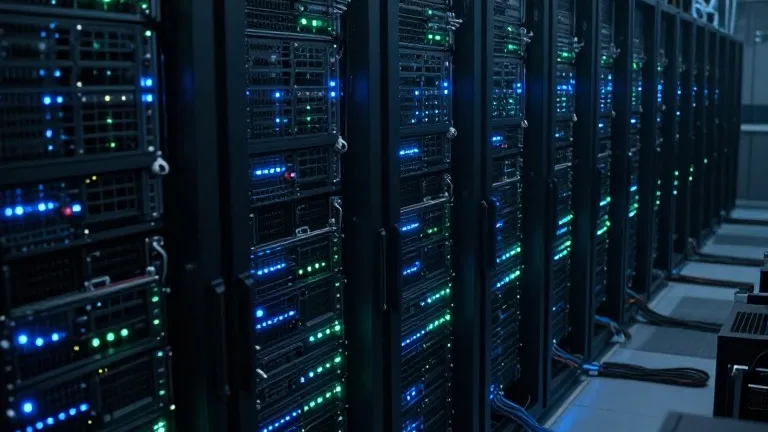
The core of the financial risk lies in the company's infrastructure commitments. Anthropic's disclosures show approximately $900.9 billion in purchase commitments and lease agreements for computing hardware. Of this total, about $451.6 billion is expected to be incurred before the end of 2030. The remaining costs stretch out to 2045, with roughly $70.7 billion due within 12 months of September 30, 2026. These are contractual obligations, not current debt, but they represent a heavy burden on future cash flow.
To support such a valuation, the company must generate significant profits, not just revenue. Anthropic's October annualized revenue run rate reached approximately $81 billion. This figure is far higher than the $20 billion annual revenue estimate often cited in market discussions. However, revenue is not profit. The company must still pay for electricity, data centers, research, and personnel. Investors are betting that this high revenue will translate into the extraordinary profits needed to satisfy hundreds of billions in future payments.
The cost of serving each user is a critical factor in this equation. A single high-end GPU can cost approximately $20,000 at retail. In illustrative scenarios, one such unit might serve 15 to 20 light users at $20 each per month. This generates $400 in monthly revenue. It would take 50 months to recover the hardware cost alone, before accounting for servers, cooling, and electricity. Heavier users who run intensive coding agents consume more resources, potentially making their subscriptions less profitable despite higher price points.
Nvidia holds a dominant position in this ecosystem. The chipmaker supplies the essential accelerators and high-bandwidth memory required for AI training and inference. When demand exceeds manufacturing capacity, prices rise and delivery times lengthen. Large technology firms can secure supply years in advance, while smaller developers struggle to compete. This imbalance benefits Nvidia regardless of which AI model wins the consumer market. The company profits from the hardware layer that supports all major competitors.
Nvidia is also moving to control the distribution of AI models. In September 2026, the company announced an agreement to acquire Hugging Face for approximately $12.93 billion. The deal includes an equity-based employee retention component and is expected to close in 2027. Hugging Face serves as a central hub where millions of developers discover and distribute machine learning models. The acquisition gives Nvidia control over a key platform in the open-model ecosystem, raising questions about how the company will manage competition from rival hardware providers.
The rise of open-weight models poses a direct threat to proprietary AI pricing. Projects from DeepSeek, Alibaba, and other groups have released advanced models that can be downloaded and run on private hardware. This allows businesses and developers to operate AI systems without relying on expensive centralized APIs. Quantization technology reduces the memory requirements of these models. A model with 200 billion parameters can be compressed from 400 GB of storage to 100 GB, making it practical to run on cheaper equipment.
This shift changes the economic landscape for AI providers. If capable models can run locally on a user's own hardware, the need for premium subscriptions may decline. The technology is real and improving, but the financial valuations may be optimistic. The internet was a genuine innovation during the dot-com bubble, yet many investors still lost money. For Anthropic, the challenge is proving that its $1.3 trillion valuation can withstand the pressure of high infrastructure costs and increasing competition from open-source alternatives.