Breaking: Strategists Warn of Painful AI Reset After Market Crash
Wall Street strategists say the Nasdaq's slide marks a shift from AI hype to price scrutiny, with Democrats poised to slow data center growth.
By Bianca Ruiz ·
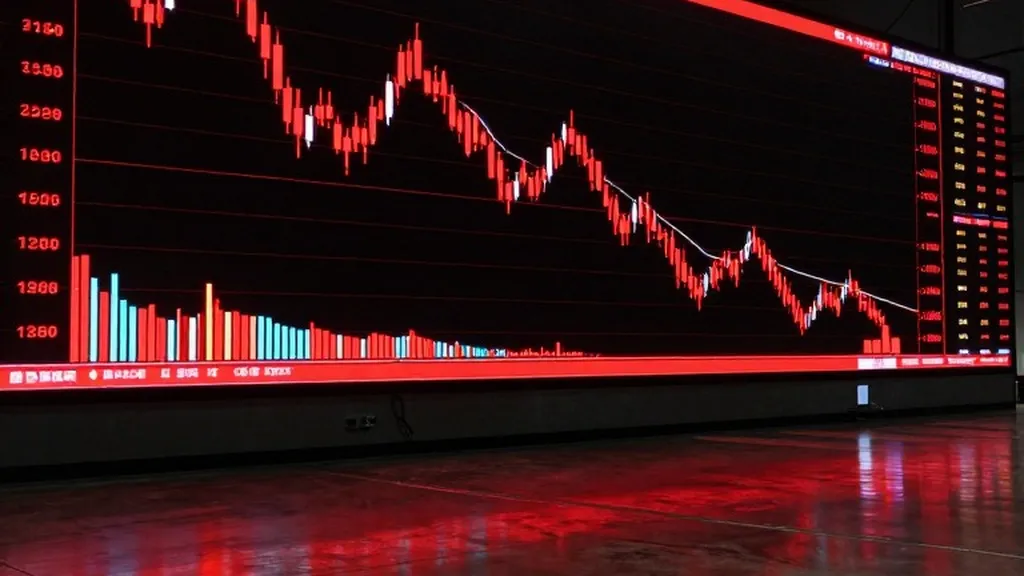
The Nasdaq Composite fell 5.5 percent on Thursday, marking its worst day in 18 months and closing more than 11 percent below the record it set last month. This drop places the index in correction territory, a state defined by a fall of at least 10 percent from a recent high. An estimated $2.5 trillion in market value was wiped from the Nasdaq Composite during the session. The selling pressure was broad, with the S&P 500 falling 4.3 percent and the Dow Jones Industrial Average dropping more than 1,800 points to close at 51,868.
Neil Wilson, an investor strategist at Saxo UK, described the situation as a complete capitulation-level event playing out in tech stocks. He noted that the fear is a total momentum unwind as Democrats pace the frontier and kibosh datacenter buildout. Wilson added that while the market looks totally overdone, the nature of sell everything in this market means investors need to look for some stability first. This sentiment reflects a broader concern that the rapid expansion of artificial intelligence infrastructure may be facing immediate political headwinds.
Dan Ives, a tech analyst, emphasized the legislative hurdles ahead. He stated that there is no way to sugarcoat that Democrats taking control, especially over the Senate, will create some major hurdles for AI and tech legislation in the Beltway over the next two years. Ives viewed the midterm results as a clear sign that the pace of data center build-out will start to slow. This perspective aligns with the recent election results where Democrats won key races in states with large concentrations of planned data centers.
Ted Parkhill, founder and chief executive of Incline Investment Management, highlighted a fundamental shift in market valuation. He observed that the market's moving from the promise of AI to the price of AI. Parkhill noted that while AI is going to be transformative for the world in the long run, that does not mean every AI-related stock is currently priced appropriately. He predicted there is going to be a lot of turmoil as the industry adjusts to these new realities and investors reassess their holdings.
Gene Goldman, chief investment officer at Cetera Financial Group, offered a more optimistic long-term view. He said the sell-off had become exaggerated as selling accelerated through the day and predicted a recovery. Goldman stated that when you have a correction in a bull market they are typically short lived. He added that it is ugly right now but we do think we will see a bounce back soon, suggesting that the current panic may be an overreaction to the short-term political changes.
A review of 10 Nasdaq corrections over the last decade provides historical context for such events. The analysis shows that sell-offs in 2025, 2022, 2020 and 2018 were followed by further rough selling over the next month. However, the Nasdaq was back in rally mode six months later in every case except 2022. On average the Nasdaq gained 9.41 percent in the three months after a correction bottom and 17.03 percent over six months, indicating a tendency for recovery despite initial volatility.
The catalyst for Thursday's crash was the Democrats' sweep of the House and Senate in Tuesday's midterm elections. Democrats in races across the country campaigned on slowing the spread of data centers and AI, and there were dozens of measures on ballots aimed at restricting data center development. Voters rejected data centers in a series of local ballots, signaling a direct political backlash against the infrastructure driving the AI boom. This voter action has heightened concerns that the facilities at the heart of the AI build-out will face new hurdles.
In Texas, Democrat Gina Hinojosa won the race for governor after campaigning on an immediate moratorium on new data center construction. Democratic victories in states with large concentrations of planned data centers, including Ohio and Texas, heightened concerns among investors. The election results suggest that state-level restrictions could slow data center construction, pressuring companies tied to the artificial intelligence trade. This development comes on top of broader concern that the huge sums being spent on AI will not pay off and that AI shares may be in a bubble.
The tech industry is responding to the backlash with new outreach efforts. Greg Brockman, president and co-founder of OpenAI, said at the WSJ Tech conference in Napa, California, that everyone had been surprised by the reaction to data centers. He noted that from San Francisco trying to build infrastructure in Texas and Georgia, you cannot just tweet and say this is going to be good. Brockman emphasized that the industry needs to be in those communities to build trust. Dina Powell McCormick, president of Meta, also told the conference that the industry needs to double and triple down on telling the story to make the case for AI.
More Business · Buyer Beware · Report a business · Got a Story?