Harris County Youth Turnout Hits Record as Black Voters Redefine Texas Midterms
Record numbers of young Black voters in Texas are turning out in primary and early voting, a shift that could determine the outcome of tight statewide races.
By Beatrice Gray ·
The outcome of this year's Texas midterm elections may hinge on a demographic shift that has not been seen since the 1970s. Major polls show Democratic candidates in statewide races holding razor-thin leads over Republicans, a margin that requires extraordinary turnout from the party's base. That base, particularly in Harris County and East Texas, is Black voters. This year, a younger generation is driving that turnout.
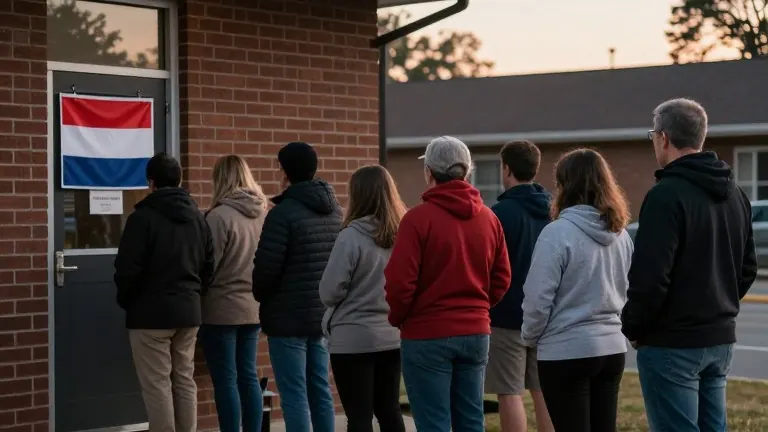
Harris County, home to the state's largest Black population, has set records in the recent primary and on the first day of early voting. Harris County Clerk Teneshia Hudspeth reported more than 565,000 voters cast ballots in 12 days during the primary, a record for a non-presidential primary. Demographic estimates suggest roughly 118,650 of those votes came from Black voters. These numbers mark a departure from recent trends where Black turnout lagged behind white turnout in several Southern states after 2012.
Pam Gaskin, 79, a co-founder of the Houston Voting Initiative, said she is witnessing a younger generation ready to take the reins. Gaskin, who remembers her father paying poll taxes in the 1960s, stated, "I cannot fight this fight much longer. I think it's time." Her sentiment is shared by Erika Harrison, a 40-year-old attorney and social media creator who has shifted her content from food to voter mobilization. Harrison noted, "I do believe there is a changing of the guard, but I also think we aren't doing what they used to do. There are so many generational differences."
The shift is driven by a change in priorities. Unlike older generations focused on equality and civic rights, younger Black voters are prioritizing day-to-day issues such as affordability, the environment, and job security. Evan Robinson, a junior at Texas Southern University and vice president of the campus NAACP chapter, said the group is waking up to the reality that politics affects them whether they like it or not. He added, "For a long time there was a feeling that our voice doesn't matter, but now we are waking up to the fact that if we don't do something, it will only get worse."
Organizers are working to capitalize on this energy. Stephanie Williams, senior state organizing manager for Black Voters Matter, reported that her team has registered over 60,000 young people to vote in Texas. Williams emphasized the next step is educating these new voters on how to cast ballots and turning them into organizers. She cited specific grievances, such as the layoffs of young educated Black women from federal jobs due to Department of Government Efficiency cuts and the end of Diversity, Equity and Inclusion programs, as motivators for participation.
The decline in Black turnout since the Obama era is attributed by analysts to a generational shift and a lack of engagement strategies for Millennials and Gen Z. Former President Joe Biden won Harris County by 13 points in 2020, but Democratic candidate Kamala Harris won the county by only 5.5 percentage points in 2024. Michael Adams, a political science professor at Texas Southern University, noted that the Black vote is concentrated in Houston, San Antonio, Dallas, and East Texas, making these areas critical for any candidate hoping to win the state.
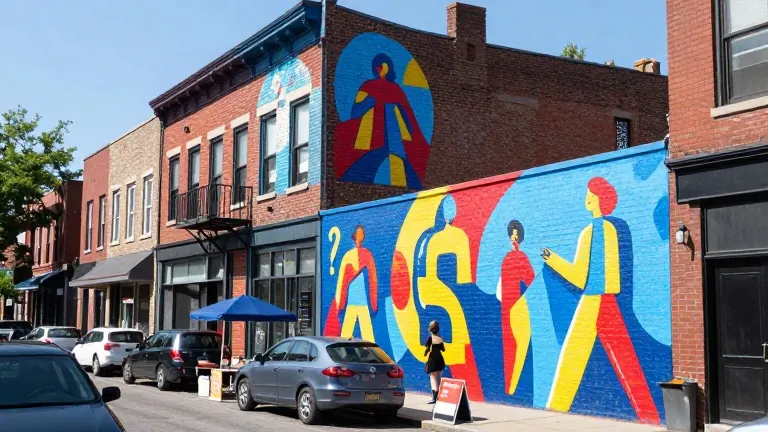
Voting advocates are using new methods to reach this demographic. Brianna Brown, executive director of the Texas Organizing Project, said the messaging that resonates with young people is not candidate-specific but focuses on healthcare and other core issues. Organizations are collaborating with social media creators, hosting community parties, and unveiling murals in neighborhoods like Midtown to encourage participation. Svante Myrick, president of the People For the American Way Foundation, told a crowd in Houston, "The entire world hinges on what happens here in Houston and Texas."
Annie Benifield, the other co-founder of Houston Voting Initiative, said every generation must determine what freedom means to them. She recalled marching in college in Alabama and noted that her parents did not get to vote until their 50s after the Voting Rights Act. Benifield stated, "We stopped engaging and participating. We thought we had overcome, but we hadn't." The current push aims to rebuild the infrastructure of the Black vote that was most consistent between 1965 and 2012.