Housing Market Shift: $1.3 Billion Redevelopment to Transform Kalihi-Palama
A massive mixed-income project is breaking ground in Honolulu, aiming to replace aging public housing with thousands of new units and commercial space over the next decade.
By Beatrice Gray ·
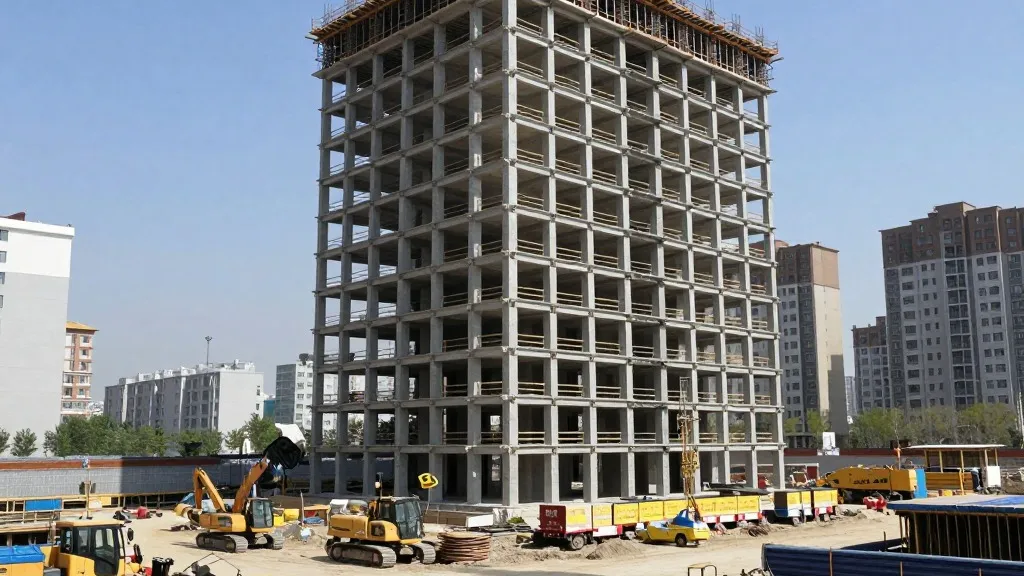
The scale of the investment in Hawaii's housing stock is set to reach a historic milestone this week. State officials and local leaders gathered Thursday for a ceremonial groundbreaking in the Kalihi-Palama neighborhood of Honolulu. This event marks the start of the first phase for the Mayor Wright Homes redevelopment, which holds the title of the largest public housing project in state history.
The development represents a significant shift in market strategy and asset management. The Hawai‘i Public Housing Authority, in partnership with developer Highridge Costa, is replacing a complex that has stood for nearly 75 years. The 15-acre site is bounded by King Street, Liliha Street, and Vineyard Boulevard. The new development is designed to hold seven times as many homes as the current facility. Crucially, the project moves away from a single-income model to serve a mixed-income population, expanding beyond just very low-income residents.
Hakim Ouansafi, the executive director of the housing authority, framed the financial and physical undertaking as a structural change. He stated that the event was about breaking barriers rather than just breaking ground. He emphasized that the state cannot solve future housing crises by relying on historical methods. The goal is to provide safe, modern homes in communities where poverty is not concentrated, ensuring that public housing is not viewed as second-class product.
The project scope includes more than 2,400 new rental homes ranging from studios to five-bedroom units. The development plan also incorporates public housing units, condominiums for sale, and commercial space spread across 10 towers. Over half of the units will be reserved for tenants earning less than 80 percent of the area median income. Later phases will extend affordability to households earning up to 100 percent of that median, which is roughly $150,000 annually for a family of four. Current residents displaced by the construction will have priority for return.
Governor Josh Green highlighted the broader economic and social returns on investment, noting that stable housing allows people to focus on education and health. Moe Mohanna, president of Highridge Costa Development Company, described the initiative as a legacy for the state. Honolulu Mayor Rick Blangiardi linked the project's timing to the arrival of the Skyline rail line, calling the combination of transit and affordable housing unprecedented. The development is designed to be within walking distance of the planned Iwilei rail station.
The financial estimates for the project have grown over time. The housing authority estimates the cost of Phase 1A at $333 million. In 2017, the state estimated the total cost for the entire redevelopment at $1.3 billion. The site will also feature four acres of public parks and recreational space. The first building is scheduled to open in 2029, with the full redevelopment expected to take 15 years to complete.
More Business · Honolulu news · Buyer Beware · Report a business · Got a Story?