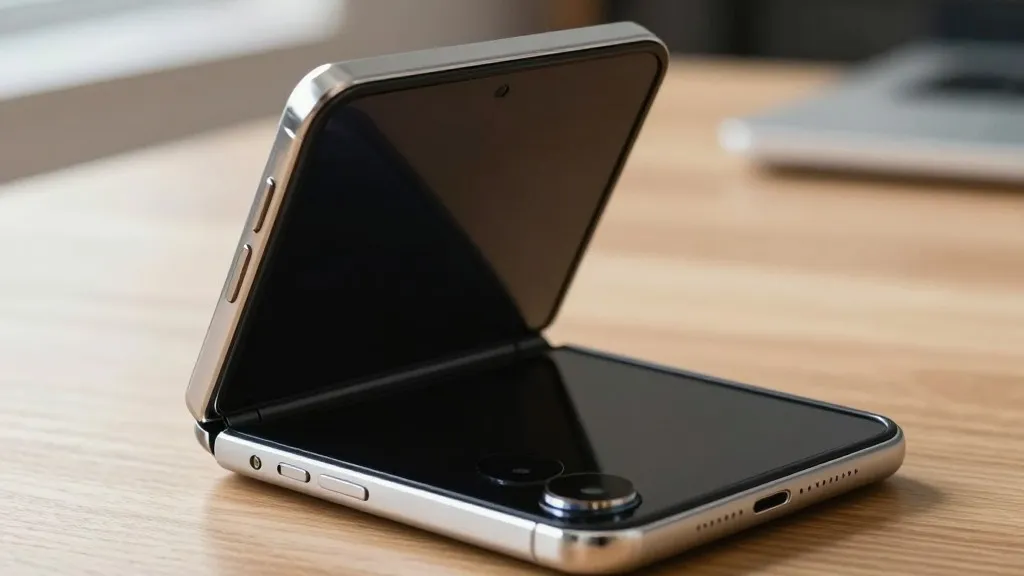
iPhone Duo's mandatory sidebar shrinks its 5.4-inch cover display
Early user feedback suggests the new dock layout wastes usable screen real estate compared to Samsung's Galaxy Z Fold 8.
By Maya Bauer ·

Users holding the new iPhone Duo report that a fixed sidebar on the right side of the device consumes a large portion of the 5.4-inch cover screen. This design choice limits the area available for main content. The restriction stands in sharp contrast to the Galaxy Z Fold 8, which leaves nearly the entire outer display free for applications when gesture navigation is enabled.
Apple introduced the iPhone Duo as its first entry into the wide foldable market. The device launched with limited availability. Samsung has been refining the Galaxy Z Fold line for several years. Over that time, the company worked with Google to adapt the Android operating system to larger screens. Apple is testing this form factor for the first time. Early assessments indicate that the hardware is promising, but the software implementation faces immediate criticism.
Allison Johnson of The Verge published a short review detailing specific usability issues. She noted that the iPhone Duo feels harder to operate with one hand than the Galaxy Z Fold 8. The Fold 8 has a taller and narrower physical profile. This shape makes the cover screen easier to navigate. Johnson emphasized that the outer screen is a key feature for users who chose the Samsung device.
The iPhone Duo uses a sidebar intended to simplify navigation. The dock is positioned on the right edge of the display. This placement leaves a significant chunk of the screen essentially unused. A post on Twitter/X illustrated the visual difference between the two devices. In a video from The Verge, the Galaxy Z Fold 8 was set to use a navigation bar rather than gestures. This setting reduced the visual gap between the two phones. However, users who rely on gestures on the Fold 8 see very little wasted space.
Apple's approach aims to save space by shrinking the available area. This allows media to appear taller, similar to a standard slab device. The Galaxy Z Fold 8 demonstrates that leaving the space open for content works effectively. The iPhone Duo is currently on sale, but stock is limited. The Galaxy Z Fold 8 continues to sell successfully for Samsung.
The debate centers on how developers handle small displays on large hardware. Apple chose a constrained layout. Samsung opted for a flexible interface that adapts to the user's preference. The physical dimensions of the iPhone Duo differ from the Fold 8, influencing one-handed usability. The software choices amplify these hardware differences for the end user.