iPhone Duo Launches at $1,999 With Foldable Screen and New Touch ID
Apple's first folding phone offers a larger canvas and new biometrics, but users must navigate software quirks and higher repair costs.
By Maya Bauer ·
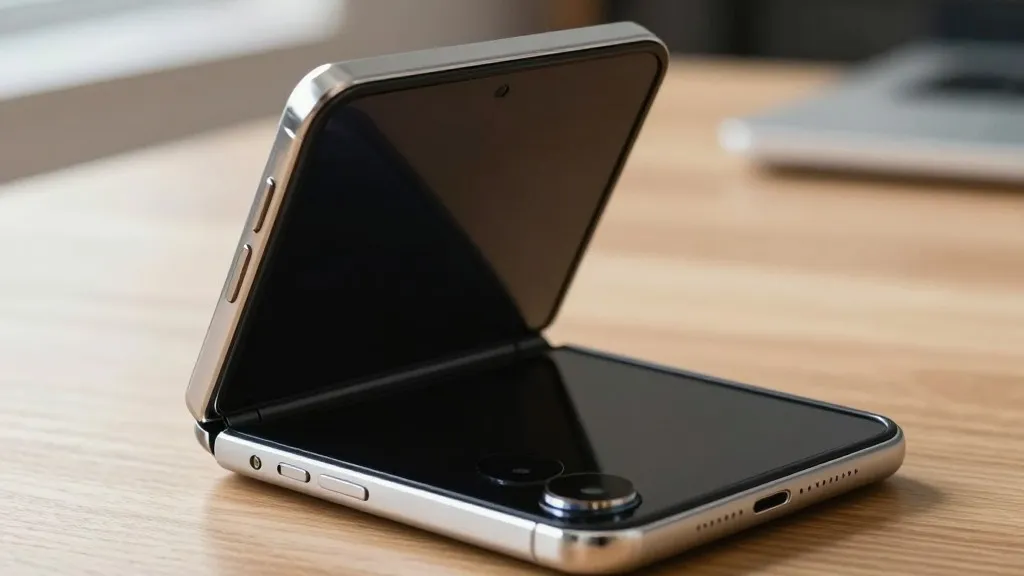
Apple has finally entered the foldable smartphone market with the release of the iPhone Duo, a device that redefines how users interact with their phones. Priced at $1,999, the handset arrives seven years after Samsung introduced the category with the Galaxy Fold. For working families and early adopters, the primary shift is the ability to unfold a 7.6-inch inner display for media and multitasking, while retaining a compact 5.4-inch outer screen for daily use. This dual-screen approach changes the physical footprint of the device, requiring a new mindset for navigation and app usage.
The hardware specifications are backed by a significant refinement period. Industry assessment suggests that the time spent perfecting the mechanism has resulted in a robust device. However, the financial commitment is substantial. At $1,999, the cost is a significant investment for most households. Buyers should consider that the price includes the hardware, but the ecosystem of apps and accessories is still maturing to support the new form factor fully.
Software compatibility remains the most immediate challenge for new owners. The unique aspect ratio of the Duo has caught many developers off guard. While Apple’s first-party applications have been redesigned to fit the new shape, numerous third-party apps currently display as a narrow vertical strip in the center of the screen. This leaves thick black bars on either side, which can be distracting for users accustomed to full-screen experiences. Major platforms like Slack, Instagram, DoorDash, and WhatsApp have received updates for iOS 27.1, but even these show some broken interface elements. Apple has also shifted navigation controls to the right edge of the screen rather than the bottom center.
The transition from Face ID to Touch ID marks a notable design departure. The Duo features a fingerprint sensor on the right side of the device. This is the first time a flagship iPhone has relied on Touch ID, a move likely driven by the thinness of the folding hardware. For users who preferred the speed of facial recognition, this may be a step back, while those who found facial authentication cumbersome may welcome the familiarity of the fingerprint scan. The Dynamic Island remains, but it has been relocated to the top-right corner around the outer selfie camera.
Accessories require careful consideration due to the device's physical shape. While the Duo supports MagSafe, the uneven weight distribution when unfolded can cause the phone to tilt on car docks or tripods. Third-party manufacturers may need to develop anti-rotation magnets to solve this. Magnetic wallets also present a fit issue; because the Duo is shorter than standard iPhones, these accessories extend past the bottom edge. Apple has not yet provided an official solution for this gap.
Photography capabilities have been enhanced by the folding mechanism. Users can take selfies using the higher-quality rear cameras while viewing the preview on the outer screen. A control labeled Slide to show camera allows the full camera interface to move to the outer display, disabling the inner screen to prevent accidental touches. Additional features include Duo Preview, which lets subjects see the viewfinder, and Kids Cue, which uses Snoopy animations to engage children during photos.
Multitasking offers new possibilities with the larger inner display. Users can drag an app to the side to run two programs side by side. Tapping the middle bar locks these apps as a pair, making them accessible from the recent apps menu. However, these pairs cannot be saved as a single icon on the home screen, which may limit convenience for frequent users.
Care for the inner display is crucial to maintain warranty coverage. The matte nano-texture finish is described by Apple as an integral component. The company explicitly warns users not to attempt to remove it, as doing so could void the warranty. Third-party screen protectors are not addressed in official support documentation and may affect display performance. If the finish is damaged, Apple offers a replacement for $19 in-store or $49 out of warranty. A cracked inner display costs $999 without AppleCare+.
Future software updates will address some current limitations. A keyboard split feature is already available to improve typing on the wide screen. Later this year, an update will introduce Reachability, allowing users to shift apps to the sides rather than pulling them down. Another update will add support for the USB-C Apple Pencil, which is expected to enhance the writing experience on the textured screen. The device does not have a built-in storage slot for the stylus.
The arrival of the iPhone Duo represents a significant shift in mobile technology. For consumers, it offers a larger workspace and new interaction models at a premium price. The trade-offs include a learning curve for apps, a change in biometric security, and specific care requirements. As developers catch up and accessories adapt, the device may become more seamless for everyday use.