Lakshmi Aguirre: Spain's Daily Set Lunch Faces Financial Pressure
New book details the history and current economic strain on the menú del día, which now costs 14.70 euros on average.
By Maya Bauer ·
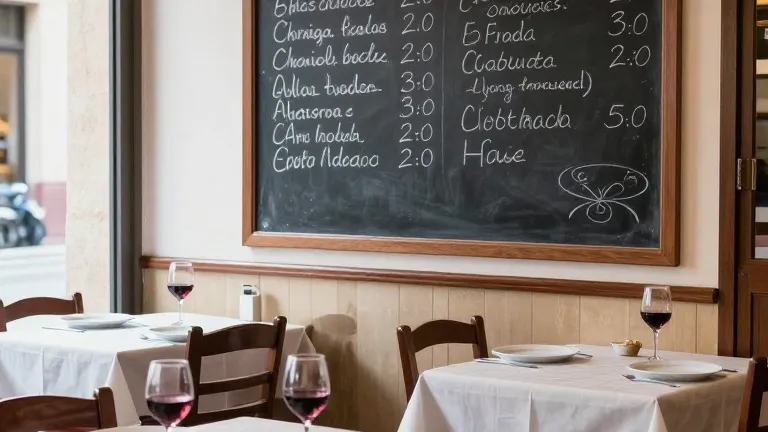
A new book argues that Spain’s traditional set lunch is struggling but not gone.
Spanish food journalist Lakshmi Aguirre published Menú del Día: Everyday Scenes of a First Course, a Second Course and Pudding this week. The text documents the history and current state of the daily set-price meal. Aguirre states the tradition is in trouble. She notes that about 4 million of these meals are still served on each working day. The average price for the set menu is now 14.70 euros.
The dish was created in the mid-1960s by Manuel Fraga. He served as information and tourism minister under Francisco Franco. The government wanted to show foreign visitors that Spanish food was plentiful and affordable. Regulations fixed prices between 50 and 250 pesetas. They required a soup starter, a main dish of egg, fish or meat, and a pudding. The law also mandated a quarter-litre of pure Spanish wine with at least 12% alcohol. The menu was renamed in the early 1970s to attract local workers rather than just tourists. Aguirre says many Spaniards were surprised to learn the tourist origin. She said, 'It says a lot about us Spaniards; we forget very quickly.'
Restaurants face rising costs for energy and food. These pressures make it hard for small, family-run businesses to offer a rotating daily choice. Some owners have replaced the set menu with a single dish of the day. Others have added Latin American staples to reflect changing demographics. Many diners now bring food from home or microwave supermarket meals due to short time schedules. Aguirre says the menu has always mirrored Spanish society. She argues nostalgia is growing as people realize the habit is fading.
The cost of the meal has risen. In 2009, chef Ferran Adriá declared the menu dead. He blamed changing eating habits and economic downturns. Seventeen years later, the tradition persists. Aguirre lists specific criteria for a good venue. She looks for simple dishes, a changing menu, and non-frozen chips. She prefers a chalkboard that does not list words like avocado or truffle. She gives bonus points if the owners' child does homework at a back table.
Aguirre says the menu serves a social function beyond providing cheap food. She describes it as a meeting point for families with limited means. It provides company for people living alone. She notes the privilege lies in having time to enjoy the meal. The average price of 14.70 euros reflects the current economic reality for these establishments.
The book traces the evolution of the menu from the post-war era to the present. It details how the set lunch became a standard part of the Spanish workday. Aguirre observes that the habit is losing ground to faster dining options. The 4 million daily servings represent the remaining core of the practice. The financial squeeze on small restaurants continues as they adapt to higher input costs.
More Culture · World news · Report a business · Got a Story?