Music History: The iPod Turns 25
Twenty-five years ago, Apple introduced a pocket-sized device that promised to hold a thousand songs, fundamentally changing how people carried their music.
By Beatrice Gray ·
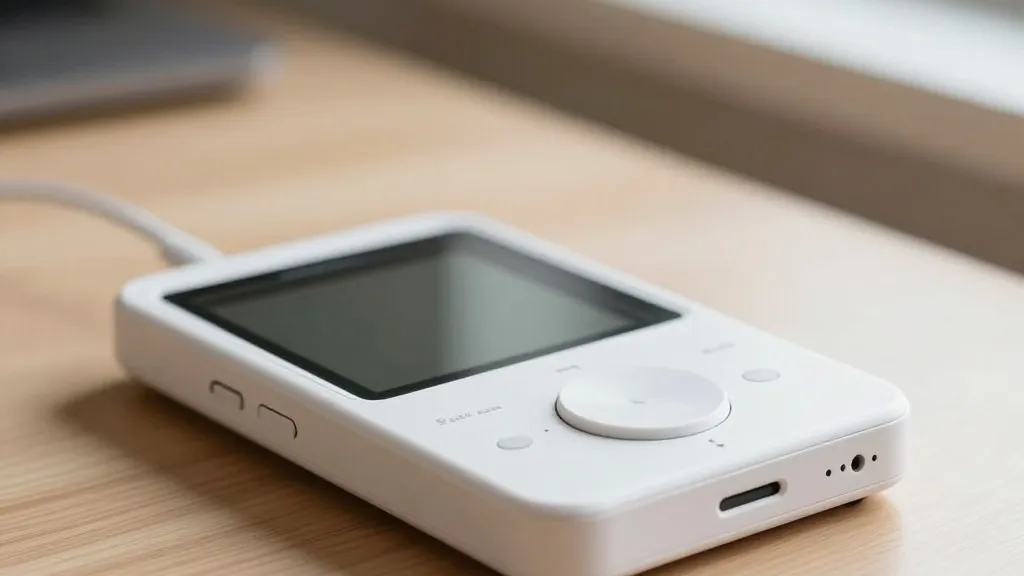
Twenty-five years ago today, on October 23, 2001, Apple CEO Steve Jobs unveiled a device that would become a cultural icon. The original iPod debuted with a bold promise: it could fit a user's entire music library into a package the size of a deck of cards for $399. This announcement marked a pivotal moment in consumer electronics, shifting the way the world interacted with digital music. Jobs began his presentation by teasing a breakthrough digital device that was not a Mac, setting the stage for a product that would define the pre-smartphone era for gadget enthusiasts.
At the time of the launch, Apple was in a strong position. Jobs had successfully steered the company past its earlier struggles, establishing a foothold with the Mac OS X, iBooks, and iMacs. The company was thriving even as the tech industry recovered from the dot-com bubble burst. Jobs envisioned the Mac as the central hub of a user's digital lifestyle, connecting cameras, DVD players, and now a portable music player. He argued that music was a massive target market that lacked a clear leader, making it an ideal area for Apple to expand.
Jobs acknowledged that competitors like Sony, Creative, and Sonic Blue already offered portable digital music players. However, he believed none of them had found the right recipe for success. The market at the time was divided among CD players, MP3 CD players, flash-based players, and hard disk-based jukebox players. Apple decided to enter the market with the hard disk-based approach, which offered significantly more storage capacity than its rivals.
The device itself was introduced as an MP3 music player capable of CD-quality sound. It supported popular formats of the day, including MP3, WAV, and AIFF. The 5GB storage capacity was a major selling point, allowing it to hold approximately 1,000 typical pop songs. Jobs emphasized that for most people, this meant their entire music collection fit in their pocket. This level of capacity was unprecedented for a portable device at the time.
A key feature of the original iPod was its ultra-portable form factor. The design was made possible by Toshiba's new ultra-compact and ultra-thin hard drive, which measured 1.8 inches in diameter and 0.2 inches in thickness. The finished device measured 2.4 by 4 by 0.78 inches and weighed just 6.5 ounces. Jobs noted that it was lighter than most cell phones of the era, making it easy to carry without bulk.
Despite its small size, the player offered advanced connectivity features. It used a single FireWire 400 cable for both charging and data transfer. Jobs claimed this connection was fast enough to transfer an entire CD of music in five to 10 seconds. In comparison, USB connections of that era could take up to five minutes for the same transfer. Filling the device with 1,000 songs would take only about 10 minutes, whereas a USB player could take five hours. The device also featured 20 minutes of skip protection and fast file transfers.
The battery life was another significant advantage. The rechargeable lithium-polymer battery provided 10 hours of continuous music playback. Apple stated that an empty battery could be recharged to 80 percent in just one hour. This combination of long playback time and fast charging made the device practical for daily use. It was marketed as the first and only music player with FireWire, a distinct advantage over competitors relying on slower USB standards.
Jobs highlighted the design as a major strength, describing it as minimal and durable. The controls were designed for single-hand use, featuring an accelerated scroll wheel with a piezoelectric clicker for tactile feedback. This allowed users to quickly locate and play music by playlist, artist, or song. During the stage demo, the first song played was 'Building a Mystery' by Sarah MacLachlan. The device also doubled as a FireWire hard drive, adding utility beyond just music.
The launch of the iPod coincided with the release of iTunes 2. This software included features like MP3 CD burning and syncing support. The Auto-Sync feature ensured that libraries created on a Mac were always synchronized with the portable player during transfers or charging. This seamless integration between the computer and the pocket player was a crucial part of the product's appeal.
The first iPhone did not arrive until early 2007, more than five years later. For over a decade, the iPod and iPhone coexisted in Apple's product lineup. However, the iPod's prominence eventually faded as smartphones became more capable. The final model, the 7th-generation iPod Touch, was released in May 2019. The product line was left without updates until it was officially discontinued in May 2022, bringing a close to a 21-year run for one of technology's most enduring devices.