The 25-Year-Old iPod That Made Pocket Music Standard
Steve Jobs priced the 2001 device at $399, promising 1,000 songs and faster syncing than existing options.
By Beatrice Gray ·
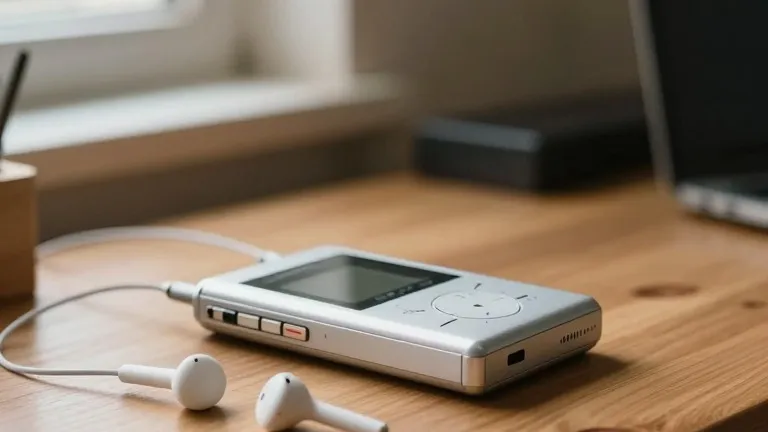
On October 23, 2001, Apple chief executive Steve Jobs introduced a pocket-sized music player that changed how people carried audio. The device cost $399 and held roughly 1,000 songs. This price point and storage capacity set a new standard for personal audio ownership before smartphones made dedicated players obsolete.
The launch occurred while Apple was recovering from the dot-com bubble burst. Jobs had already moved the company beyond its beige-box era with Mac OS X and iMacs. He envisioned the Mac as the hub for digital devices, including cameras and portable music players. Jobs selected music as the target market because no company had yet solved the problem of digital audio portability.
Competitors like Sony, Creative, and Sonic Blue sold portable players at the time. Jobs noted that four categories existed: CD players, MP3 CD players, flash players, and hard-disk jukebox players. He believed the hard-disk category offered the best entry point into the market. The new device handled MP3, WAV, and AIFF files with CD-quality sound.
The hardware relied on a new 1.8-inch hard drive from Toshiba that was 0.2 inches thick. The player measured 2.4 by 4 by 0.78 inches and weighed 6.5 ounces. Jobs described the weight as lighter than most cell phones. A lithium-polymer battery provided 10 hours of continuous playback. Apple stated that an empty battery could reach 80% charge in one hour.
Jobs emphasized the speed of the FireWire 400 connection used for charging and file transfer. He claimed a whole CD could move to the player in five to 10 seconds. This was significantly faster than the five minutes required for USB connections of that era. Transferring 1,000 songs took about 10 minutes instead of the five hours typical for previous devices. The system included 20-minute skip protection to prevent buffer interruptions.
The device featured a minimal design with a scroll wheel for one-handed control. The wheel used a piezoelectric clicker to provide tactile feedback. Users could browse music by playlist, artist, or song. During the presentation, Jobs demonstrated the interface using Sarah McLachlan's track "Building a Mystery." Apple released iTunes 2 the same day to support the player.
iTunes 2 introduced MP3 CD burning and auto-sync capabilities. When connected, the player would automatically match the library curated on the Mac. The device could also function as a FireWire hard drive. More than five years later, Apple launched the first iPhone in early 2007. The two products coexisted in Apple's lineup for over a decade.
The popularity of the iPod line faded as smartphones matured. The last model was the seventh-generation iPod Touch, released in May 2019. Apple stopped maintaining the line and officially discontinued it in May 2022. The 25th anniversary of the original launch marks the point where a $399 device made a personal music library a tangible, portable object.