Resolve Marine removes masts from WWII explosives wreck off Sheerness
Engineers extracted three rusting spars from the SS Richard Montgomery at a cost of under $13 million, leaving the 1,500 tons of wartime munitions submerged in the Thames Estuary.
By Bianca Ruiz ·
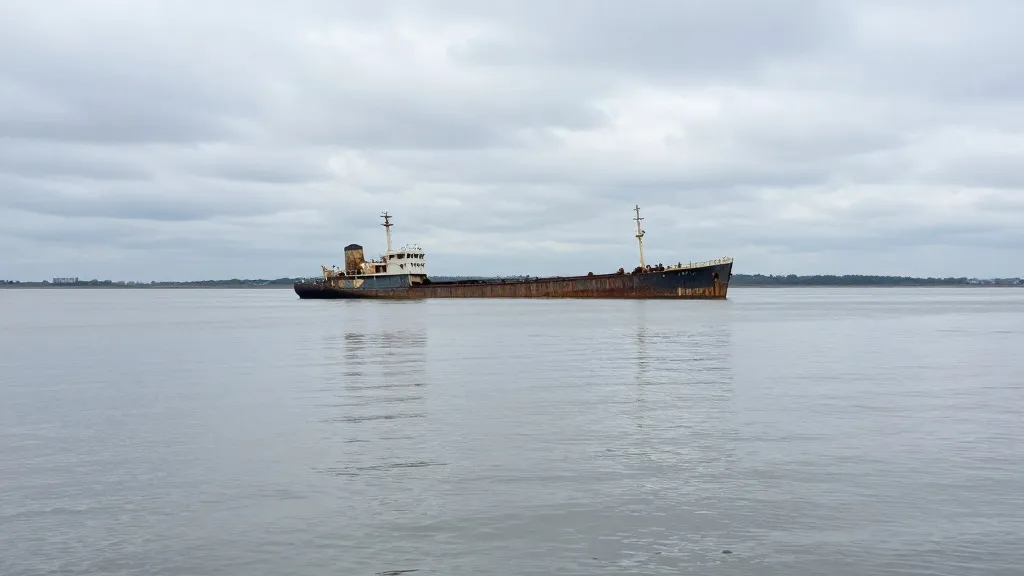
Crews have completed the removal of three rusting masts from the SS Richard Montgomery, a World War II vessel resting on the sea floor off the Kent coast. The operation concludes a high-risk engineering project designed to mitigate the potential for a catastrophic structural failure near London. The ship still holds a massive cache of explosives, which remain in their original positions within the cargo holds.
The Montgomery was one of approximately 2,700 vessels constructed in the United States to support the Allied war effort. It struck a sandbar in the Thames Estuary in August 1944, located roughly 40 miles from the British capital. The ship was transporting munitions intended for the period following the D-Day landings. During salvage operations, the hull fractured and the vessel sank with an estimated 1,500 tons of explosives aboard.
For decades, the three masts protruded from the waterline, serving as a visible landmark for local residents and passing traffic. Recent structural surveys indicated that the remaining superstructure was deteriorating at an accelerating rate. Officials feared that a collapse of the masts could impact the cargo below and trigger a detonation.
Nolan Conway, a naval architect with Florida-based Resolve Marine Group, stated that the vessel had begun to lean. He explained that the primary concern was the possibility of the masts falling onto the cargo and causing an explosion. Conway noted that some of the munitions are believed to have pressure fuses, meaning that physical impact could potentially initiate a chain reaction.
The engineering team faced the challenge of cutting the masts away without disturbing the wreck or endangering personnel. They constructed a custom lifting frame to raise each mast vertically, preventing any swinging or swaying during extraction. The team also deployed a remotely operated underwater diamond-wire saw. This device uses hydraulic arms to clamp around the mast and cut through it, eliminating the need for divers to enter the water.
U.K. maritime minister Keir Mather announced in the House of Commons this week that the project finished ahead of schedule and within budget. The total cost for removing all three masts was just under $13 million. Mather stated that the masts had placed a substantial load on the structure and that their removal reduces risk while supporting the long-term safe management of the site.
The explosives remain in place because extraction would carry considerable risks. Experts disagree on the potential consequences of a detonation. Conway said estimates range from localized effects on the shoreline to a tidal wave traveling up the Thames, or a minor event that would only close a nearby shipping channel. He described the range of impacts as wide, though none are favorable. Officials continue to judge the overall probability of an explosion as low.
The government maintains an exclusion zone around the wreck, which lies about 1.5 miles off the Sheerness coast. Mather confirmed that the site will continue to undergo continuous monitoring and control through this designated zone. The three removed masts are expected to be preserved at the Historic Dockyard Chatham museum. They will be displayed to recognize the ship's historic significance and its role in supporting Allied forces during the war.