Tesla Reveals Fighter-Jet-Style Dashboard for New Roadster
The electric hypercar's new interface prioritizes track telemetry and thruster status over traditional navigation, marking a distinct shift from the company's other models.
By Maya Bauer ·
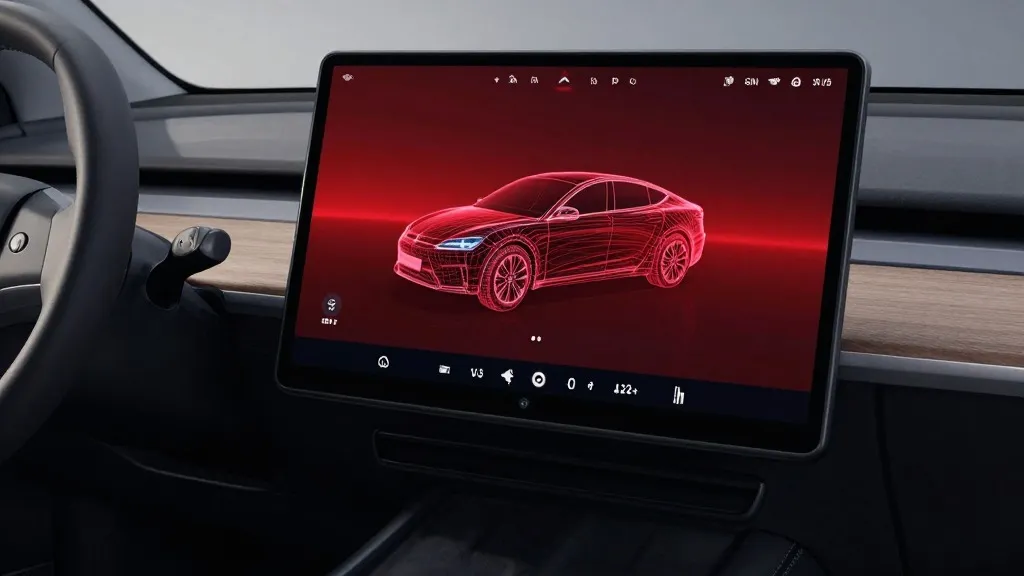
Tesla has unveiled the most detailed look yet at the digital cockpit of its upcoming next-generation Roadster, revealing an interface designed to mimic the controls of a fighter jet. In a thirty-four-second video shared on X on Friday afternoon, the company highlighted how the screen prioritizes driver-centric data over standard automotive features. The accompanying caption stated that the design was "inspired by fighter jet cockpits" and built "around the pilot," signaling a distinct departure from the user experience found in the rest of the brand's lineup.
The video begins with a black screen featuring red graphics and a three-dimensional wireframe of the vehicle positioned next to its squared-off steering yoke. Interacting with the digital model reveals controls for the rear wing, allowing users to select between low-drag and high-downforce configurations. The display also includes a charging page with a limit bar and a compact music player. Along the bottom of the screen, a row of navigation tabs provides access to Home, Vehicle, Listen, Climate, and Navigate functions.
A significant portion of the footage focuses on the car's Track Mode, which transforms the dashboard into a dense array of performance data. The interface displays a live circuit map, a log of session lap times, and real-time readings for brake and motor temperatures. Drivers can also monitor pressure and temperature for each individual tire. A dedicated setup page allows for the selection of Auto, Low Drag, High Downforce, or Custom aero modes, while also offering adjustments for aero balance and brake balance. Additionally, users can disable stability and traction control for maximum performance.
The software is directly linked to the hardware components Tesla showcased near Waco, Texas, on October 15. A status bar at the bottom of the Track Mode screen displays "Thruster · 5,500 PSI" alongside a "Boost Ready" indicator. This gauge corresponds to the cold gas thrusters used in the Thrust and Rocket versions of the car, which are powered by carbon-overwrapped pressure vessels. According to previous breakdowns of the three Roadster configurations, these thruster-equipped models are rated for 0 to 60 mph times of under 0.9 seconds and under 0.59 seconds, respectively.
The base Performance variant, which does not include thrusters, relies on a fan and ground sealing system to generate grip. The aero settings visible on the screen align with the active wings and suction setup that Tesla has previously detailed in its explanations of how the Roadster generates downforce. This integration of software and hardware underscores the vehicle's focus on aerodynamic precision.
The Roadster’s layout differs significantly from Tesla’s other vehicles. Instead of centering a map on the home page, the Roadster places a representation of the car itself at the center of the interface. Tesla’s official page for the vehicle lists two smaller forward-facing displays in addition to the main touchscreen. It remains unclear whether the advanced telemetry features seen in Track Mode will eventually be available in other models, such as the Model 3 Performance.
Deliveries are not expected to begin until 2028, a timeline Elon Musk confirmed at the recent launch event. While the interface shown in the video may undergo changes before production, the company has clarified that the flagship Rocket version is not currently approved for public road use. Reservations are open to the public with a $50,000 payment, while the Thrust version is designated as a limited release and the Rocket model is available only by invitation.
Prospective buyers will soon have the opportunity to view the vehicle in person. According to Sawyer Merritt, the Roadster will be displayed in the lobby of the Petersen Automotive Museum in Los Angeles from October 24 to 27. This exhibition marks the first time the public will be able to see the car up close before it enters the production phase.