Billion-dollar gap: How Republican committees outspent Democrats in 2026
While Democratic candidates raised more than their opponents, party committees and Elon Musk helped fund a historic spending surge concentrated in states President Trump won in 2024.
By Maya Bauer ·

The 2026 midterm elections are shaping up to be the most expensive in American history, a financial landscape defined by a distinct divergence in how the two major parties are funding their efforts. Republican committees have outraised and outspent their Democratic counterparts. This advantage has been bolstered by significant contributions from groups affiliated with President Donald Trump and billionaire Elon Musk. The sheer volume of capital flowing into the race underscores the high stakes of determining who will control Congress for the final two years of the current administration.
The disparity in spending is not just a matter of total volume but also of strategic placement. The AP analysis reveals that 88.1 percent of Republican general election television ad spending was directed toward states and districts that President Trump won in the 2024 presidential election. This targeted approach reflects a strategy focused on consolidating support in areas where the administration has a strong base. In those specific regions, Republicans spent more than 850 million dollars in areas where Trump won by 10 points or more. This concentration of resources aims to drive out the base and protect the party's position in what are often considered safe seats.
In contrast, the Democratic fundraising strategy has shown a different pattern at the individual level. While their committees lagged behind the Republican machine in total expenditure, Democratic candidates actually outraised their Republican opponents. This candidate-level edge suggests that individual Democratic candidates are resonating strongly with local donors and voters, even if the broader party infrastructure is facing a funding deficit. This dynamic creates a complex financial battlefield where local candidates have resources but may lack the massive national advertising budgets available to their Republican rivals.
The influx of money from Elon Musk and Trump-affiliated groups has played a pivotal role in shifting the financial balance of power. These contributions have allowed Republican committees to maintain a spending edge that might otherwise have been difficult to sustain given the midterm tradition of the president's party losing seats. The presence of such high-profile donors has also injected a level of intensity into the campaign that is characteristic of recent national elections. For Democratic strategists, the challenge is to leverage their candidate-level fundraising success to offset the committee-level disadvantage.
The cost of this election comes at a time when many voters are feeling the pinch of high prices and economic uncertainty. The Associated Press describes the mood as one of struggle, with many Americans angry over an unpopular war with Iran and frustrated by the cost of living. This economic anxiety is likely to influence how voters perceive the heavy spending by both parties. While Republicans are pouring money into states they believe are solidly in their column, Democrats are focusing their limited resources on battleground districts where the outcome is genuinely uncertain.
The financial edge of the Republican committees is part of a broader effort to beat the historical midterm pattern. Republicans have attempted to use redistricting in states like Florida, Texas, and California to create more favorable maps for their candidates. However, the new maps may not vote exactly as drawn, adding another layer of complexity to the spending strategy. The 850 million dollars spent in high-margin Trump districts indicates a defensive posture, aiming to ensure that even in friendly territory, the Republican candidate secures a decisive victory.
Democratic leaders are cautiously optimistic despite the spending gap. They argue that the anger of the American people, fueled by economic concerns and oversight issues, will translate into votes even if they are outspent. The party is counting on the strength of its individual candidates and the high visibility of the issues to overcome the financial disadvantage. The focus is on the 46 battleground districts in the House and the 13 competitive Senate races where the margin of victory could be thin.
The role of television advertising in this election cannot be overstated. With 88.1 percent of Republican TV ad spending focused on Trump-winning areas, the message in those regions has been consistent and repetitive. This saturation of airwaves is designed to maximize name recognition and turnout. For Democrats, the strategy has been more surgical, targeting specific swing states and districts where the economic pain felt by voters is most acute. The difference in approach highlights the divergent strategies of the two parties as they head into Election Day.
The financial data also reflects the broader political environment, where the administration is facing a referendum on its second term. With only 35 percent of U.S. Adults approving of President Trump's job performance, the spending by his party's committees is a hedge against the potential for a strong Democratic performance. The money is being deployed to mitigate the risks posed by the president's approval ratings and the popularity of the opposition's message on the economy.
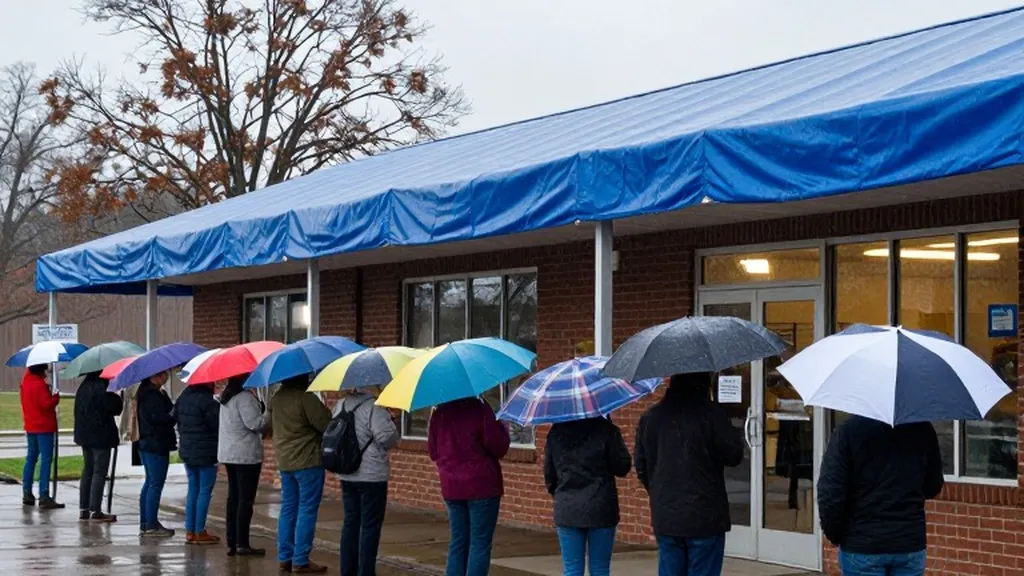
As polls open across the country, the impact of this record-breaking spending will be felt in the final hours of the election. The sheer amount of money raised and spent is a testament to the intensity of the contest. While the Republican committees have the advantage in total dollars, the Democratic candidates' ability to raise funds locally suggests a resilient base. The final tally of votes will determine whether the financial edge translates into legislative control or if the economic grievances of voters prove to be the more decisive factor.