Venezuela: Hegseth pledges expanded military ties after unannounced trip
Defense Secretary Pete Hegseth met with Acting President Delcy Rodríguez to discuss countering foreign actors and expanding the 25-year oil partnership.
By Beatrice Gray ·
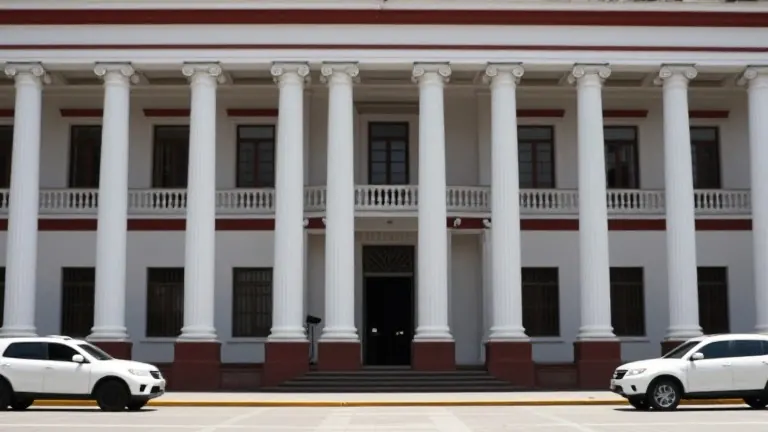
Defense Secretary Pete Hegseth landed in Caracas on Wednesday for a visit that the Pentagon did not announce until Venezuelan state television broadcast the event. He met with Acting President Delcy Rodríguez at the Miraflores Palace. The unpublicized trip signaled a shift toward a more integrated security relationship between the two governments.
Hegseth declared that the United States intends to expand its military partnership with Venezuela. He stated that Washington looks forward to pairing U.S. military expertise with Venezuelan capabilities. The goal, he said, is to keep Venezuelans safe from foreign actors, narco-terrorists, and criminals within their sovereign borders. The Pentagon did not respond to a request for comment regarding the specific details of the new cooperation.
The defense secretary linked military strength to economic stability during his remarks. He pointed to Venezuela's natural resources as a foundation for peace in the region. Hegseth argued that a prosperous Venezuela would create a safer hemisphere and a safer America. He described the renewed partnership as a demonstration of what is possible when nations with a long shared history rebuild their relationship.
This visit follows a series of trips by senior Trump administration officials to the country. Energy Secretary Chris Wright, Interior Secretary Doug Burgum, and CIA Director John Ratcliffe have all traveled to Venezuela in recent months. Hegseth’s stop in Caracas came one day after he visited U.S. Southern Command headquarters in Florida. He met with Southcom commander Gen. Francis Donovan during that visit.
The diplomatic push occurs against the backdrop of the capture of former leader Nicolás Maduro by U.S. forces earlier this year. A deal brokered by the Trump administration gave Washington control over some of the country's oil reserves. Rodríguez described that arrangement in late August as a 25-year bilateral project. It covers the development of 17 strategic fields with a production target of more than 1.5 million barrels per day.
Rodríguez said at the time that the partnership relies on mutual strengths. Venezuela contributes oil, industry, and over 100 years of worker experience. The United States provides the capital and technology needed to recover and develop those assets. The agreement drew criticism from some Democrats on Capitol Hill regarding the terms of the deal.
Negotiations for a permanent U.S. military presence in the country are also underway. The New York Times reported in November that Washington is in talks with Caracas to establish such a presence. Secretary of State Marco Rubio told the paper on Nov. 5 that the U.S. wants a presence agreement to provide legal protections for American troops operating jointly with Venezuelan forces.
The cooperation fits into the administration's regional security campaign. The U.S. launched the Americas Counter Cartel Coalition under the Shield of the Americas framework. Since September of last year, U.S. military forces have destroyed alleged drug trafficking boats in the Caribbean and Eastern Pacific. American forces have also interdicted at least eight large vessels labeled as floating refueling stations off Ecuador's coast.
More Politics · National news · Report a business · Got a Story?