1 Terawatt: Musk’s Terafab Aims to Outproduce Global AI Capacity
Tesla and SpaceX are accelerating chip production timelines with supplier support, targeting a massive Texas facility that aims to generate one terawatt of annual computing power.
By Bianca Ruiz ·
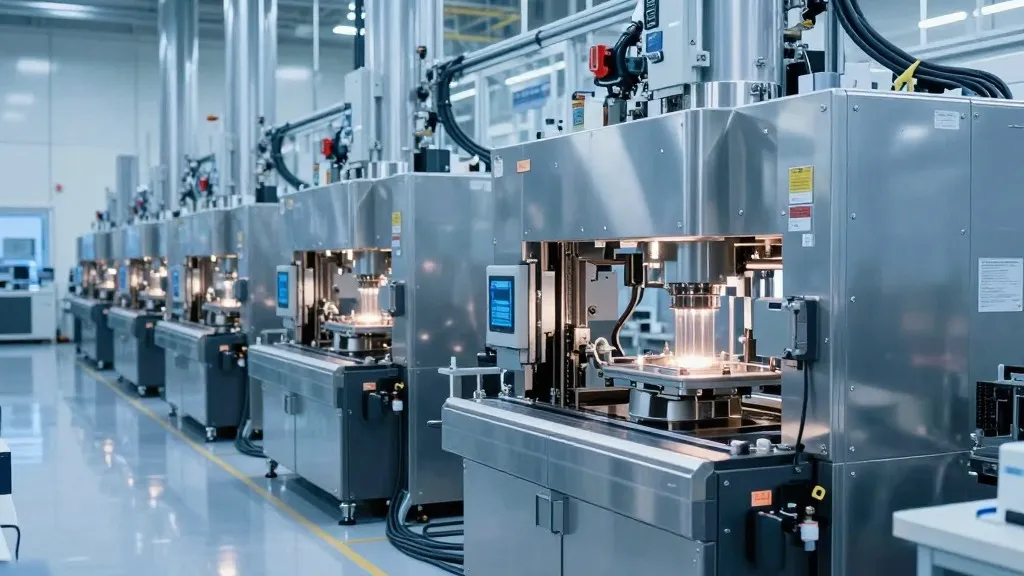
The global semiconductor supply chain is under unprecedented strain as the demand for artificial intelligence hardware continues to outstrip available manufacturing capacity. In a significant move to address this bottleneck, Tesla and SpaceX are working to fast-track the construction of Terafab, a vertically integrated chip factory in Texas, with key equipment suppliers agreeing to expedite deliveries.
Elon Musk, who serves as CEO of both companies, made these announcements during a live broadcast of SpaceX’s third-quarter 2026 earnings call on X on October 20. He stated that critical suppliers, including ASML, are accelerating shipments to support the project’s aggressive schedule. The primary goal is to begin volume chip production at the facility in Gibbons Creek, Texas, by the third or fourth quarter of 2028. Musk described this timeline as "highly aspirational" and noted that it carries "big error bars," acknowledging the difficulty of the target.
To understand the scale of this undertaking, it is helpful to look at the project’s evolution. Intel officially joined the Terafab venture in April 2026, bringing its 14A manufacturing node technology to the partnership. This collaboration allows the facility to utilize extreme ultraviolet lithography systems, a technology for which ASML is the sole commercial supplier. While Terafab’s first EUV tool was previously slated for delivery in mid-2027, Musk’s recent comments suggest that this timeline may have been further compressed to meet the 2028 production target.
The project involves a complex web of international partnerships beyond just the major lithography providers. American equipment manufacturers Applied Materials, Lam Research, and KLA Corporation, along with Japan’s Tokyo Electron, are supplying front-end processing and metrology machinery. Additionally, Tesla and SpaceX are in negotiations with approximately ten South Korean firms, including Hanmi Semiconductor and HPSP, for advanced packaging and specialized components. These suppliers are currently moving to prioritize Terafab’s orders even as their own production capacities remain tight.
Musk outlined specific performance goals for the facility, stating that once fully operational, Terafab aims to manufacture one terawatt of AI computing power per year. This output would be used to supply chips for xAI’s training clusters, Tesla’s self-driving vehicles, Optimus humanoid robots, and SpaceX’s orbital data centers. He claimed that the commercial value of this output would be so significant that a single building could rival the GDP of the 20th-largest economy in the world, a position currently held by Switzerland with a GDP of approximately $1.14 trillion.
Alongside the semiconductor plans, Musk detailed near-term expansion goals for his AI computing infrastructure. He expects his companies to have 2.5 to 3 gigawatts of computing capacity active by the end of 2026. He expressed high confidence in adding another 10 gigawatts in 2027, aiming for a total of 13 gigawatts by the end of that year. To achieve this, SpaceX and xAI are procuring next-generation NVIDIA architectures, with plans to bring a 440,000-GPU "Vera Rubin" training cluster online by the second quarter of 2027.
The timeline for Terafab is ambitious when compared to industry standards. Research firm Gartner estimates that the total global capacity for AI-optimized data centers is roughly 44 gigawatts as of late 2026. This means Terafab’s planned annual output of one terawatt is significantly larger than the current global total. While EpochAI notes that global AI computing capacity has grown at a rate of 3.3 to 3.4 times per year since 2022, experts have questioned whether the 1-terawatt target is realistic, given the sheer scale of the infrastructure required.
The next steps for the project involve finalizing the installation of the expedited equipment and ramping up production at the Austin, Texas, research facility, which is expected to produce its first experimental test chip around the second quarter of 2027. The success of Terafab will depend on the ability of the supply chain to maintain this accelerated pace, potentially reshaping the global landscape of semiconductor manufacturing and AI hardware availability.