Rocket Lab Launches Three New Signal Satellites From New Zealand
The Electron rocket carried the spacecraft to a 520-kilometer orbit to continue monitoring radio frequencies for government clients.
By Maya Bauer ·
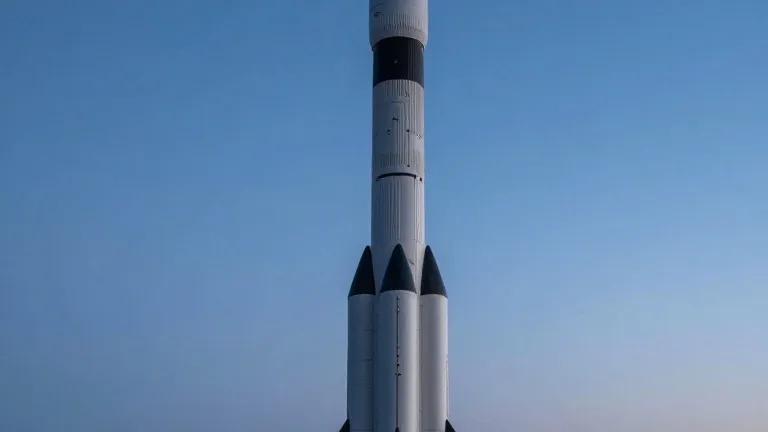
For operators tracking maritime vessels or detecting radar interference, the network of eyes in the sky grew by three units on Thursday morning. An Electron rocket lifted off from Rocket Lab’s facility in New Zealand at 3:11 a.m. EDT, carrying hardware designed to scan the planet for specific electromagnetic emissions.
The payload consisted of three Hawk satellites built for HawkEye 360, a Virginia-based company. Rocket Lab designated the mission "We're Not Hawking Around." The spacecraft were placed into low Earth orbit at an altitude of 520 kilometers, or 323 miles.
According to Rocket Lab’s mission summary, the satellites operate in clusters of three to collect data across the radio frequency spectrum. This data supports maritime tracking, global navigation satellite system jamming detection, and communications mapping. The company noted that these capabilities also contribute to space defense efforts.
HawkEye 360 provides this information to the U.S. government and its allies. The firm states that its use of proprietary signal processing and AI-powered analytics transforms spectrum knowledge into a strategic advantage for faster decision-making. This launch marks a rapid expansion for the provider, which first deployed satellites in 2018.
The company has now placed nearly 50 satellites in low Earth orbit. This mission followed a previous Hawk deployment by only two days, when three other satellites flew on SpaceX’s Bandwagon-5 rideshare mission. The latest flight was Rocket Lab’s 98th launch overall and its 19th of 2026. Sixteen of the year’s flights used the two-stage Electron, while three utilized the suborbital HASTE variant.