Tesla's Fremont Line Marks the Start of Commercial Humanoid Production
The automaker has confirmed that its newly established robot assembly line is producing the first units ready for commercial sale, with a massive training initiative set to accelerate development.
By Bianca Ruiz ·
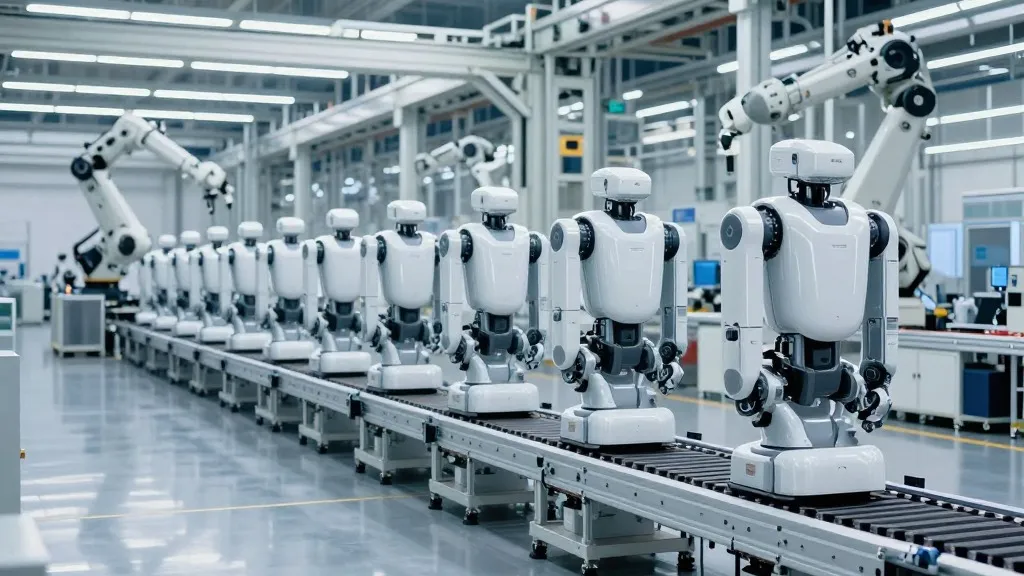
Tesla has officially transitioned its Fremont factory into a high-volume production hub for the Optimus humanoid robot, marking the first time the company has manufactured units that meet its internal standards for a commercial product. In its third-quarter shareholder letter, the automaker stated that the robots emerging from this specific line are the first production-quality models, thereby validating that the current manufacturing process is suitable for a market-ready device. This shift signals a pivotal move from prototyping to industrial scale, anchoring the company's long-term strategy in autonomous robotics.
The production capacity was secured earlier this year when Tesla cleared the former Model S and Model X assembly area in just 46 days. This rapid conversion allowed the company to install equipment capable of handling one million units annually. During Wednesday’s earnings call, CEO Elon Musk noted that the majority of the necessary hardware is already in place. He indicated that output is expected to climb steeply, targeting a ramp-up to approximately 20,000 robots per week as operations stabilize.
The development trajectory is expected to follow a classic S-curve, according to Musk, who described the initial growth phase as having a shallow slope. The engineering team is currently focused on refining the robot’s artificial intelligence, electromechanical architecture, and overall reliability. Tesla aims to complete these critical refinements by the end of next year, at which point it plans to begin delivering Optimus units to external partners for use in dangerous, repetitive, and round-the-clock industrial tasks.
A central challenge in scaling the technology is the lack of a vast existing fleet to generate training data, a resource available to Tesla’s automotive division. To address this gap, the company is implementing an "Optimus Academy," a program where between 10,000 and 20,000 robots will practice diverse tasks. These units will feed the resulting data back into the system, allowing the next generation of models to learn from the collective experience of every unit produced in Fremont.
Hardware upgrades are also imminent, with Tesla planning to integrate its AI5 chip into the Optimus platform next year. Musk stated that a new video demonstration is expected within one or two months, showcasing the robot performing tasks driven by AI rather than preprogrammed motions. He distinguished this approach from rival humanoid demonstrations that rely on scripted routines, arguing that only AI-driven actions will prove effective in real-world environments.
The supply chain is rapidly aligning with Tesla’s production goals. In September, the company certified Tuopu, Joyson, and Sanhua as mass production partners for key components. Simultaneously, a much larger dedicated facility is under construction at Giga Texas. Recent aerial footage indicates that the steel frame of this new plant is nearing completion, with Musk setting a long-term target of ten million robots per year for that location. Executives also noted that Optimus production costs are trending toward the expected manufacturing cost of the Cybercab, indicating the robot is engineered for volume from the outset. The robot’s hands remain the most complex design element and are currently the primary focus of engineering efforts.