Apple ships lighter MacBook Pro with OLED touch screen on October 28
The October 28 reveal features OLED touch screens and a thinner body, but relies on processors introduced eight months ago.
By Bianca Ruiz ·
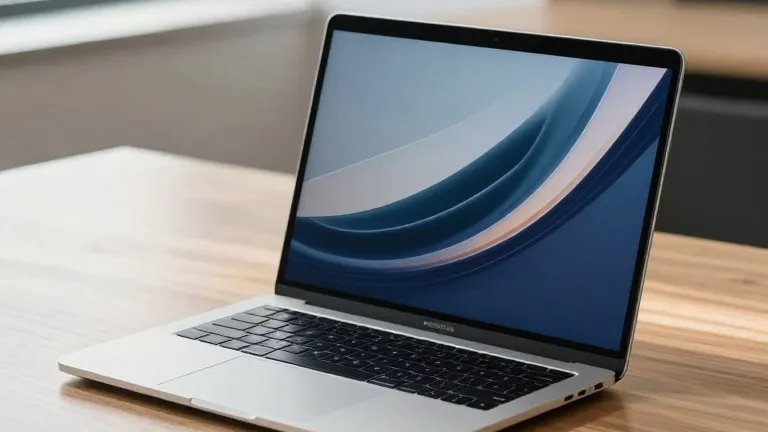
Apple is set to unveil a fully redesigned MacBook Pro on October 28, according to reports. The new model will feature a lighter chassis and an OLED display with touch capabilities. However, the laptop will rely on the M5 Pro and M5 Max chips that first appeared nearly eight months ago. This means the machine will offer no increase in processing power over current models.
The event, dubbed "Pro and tell," marks a shift in Apple's hardware roadmap. Mark Gurman, who provided the reporting, noted that the company is skipping the M6 Pro and M6 Max processors entirely. Instead, Apple is fast-tracking the M7 Pro and M7 Max for release in 2027. The upcoming MacBook Pro will occupy the gap between these generations, relying on existing silicon to bridge the wait.
Design changes are expected to be substantial. The new industrial design is described as significantly lighter and slightly thinner than the current version. The display will drop the traditional notch in favor of a Dynamic Island. Touch input will also be added to the OLED screen, a first for the MacBook Pro line. A C2 cellular modem is a less certain possibility that has been floated as a potential feature.
Pricing remains an open question for consumers. The MacBook Pro is already an expensive product, and the redesign may carry a premium. Reports suggest the starting price could reach approximately $2,999. This price point would require buyers to pay more for a machine that is no faster than its predecessor. While Apple could theoretically replace the current M5 Pro and M5 Max models at the same price, analysts consider that unlikely given the current memory crisis.
The launch presents a challenge for Apple's marketing team. Professional users who held off on purchasing an M5 Pro or M5 Max machine earlier this year will need a compelling reason to switch. The design improvements must be enough to justify the cost without a performance boost. Apple has not confirmed the rumored details, but the October 28 event will clarify how the company positions this redesigned hardware.
The decision to reuse existing chips reflects a strategic pause in Apple's silicon development. By skipping a generation, the company aims to accelerate the arrival of more advanced M7 processors. For buyers in the next week, the choice will hinge on design preferences and display technology rather than raw computational speed.