Arsenic hits 30x safe limit in Thai river linked to Myanmar mines
More than 20,000 households in Chiang Rai province have lost safe tap water as contamination from cross-border mining spreads down the Sai River.
By Beatrice Gray ·
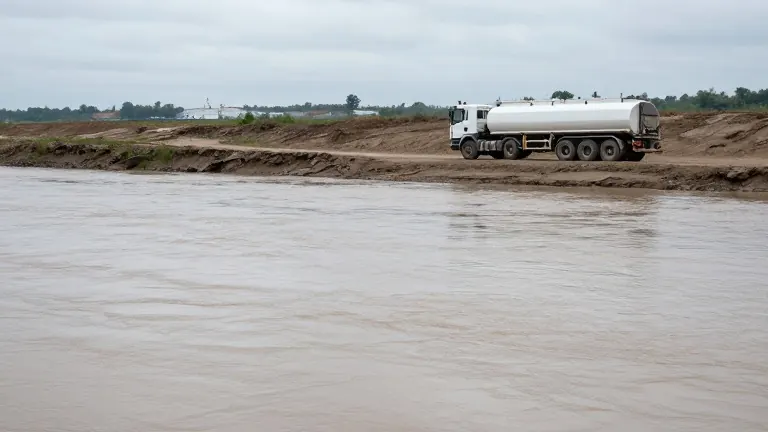
Water quality in northern Thailand has deteriorated sharply, with arsenic levels in the Sai River reaching 30 times the safe drinking limit. This spike has forced authorities to cut off tap water service to over 20,000 households in Chiang Rai province. The contamination traces back to mining activities across the border in Myanmar.
The crisis began escalating in early November when officials suspended service in 14 villages within Mae Sai district. These communities are located near the Myanmar border. Laboratory tests confirmed that the local waterworks were producing water with dangerously high arsenic concentrations. The situation worsened when untreated water drawn directly from the Sai River tested at 25 times the standard limit.
Prime Minister Anutin Charnvirakul ordered a rapid response late Tuesday. Deputy government spokeswoman Lalida Persvivatana said the prime minister directed agencies to find alternative water sources. He also mandated close monitoring of tap water quality across the province. Two trucks are currently distributing clean drinking water to affected residents while officials evaluate other rivers for potential use.
Scientists at Naresuan University identified the source last week. Their chemical analysis and satellite modeling linked the sediment to gold mining operations on the Myanmar side of the border. The study noted that a surge in rare earth mining in rebel-held areas is driving the pollution. These operations supply processing plants in China and rely on unregulated extraction due to Myanmar's ongoing civil war.
Thai Foreign Minister Sihasak Phuangketkeow described the situation as a "dramatic" increase in pollution during a visit to Myanmar last week. He pointed to "wastewater from mining" and called the issue an "urgent matter that needs urgent attention." The Thai government has also discussed the problem with Beijing, acknowledging that many of the mining sites are Chinese-run.
Concerns are expanding as the contamination moves downstream. The Sai River is a tributary of the Mekong River, a waterway that supports millions of people across several countries. In October, tests found arsenic in the urine of 17 out of 177 people sampled in Nong Khai province. That area sits on the border with Laos, suggesting the heavy metals are traveling far from the original source.