Blocs Clash Over Minority Rule as Israeli Speaker Replacement Looms
Eisenkot pushes to replace Ohana before any coalition talks while Lieberman and Bennett reject governing without a full majority.
By Beatrice Gray ·
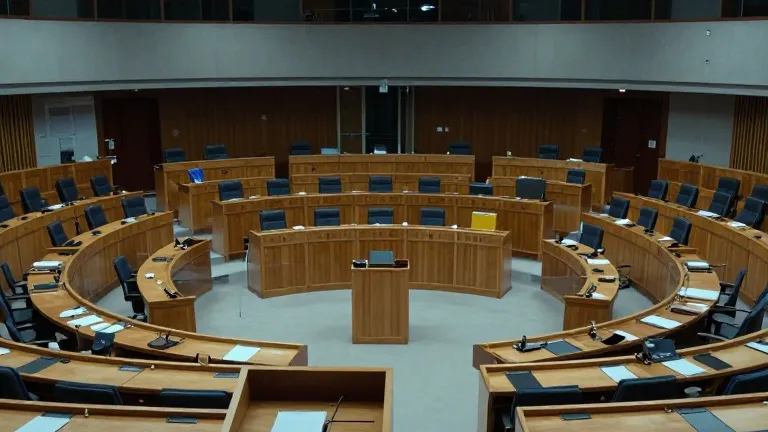
Gadi Eisenkot is pressing to lead Israel's opposition bloc and has proposed forming a government if anti-Netanyahu parties win 58 or 59 seats in the coming Knesset election. His plan would see a cabinet sworn in after a confidence vote without permanent backing from 61 lawmakers, then widen its support later. Under Israeli law, forming a government needs only a majority in the confidence vote, so abstentions could carry it through; removing an incumbent by constructive vote of no confidence still requires 61 backers.
Polls place the opposition ahead of the outgoing coalition, but current agreements among the Zionist parties seeking change fall short of the 61 seats needed to govern. Netanyahu's bloc is also short in many surveys, though some polls give the right wing enough seats. The electoral threshold could shift the seat count, and a small number of votes will decide whether Israel gets a government or another round of turmoil.
Two figures in the bloc reject the minority route. Avigdor Liberman of Yisrael Beytenu refuses any minority government even as a transitional measure and insists on a Zionist majority from the start, adding that a fresh election beats a government failing his conditions. Naftali Bennett and Yair Lapid of the Beyachad list demand a Zionist government and will not rely on Arab party votes or abstentions. Democrats chairman Yair Golan has not ruled out working with Ra'am, and Eisenkot has not excluded outside support from that party, though no agreed formula exists. A meeting this week between Eisenkot and Liberman produced a joint call for higher turnout but did not settle their disagreement. Both men seek the top job, with Eisenkot hoping to head the largest party and Bennett citing his prior tenure as prime minister.
The bloc is also moving to replace Knesset Speaker Amir Ohana before any coalition deal is struck. Control of the parliamentary agenda would follow even if Netanyahu stays on as caretaker prime minister. The speaker is chosen by public vote early in a new Knesset term, and Arab party lawmakers could supply votes for an agreed candidate. Names raised include Chili Tropper, Matan Kahana and Elazar Stern from Eisenkot's list; Meirav Ben-Ari and Eitan Ginzburg from the Bennett-Lapid list; Efrat Rayten of the Democrats; and Oded Forer of Yisrael Beytenu. No consensus candidate has been announced. Liberman estimated this week that up to one-third of outgoing coalition lawmakers might vote against Ohana, though they would have to do so in public.
Party teams have started coordinating on a state commission of inquiry into October 7, changes to conscription law, limits on a prime minister's tenure and repeal of some judicial changes enacted by the outgoing government. Liberman also seeks to bar people facing criminal charges from serving as prime minister. No binding agreement covers the details or the order of that work.