FCC grants Intel temporary license to operate foreign-made factory vehicles
The chipmaker sought the exemption to clarify whether its automated guided vehicles fall under new restrictions on mobile robots.
By Maya Bauer ·
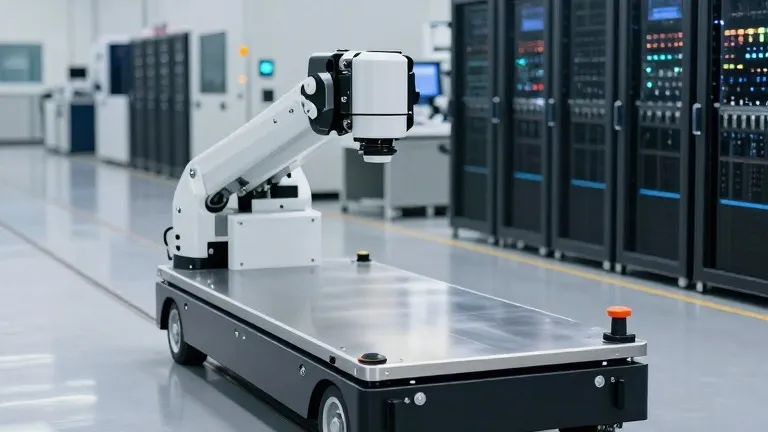
The Federal Communications Commission has finalized new rules restricting certain foreign-made mobile robots, creating regulatory ambiguity for industrial manufacturers. On October 22, the agency issued a formal order granting Intel a one-year waiver to continue operating specific robotic equipment in its United States semiconductor plants.
Intel requested the exemption to resolve uncertainty regarding its fleet of automated guided vehicles. In its filing, the company stated that it was unclear whether these machines qualified as robots covered by the new ban. Intel described the request as a precautionary measure to ensure its factory operations would not be disrupted if the rules were interpreted broadly.
The equipment in question consists of automated guided vehicles that transport materials and items along tracks or predefined paths. These machines typically require oversight from a human operator. Bloomberg News reported that such vehicles are commonly manufactured by Japanese firms like Murata Machinery and Daifuku Co., though the specific models used by Intel were listed in a confidential appendix and remain unnamed in the public record.
The FCC’s new regulations primarily target newly designed mobile robots, including humanoids and consumer devices like robot vacuums. Robots previously approved for sale in the U.S. may still be imported. However, the rules impose limits on major modifications to previously authorized devices, a provision that added complexity for companies maintaining existing industrial fleets.
The waiver authorizes Intel to make specific hardware, software, and firmware changes to maintain the vehicles during the one-year period. This allowance ensures the machinery can continue to function and receive necessary upkeep while the regulatory question is resolved.
The decision clarifies that Intel’s operations are protected for the next twelve months. The agency’s order serves as a specific legal allowance for the identified equipment, preventing the new robot restrictions from halting chip production at Intel’s domestic facilities during the waiver period.