Retired Man Keeps Loaded Gun By Bed
Laura Prater’s interview with a 72-year-old in Seattle highlighted a common risk: unsecured firearms in homes of older adults with cognitive decline.
By Maya Bauer ·
Laura Prater, a firearms researcher at Ohio State University, saw a 72-year-old retired health administrator on a Zoom call last week. The man lived alone near Seattle and had been diagnosed with depression and mild cognitive impairment. When Prater asked if he kept a gun in his home, he confirmed he did.
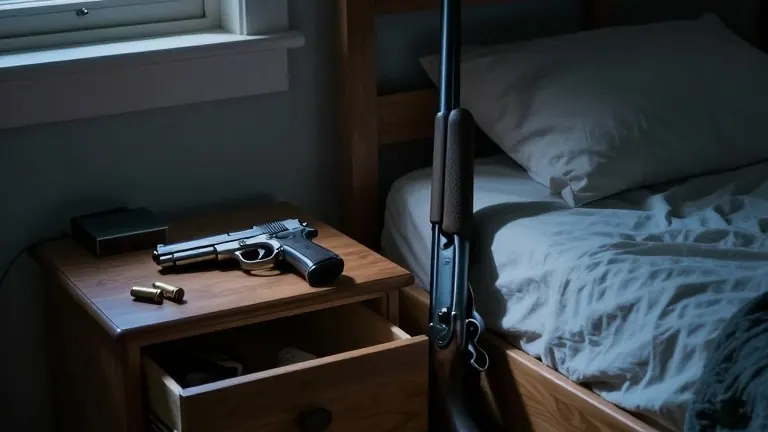
The interview revealed that the man still owned a shotgun used for bird hunting years ago. He also recently acquired a .45-caliber pistol. According to Prater, the pistol was kept loaded in a nightstand drawer. The shotgun, while unloaded, was propped up against the bed with shells resting on the nightstand.
“He kept it loaded in his nightstand drawer,” Prater said. “The shotgun, he propped up by his bed.” She noted that the man viewed the weapons as practical tools for self-protection because he lived alone. Prater described the setup as alarming but not uncommon.
Public health experts estimate that at least a third of people with dementia have access to firearms. Research indicates that more than 90% of gun deaths among people 65 and older are suicides. In 2014, the Centers for Disease Control and Prevention recorded 8,226 firearm deaths in this age group, which equates to nearly 23 deaths per day.
Researchers are now focusing on individuals with subjective cognitive decline, a stage before a dementia diagnosis. A survey across seven states found that a third of those 65 and older with such decline reported having a gun at home. A quarter of them did not store the weapons securely. Kelsey Conrick, a researcher at the University of Washington, noted that these individuals face risks of suicide, accidental discharge, and mistaken shootings.
Conrick’s Pathways 2 Safety program has distributed over 1,000 locking devices since March. The program works with community agencies to integrate firearm safety into routine healthcare. Meanwhile, Marian Betz, an emergency physician at the University of Colorado Anschutz, leads an initiative called Safety in Dementia. This online tool helps caregivers prepare for difficult conversations about household hazards.
Betz published a study in 2020 showing that only 5% of caregivers for people with dementia said a healthcare professional had discussed firearm safety with them. Patients often do not disclose gun ownership to doctors, fearing that a diagnosis of depression or dementia might lead to weapon confiscation. Only 22 states and Washington, D.C., have extreme risk protection order laws that can temporarily restrict firearm access.
Lena Makaroun, a geriatrician at the University of Pittsburgh, recounted a 2019 case involving a patient in his 80s with memory loss. After a cognitive test confirmed impairment consistent with dementia, Makaroun discussed the results with the patient and his son. The next day, the son told Makaroun that his father had been found in the basement with a gunshot wound to the head.