Stalled Tankers Reveal Real Challenges on the Arctic Shipping Lane
A recent ice jam in the Vilkitsky Strait highlights the gap between political promises and the operational reality of using Russia's Northern Sea Route for trade.
By Maya Bauer ·
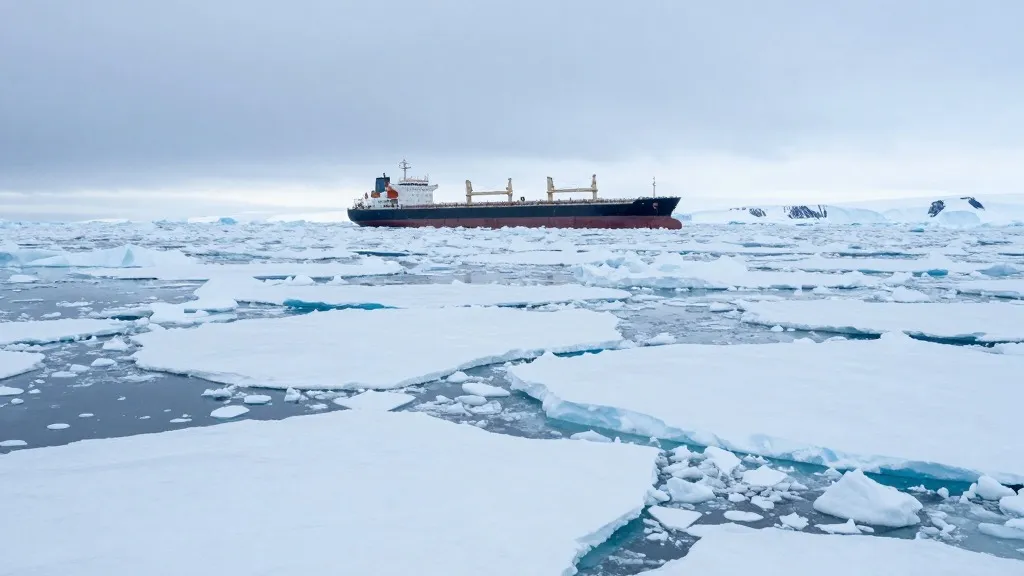
For working families and businesses relying on global supply chains, the reliability of shipping routes is a critical factor in cost and stability. A recent incident in July, where sanctioned Russian tankers became trapped in ice in the Vilkitsky Strait, underscores that the Northern Sea Route is not yet the effortless shortcut some officials claim. The strait, a narrow corridor about 55 kilometers wide near the Siberian coast, proved difficult to navigate even with the aid of nuclear-powered icebreakers. While one vessel eventually made it through, the others waited for up to two weeks before abandoning the passage for an alternative path.
This event follows a period of aggressive promotion by the Kremlin. President Vladimir Putin has long described the route as a safe gateway to major markets. Speaking at a project launch last month, he noted that 37 million tons of cargo moved along the route in 2025 and predicted this volume would nearly double by 2030. These figures contrast with earlier targets set in 2019, which aimed for 80 million tons by 2024. The discrepancy suggests that while interest is growing, the infrastructure and conditions have not yet caught up with the political ambitions.
Independent data paints a more cautious picture. The Norway-funded Center for High North Logistics reported that Russia shipped approximately 2 million tons of oil, or 15 million barrels, along the full route by the end of September. By mid-October, traders estimated the total had reached 20 million barrels. Although this represents a 50 percent increase from 2025, it still accounts for only about 1 percent of Russia's total seaborne oil exports. Tomas Alexa of Ambrey noted that this growth is significant but stems from a relatively low starting point.
Western sanctions have added complexity to the operations. Spare parts and construction materials for Arctic-capable vessels often must be routed through third parties. Additionally, repair services previously provided by Norwegian, Danish, and Dutch firms are no longer available, limiting the fleet's readiness. Despite these hurdles, other nations are testing the waters. South Korea reported on October 22 that its first container ship had successfully used the route, while China completed its first scheduled container service to Europe this year.
The increasing activity raises questions about governance and security. Catherine Sendak of the Center for European Policy Analysis highlighted uncertainties regarding tolls and the services Moscow offers to commercial vessels. She suggested that Russia might eventually limit access for other actors. Meanwhile, security concerns are intensifying. EU foreign affairs chief Kaja Kallas described the Arctic as a front line of global power competition in a new strategy outline. NATO launched its Arctic Sentry mission in February, and the United States recently announced plans to expand its military presence in Greenland.
Environmental risks also loom large for this expanding trade corridor. Ksenia Vakhrusheva of the Bellona group explained that melting ice can pack tightly in narrow straits, blocking ships without specialized ice classes. She warned that oil spills are particularly damaging in cold conditions because the crude degrades slowly and spreads over the ice. Since Russia publishes little information on incidents in this remote area, independent monitoring remains difficult, leaving the environmental impact largely unverified.
The coming months will test whether the Northern Sea Route can maintain its momentum. As more non-Russian vessels enter the corridor, the balance between commercial opportunity and operational risk will become clearer. For now, the July jam serves as a reminder that the Arctic remains a challenging environment, and the promised ease of navigation is still a work in progress.