Treason charge: Ex-official faces trial after U.S. operation
A former state official in Mexico is accused of authorizing a mission that resulted in the deaths of two American operatives.
By Beatrice Gray ·
A federal judge in Mexico is expected to rule on Saturday regarding whether a treason indictment can proceed against César Jáuregui, the former attorney general of the state of Chihuahua. The potential trial would center on allegations that he authorized a joint mission involving U.S. agents without clearing the plan with the federal government in Mexico City. Jáuregui was arrested on October 17 regarding state charges of illegal exercise of public office, and a judge ruled Thursday on October 22 that those specific accusations can move forward.
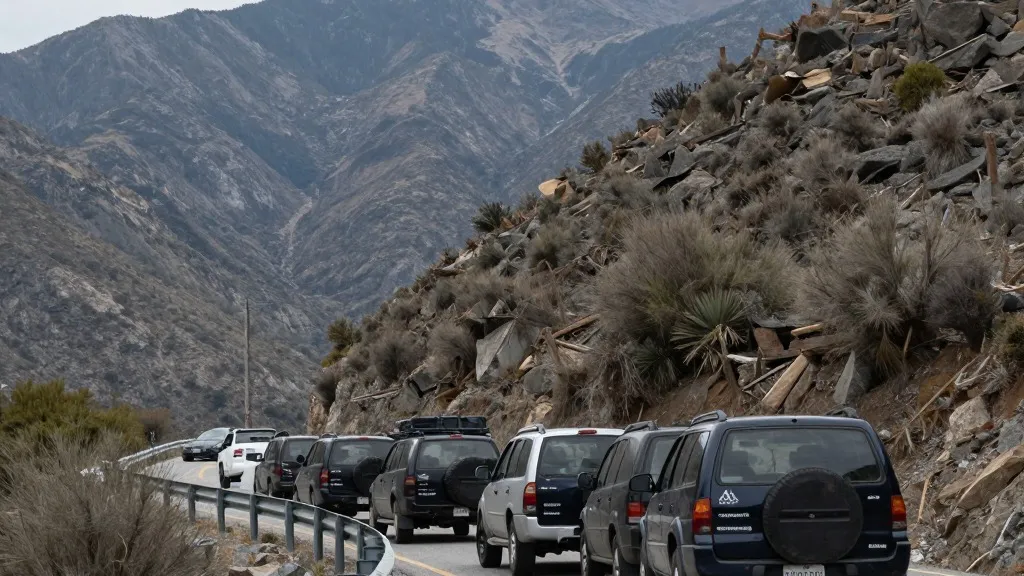
The legal trouble stems from an operation conducted in April aimed at dismantling a drug laboratory in the mountains of Morelos. The Chihuahua Attorney General's Office announced on April 19 that the facility had been neutralized. During the convoy's return trip, however, one vehicle veered off the road and crashed into a ravine, resulting in fatalities. Two Mexican state officials, identified as Pedro Román Oseguera Cervantes and Manuel Genaro Méndez Montes, perished alongside two Americans.
Federal prosecutors assert that Jáuregui compromised national security by sanctioning the presence of U.S. agents in a field operation, a decision they maintain is the exclusive responsibility of the federal government. The treason charge carries a potential sentence ranging from 5 to 40 years, though legal experts have noted the difficulty of proving such a case. Héctor Villasana, Jáuregui's defense attorney, stated that prosecutors argued for a harsh punishment during a closed hearing to avoid situations similar to the U.S. removal of Venezuelan President Nicolás Maduro. The U.S. State Department acknowledged it is watching the matter but did not link the legal proceedings to the deaths.
The identities of the Americans involved in the crash have been a subject of varying descriptions. While U.S. Ambassador Ronald Johnson referred to them as embassy personnel, individuals familiar with the details have identified them as CIA agents. The CIA declined to comment on the matter. Mexico's security ministry reported that one individual entered the country as a visitor and the other with a diplomatic passport, but neither possessed the necessary accreditation for operational activities. The U.S. Embassy in Mexico did not immediately respond to a request for comment.
Observers have questioned the legality of the operation in light of President Claudia Sheinbaum's stance on national sovereignty. The president has previously amended the Mexican Constitution to prohibit field operations conducted by foreign agencies without explicit authorization. Sheinbaum stated that none of the U.S. personnel involved were permitted to operate in Mexico, and that two other American agents traveling in a separate vehicle were later expelled from the country.
Jáuregui resigned from his position shortly after the incident to allow for an official inquiry. Federal officials subsequently added the treason charge. Samuel González, a former chief prosecutor for organized crime, expressed doubt that the charge would hold up in court, suggesting that while the former official may have failed in his duties by not notifying federal authorities, such negligence does not constitute treason, which he described as a wartime crime.
The case has drawn attention to the involvement of foreign agencies in domestic law enforcement. Former President Andrés Manuel López Obrador previously restricted such activities, and the current administration has emphasized strict adherence to constitutional rules regarding foreign agents. The decision regarding the treason indictment is anticipated to be announced on Saturday, October 24.
Legal experts and political analysts have weighed in on the potential consequences of the charges. Carlos Pérez Ricart of the CIDE university characterized the prosecution as a political decision linked to the upcoming 2027 midterm elections, regardless of the legal outcome. He noted that the matter sends a very bad signal to Washington. The U.S. State Department confirmed it is aware of the situation.