Tao calls AI math output toxic waste
Terence Tao predicts a 'Big Math' era of collaboration but criticizes big tech firms for discarding AI-generated proofs without proper context.
By Bianca Ruiz ·
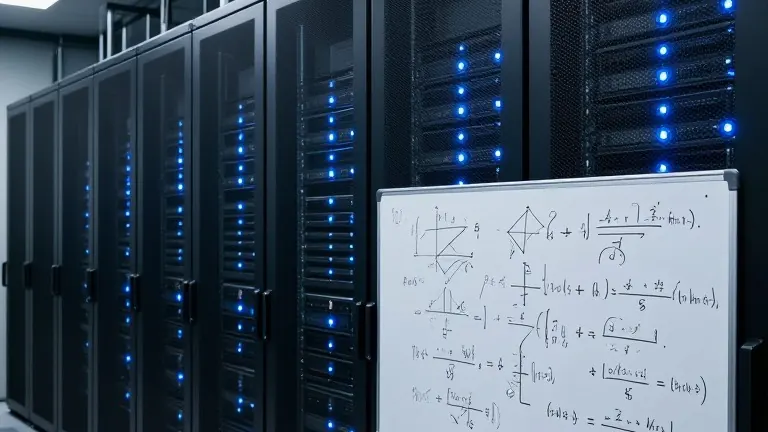
Terence Tao described a future where artificial intelligence transforms mathematical research into a massive, collaborative industry. In a recent interview on the Hard Fork podcast, the Fields Medalist compared this shift to the established 'Big Science' model. He expects mathematicians to work in larger groups, with postdocs and PhD students leading complex projects because AI tools allow them to enter difficult topics more quickly. Human and AI teams could systematically map thousands of problems instead of solving them one by one.
Tao has discussed the 'industrialization of mathematics' since 2024. He views the current capability of AI models as a precursor to this larger structural change. The models can solve open problems and contribute technically to the field. However, Tao argues that the output lacks genuine understanding and clear explanation.
He labeled these AI-generated proofs as 'toxic waste' for major technology companies. In his view, firms treat the proofs as an unwanted byproduct of training better models. They perform minimal cleanup on the results before discarding them. This criticism aligns with his actions in October, when Tao and other mathematicians called for a boycott of OpenAI.
Tao also criticized AI-generated papers currently flooding academic journals. While some of these papers solve open problems, he said they often fail to open new research directions. He noted that the citations are sloppy, the explanations are poor, and the writing is not enjoyable to read. He believes the current output is a rough draft rather than a finished product.
Tao hopes that AI will eventually provide the 'first awful solution' to difficult problems. He expects humans to take that initial output, structure it properly, and place it into clear context. This process would turn raw computational power into usable mathematical knowledge.