Server Revenue Surge: Dell and HPE earnings reveal memory price dependence
Dell and HPE reported record revenues driven by higher prices for memory and servers, despite falling unit volumes and thinner margins ahead of them.
By Bianca Ruiz ·
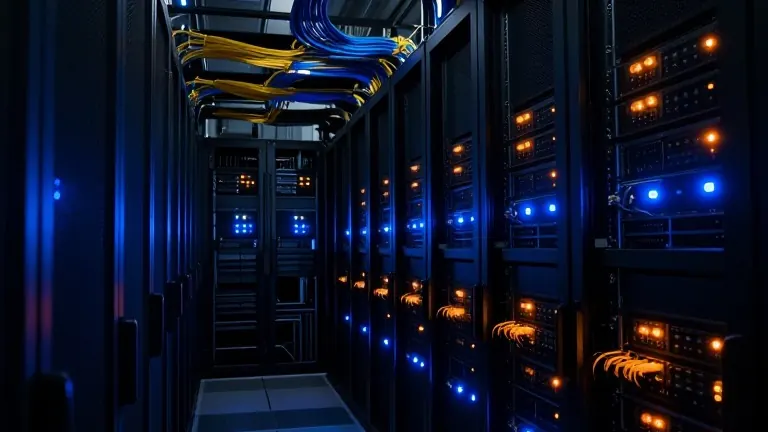
Dell Technologies and Hewlett Packard Enterprise told investors on consecutive days that their businesses have fundamentally changed. Both companies credited artificial intelligence for the shift, but the financial data points to a different primary driver: a global shortage of memory components that has inflated server prices.
Antonio Neri, CEO of HPE, stated during the fiscal fourth-quarter earnings call that the company is now a fundamentally different entity. Jeff Clarke, Dell’s vice chairman and chief operating officer, used nearly identical language the following day when presenting Dell’s third-quarter fiscal 2027 results. While Neri linked HPE’s transformation to its acquisition of Juniper Networks, Clarke pointed to the Infrastructure Solutions Group, or ISG, which now generates the majority of Dell’s profit.
HPE reported revenue of $14.5 billion, a 50 percent increase from the prior year. The Cloud and AI segment drove most of that growth, rising 68.6 percent to $11.3 billion. Within that segment, server revenue nearly doubled to $8.8 billion. Networking revenue, which includes the Juniper business, grew a more modest 12 percent to $3.06 billion. Operating margin for networking slipped from 23.4 percent to 22.1 percent.
The surge in HPE’s server line came despite lower unit volumes. Marie Myers, HPE’s chief financial officer, noted that higher average selling prices offset the drop in shipments. This dynamic aligns with a wider market trend where memory prices have risen sharply. HPE booked its first order for the AMD Helios rack-scale platform in September 2026, a $1.2 billion deal with Vultr. The company targets $800 million in annual savings from Juniper integration by fiscal 2028.
Dell’s figures show an even starker divergence between unit counts and revenue. Total revenue more than doubled to $54.9 billion. The ISG segment grew 198 percent to $42.0 billion, while the PC-focused Client Solutions Group grew only 3 percent to $12.9 billion. The ISG accounted for approximately 91 percent of the combined operating income of the two segments, contributing $7.1 billion against $704 million from the client group.
Clarke acknowledged that server units were down while revenue tripled. He attributed the revenue gain to richer configurations that include more processing cores and dynamic random access memory per server. He described the market as experiencing major unit total addressable market destruction due to inflation. Traditional server and networking revenue rose 235 percent to $15.0 billion, while AI-optimized servers brought in $22.0 billion, up 291 percent.
The PC division suffered as customers prioritized server and storage purchases. David Kennedy, Dell’s CFO, explained that the company moved some PC manufacturing wafers into server supply for the latter part of the year. Global PC shipments fell 20 percent year over year in the third quarter, according to IDC data. The client group’s operating margin slipped to 5.5 percent.
Both companies warned that current pricing conditions may not last. Myers stated that HPE’s Cloud and AI segment margin of 18.4 percent benefited from favorable pricing, and she cautioned that costs are increasing faster than prices as the AI server mix grows. HPE guided the segment’s fiscal 2027 margin to approximately 14 percent. Shares fell 16.3 percent the day after the earnings release.
Dell ended the quarter with a record $132.3 billion AI backlog after booking $60.2 billion in new orders. Clarke said most new orders are for Nvidia’s Vera Rubin NVL72 systems. He expects the memory crunch to continue into 2027, while Neri projects that memory and NAND constraints will persist until at least the second half of 2028.
More Business · Buyer Beware · Report a business · Got a Story?