Washington Banks on Fusion Chips to Secure Grid Future
A new federal grant aims to bolster the semiconductor supply chain needed for the next generation of power plants.
By Beatrice Gray ·
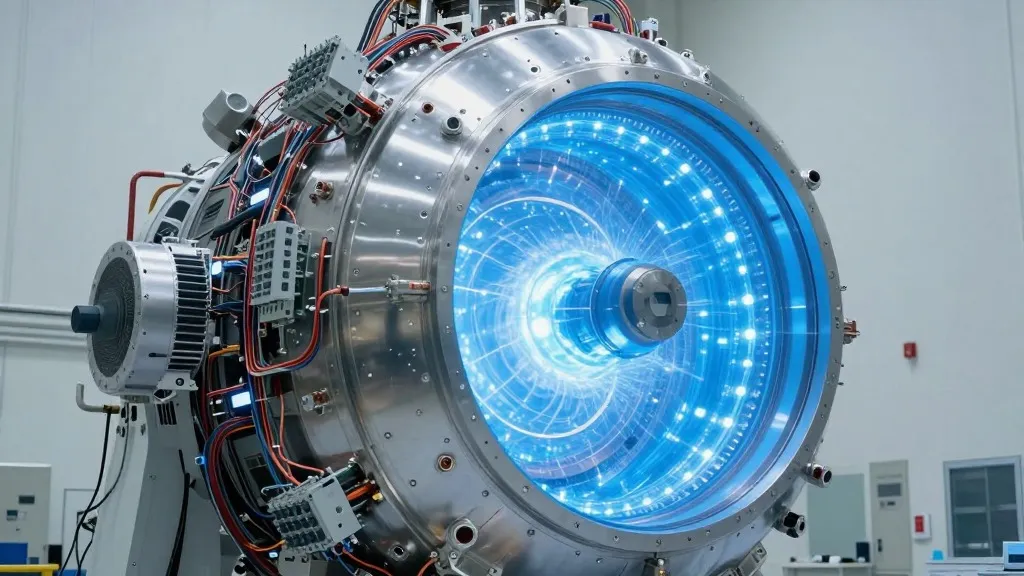
The tension surrounding the next era of electric power lies in a specific hardware bottleneck. While the physics of fusion has advanced, the market lacks the robust power electronics required to scale the technology from laboratory proof points to commercial utility. Commonwealth Fusion Systems has secured a major federal investment to address this gap, signaling a shift in how the U.S. government views its role in the fusion economy.
On Thursday, the company confirmed it will receive 85 million dollars from the U.S. government. This capital is part of the broader CHIPS Act initiative administered by the Department of Commerce. The deal is not just a grant; it grants the federal government an equity stake in the private entity. The company stated that these resources will deepen research efforts and broaden the domestic production capabilities for specialized chips.
This financial move lands during a critical period for the sector. Startups are currently focused on completing their initial demonstration reactors. Commonwealth Fusion Systems expects to energize its Sparc reactor within the coming year. However, a single operating machine serves primarily as a scientific validation. To build the dozens of plants required to impact the national grid, industry leaders require more durable components and a reliable domestic supply chain.
Brandon Sorbom, the co-founder and chief science officer, emphasized the dual benefit of the investment. He noted in a company blog post that the goal is to create a more capable and economical power plant while simultaneously strengthening the American supply chain that constructs it.
The 85 million dollar package is allocated to five distinct technical initiatives. The primary focus is the advancement of silicon carbide power electronics. These semiconductors are already prevalent in high-voltage applications, ranging from light-emitting diodes and electric vehicles to telecommunications infrastructure and data centers. In the context of fusion, they are essential for managing the intense electrical bursts that power the superconducting magnets used to contain plasma.
A second pillar of the award supports the development of next-generation radio-frequency power generators. These systems are critical for heating the fusion fuel to the necessary temperatures. A third effort targets advanced control electronics. These components are designed for faster reactor management and are specifically hardened to withstand radiation exposure. The company argues that this radiation resistance will extend the operational life of internal parts, thereby lowering long-term operating costs.
The final area of investment involves adapting existing artificial intelligence hardware, such as graphics processing units and tensor processing units, for use within power plant environments. This integration represents a convergence of computing and energy infrastructure, ensuring that the control systems can handle the complex data flows required for stable fusion operations.
Sorbom suggested that this funding creates a positive feedback loop for the broader tech sector. By improving the domestic chip and power electronics industries, the government simultaneously accelerates the timeline for fusion energy to reach the electrical grid.
Looking ahead, the next twelve months will be pivotal. As the Sparc reactor approaches its startup phase, the focus will shift from pure physics to industrial scalability. The success of these chip initiatives will determine whether fusion can transition from a high-stakes experimental field to a stable source of commercial electricity.
More Business · Tech news · Buyer Beware · Report a business · Got a Story?