House Fight Hinges on Three Seats as New Maps Reshape Battleground Districts
Democrats need a net gain of three districts to take control, but 46 competitive races and new maps in seven states complicate the path to a majority.
By Beatrice Gray ·
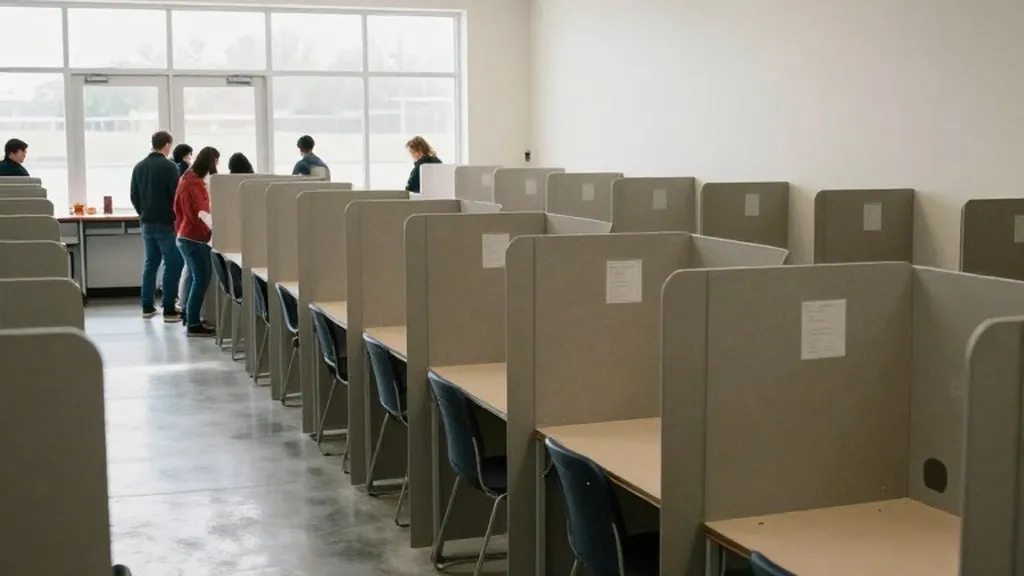
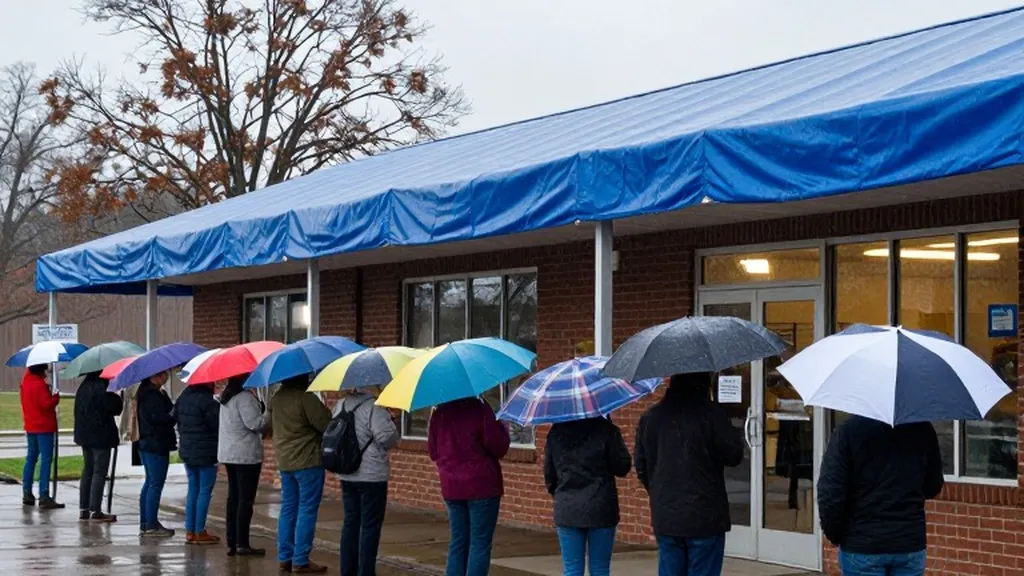
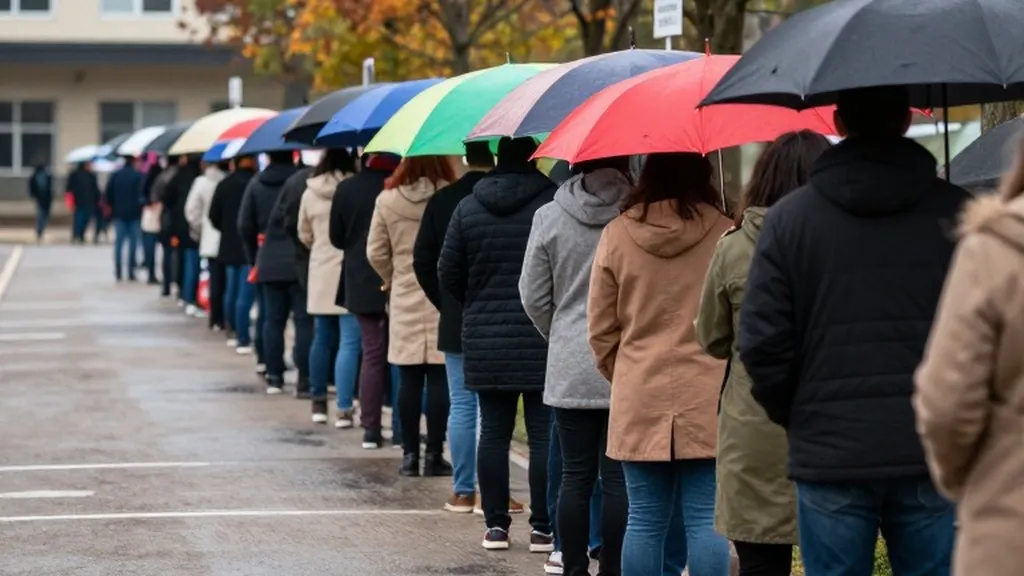
Voters across the nation are casting ballots for all 435 seats in the U.S. House of Representatives on this Election Day. The Associated Press describes the election as a referendum on President Donald Trump's second term, with many voters focused on high prices and an unpopular war with Iran. The outcome will determine which party controls the lower chamber for the final two years of the current administration. Republicans currently hold 218 seats while Democrats hold 214, leaving one independent seat and some vacancies to be filled. This narrow margin sets a high bar for the party seeking to take control of the House.
For Democrats to secure a majority, they must achieve a net gain of three districts from their current position. This means they must flip at least three more seats than the Republicans lose. Conversely, Republicans can afford to lose only two seats to maintain their majority. Ballotpedia identifies 46 battleground districts in this cycle, a figure that reflects the competitive nature of the race. Of these, 25 are currently held by Democrats and 21 by Republicans. The close margin between the parties makes every single vote in these districts potentially decisive for the final count.
The landscape of these races is complicated by new congressional maps in seven states. California, Florida, Missouri, North Carolina, Tennessee, and Texas are using new district lines, and Ohio is also utilizing a revised map. These changes were the result of mid-decade redistricting efforts. Democrats argue that these new maps present an obstacle, as Republicans spent significant time and resources drawing lines that favor their candidates. However, the AP notes that new districts in Florida and elsewhere may not vote as they were originally drawn, adding a layer of uncertainty to the final results.
Money plays a significant role in this election, which is likely to be the most expensive in history. Republican committees outraised and outspent Democratic committees, aided by Trump-affiliated groups and contributions from Elon Musk. An AP analysis of AdImpact data shows that 88.1% of Republican general election TV ad spending went to states and districts that Trump won in 2024. This includes more than $850 million spent in areas where he won by 10 points or more. Democrats, however, outraised their opponents at the candidate level, focusing resources on the specific districts they hope to flip.
The political mood is tense as polls remain open. More than 57 million people had already voted as of Monday, surpassing the early vote totals from four years ago in many closely watched states. President Trump held dozens of rallies, ending his schedule in Salina, Kansas, where he told voters to pretend he was on the ballot. His administration has also made false claims about voting fraud and sued in Alaska and California, leading some Democrats to fear interference. A federal judge temporarily barred the administration from carrying out a plan to prevent noncitizen voting, a move critics say risks disenfranchising eligible voters.
Democratic leaders are cautiously optimistic about their chances. House Democratic Leader Hakeem Jeffries has outlined a 100-day agenda focused on the cost of living and oversight if his party wins. He would become the first Black speaker of the House. The cost of living remains a central issue, with AP-NORC polling showing that 25% of U.S. adults approve of the president's handling of the economy. Most respondents blame him for high prices. A voter in Raleigh, North Carolina, named James Moore, said he is paying more taxes, more for healthcare, and more for everything, capturing the sentiment of many in the Democratic base.
Republicans are bracing for the possibility of losing the House, a pattern common in midterm elections. RNC Chairman Joe Gruters stated that everything depends on turnout, noting that if they turn out their voters, they win. The party has tried to beat the historical trend by leveraging redistricting and heavy spending. However, the new maps in states like Texas and California may not provide the expected advantage. The AP notes that one or two seats could tip the balance in either chamber, making the final margin a matter of intense scrutiny as polls close.
The fight for the House is not just about the number of seats but also about the composition of the new map. The 21 Democratic-held districts that voted for Trump in 2024 are particularly vulnerable, while the nine Republican-held districts that voted for Kamala Harris offer opportunities for Democrats. The interplay between the new district lines and the current incumbents creates a complex strategic challenge. Sixty House incumbents are not running again, with 37 Republicans and 23 Democrats leaving their seats. This turnover adds to the uncertainty, as new faces are introduced in many of the competitive districts.
As voters head to the polls, the focus remains on the three-seat margin that separates control of the House. The 46 battleground districts will be the primary arena for this contest. The new maps in seven states have altered the playing field, requiring both parties to adapt their strategies. The Associated Press reports that the election is a critical test for both parties, with the potential to shape the direction of the country for the next two years. The final results will reveal whether the Democrats can overcome the Republican money edge and the challenges posed by redistricting.
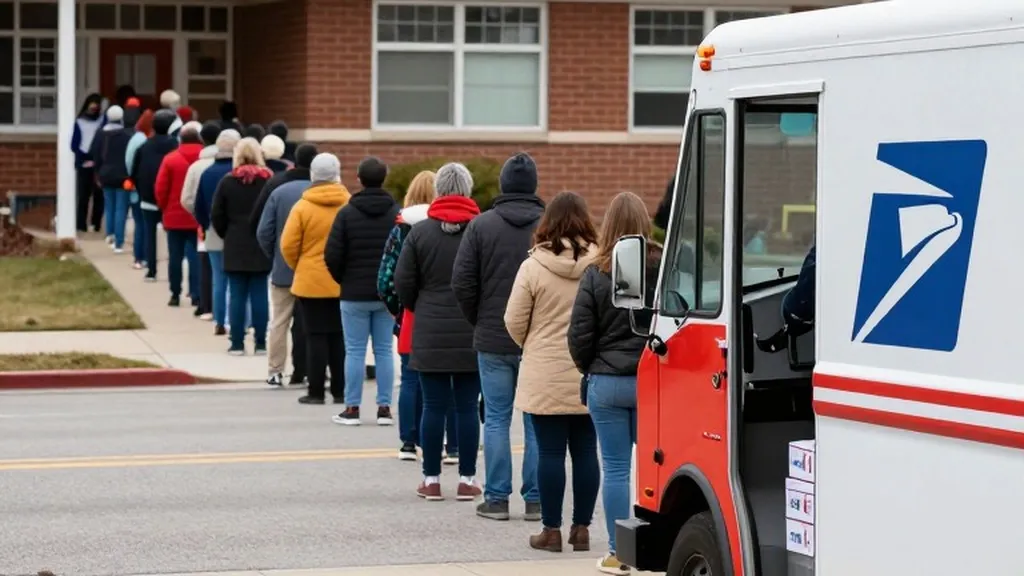
The administration of the election has also been a point of contention. The U.S. Postal Service added hours, staff, and special lines to ensure mail ballots are counted on time. A judge ordered the administration to stop demanding that California election officials segregate ballots cast by people on lists of suspected noncitizens. These administrative details are crucial as the country waits for the outcome. The Associated Press highlights that the election is a moment of high stakes, with the potential for investigations and impeachment proceedings if Democrats win even one chamber. The final tally will determine the balance of power in Washington.