Democrats take both chambers as Trump-backed redistricting falls flat
Voters rejected the president's party in a wave that swept Republicans from the House and Senate, nullifying a year of strategic map changes in key states.
By Bianca Ruiz ·

Democrats have secured control of both the House of Representatives and the Senate in a decisive midterm victory, a result that fundamentally reshapes the balance of power in Washington. According to Ballotpedia, Democrats won 20 of the 35 U.S. Senate races, gaining seven seats from Republicans to achieve a majority. In the House, the party captured 227 seats, a net gain of 27 districts that ensures a strong legislative presence for the next two years. This outcome ends two years of unified Republican control and sets the stage for a divided government where the new Democratic majority will challenge President Donald Trump’s agenda.
The victory was fueled by a deep sense of voter dissatisfaction with the current administration, particularly regarding the cost of living and the ongoing war in Iran. The Associated Press Voter Poll indicated that about six in 10 voters disapproved of how Trump is handling the presidency. Many of these voters backed Democratic candidates in their local races, signaling a clear shift in public opinion. The election served as a referendum on the president’s second term, with voters prioritizing economic relief and oversight of the executive branch over the partisan dynamics of the previous cycle.
House Democratic Leader Hakeem Jeffries, who is poised to become the first Black speaker of the House, emphasized the mandate for change. He stated that the party would work hard to deliver on the dramatic change that voters deserve. His leadership team has outlined a 100-day agenda focused on lowering the costs of gas and groceries, reversing cuts to healthcare programs, and launching a robust oversight effort. This immediate plan reflects the priorities of the electorate, who cited financial hardship and government corruption as crucial factors in their voting decisions.
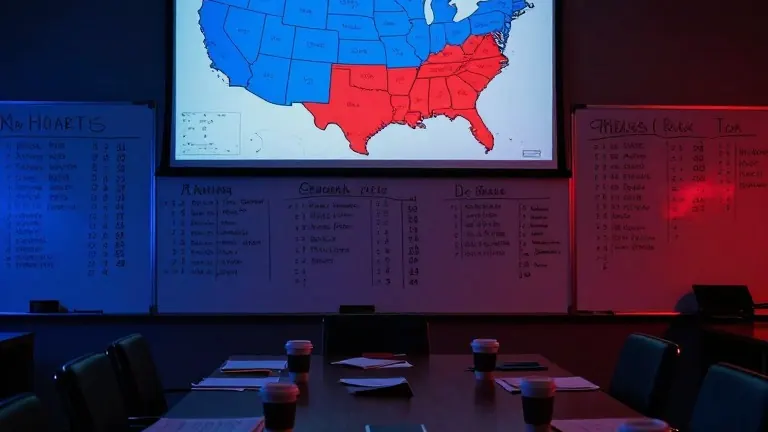
The Republican Party’s strategy to redraw congressional districts in eight states over the past year has been described as systematically dismantled. At the urging of President Trump, Republicans in states like Texas, Florida, and Alabama sought to create a more favorable map to retain a slim House majority. However, the plan failed to deliver the expected gains. Former Attorney General Eric Holder, chair of the National Democratic Redistricting Committee, noted that voters chose to elect a new Democratic majority despite the attempts to tilt the playing field. The redistricting effort, which aimed to net several additional seats, was ultimately offset by a broader Democratic surge.
In Texas, the redistricting plan fell flat in the Rio Grande Valley, where Republicans reconfigured three heavily Latino districts to target Democratic incumbents. Despite these changes, Democratic representatives Henry Cuellar and Vicente Gonzalez won reelection. Conversely, Democrats unseated Republican Rep. Monica De La Cruz in a district sandwiched between their seats. The AP Voter Poll showed a substantial shift among Hispanic voters moving away from the Republican Party compared to the 2024 election. This demographic shift proved decisive in a region where Republicans had assumed their recent gains in support would persist.
Similar results were seen in Florida and Alabama, where Democrats retained seats that Republicans had targeted for flipping. In Florida, Rep. Jared Moskowitz won reelection in a redrawn district, stating that voters were concerned about the economy and angered by the redistricting process itself. He noted that his opponents spent significant resources trying to defeat him, but the voters’ focus on daily life costs prevailed. In Alabama, Rep. Shomari Figures also won reelection, defying Republican plans that relied on a Supreme Court ruling to revert to a friendlier map. These victories demonstrated the resilience of Democratic incumbents even in newly drawn districts.
The war in Iran emerged as a significant factor in the election, with many voters viewing the conflict as a drag on Republican candidates. About six in 10 voters said the U.S. Made the wrong decision in taking military action against Iran. Vice President JD Vance publicly broke from the president’s defense of the war, blaming the unpopular conflict for the party’s losses. He questioned whether losing the Senate for the next six years was worth it, a stance that contrasted with Trump’s continued justification of the conflict. This internal disagreement highlighted the strain the war placed on the Republican coalition.
President Trump acknowledged the role of the Iran war in the party’s defeat, though he maintained that the conflict was necessary. He stated that he knew the war was going to impact the midterm elections but defended his actions as essential. The president’s approach to the aftermath of the election has been characterized by a focus on deflection, as he has historically passed the buck for midterm losses. He suggested that voters did not like the specific candidates on the ballot, a narrative that contrasts with the broader dissatisfaction with his leadership and priorities identified in polling data.
Democrats are now positioned to reassert themselves as a coequal branch of government, with the power to challenge the president and reverse course on key policies. The new majority in the Senate will allow them to play a crucial role in confirming or blocking judicial appointments and other executive actions. In the House, the party has the numbers to advance legislation and conduct investigations, with some members already hinting at the possibility of impeachment proceedings. This new dynamic creates a landscape of heightened oversight and potential gridlock, as the two parties prepare for a contentious two-year period.
The results also marked a historic shift in state-level politics, with Democrats winning governorships in states that had been reliably Republican for decades. In Texas, Democrats toppled Republicans from the top of the ballot, ending a streak of more than three decades of Republican control in statewide races. This broad-based victory indicates that the Democratic wave was not limited to national offices but extended to state legislatures and executive positions. The new control of state governments will provide additional leverage in the ongoing battle over policy and political influence.