Musk rejects 22-flight lunar fuel estimate
SpaceX chief claims six to eight tankers will suffice, contradicting a NASA safety panel's warning about Artemis IV risks.
By Beatrice Gray ·
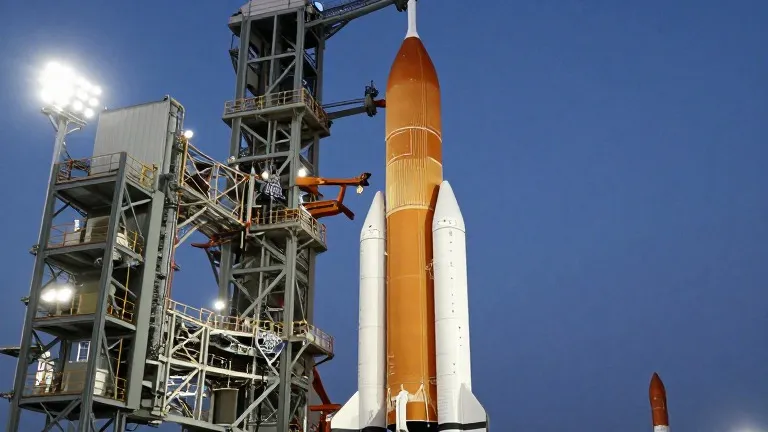
Elon Musk stated that only six to eight Starship launches are required to refuel a lunar lander, directly contradicting a recent estimate of 22 flights provided by a NASA advisory panel. The dispute centers on the logistical requirements for Artemis IV, the mission scheduled to return a crew to the Moon in 2028.
The conflict emerged during the Aerospace Safety Advisory Panel's quarterly meeting held on Thursday, October 22. Panel member Charlie Precourt, a former NASA astronaut, identified the fueling process as a primary risk for the upcoming mission. Precourt noted that the current estimate stands at approximately 22 flights, emphasizing the need for close monitoring of these repeated operations.
Musk responded to the remarks after journalist Eric Berger shared them on X. Musk described the panel's figure as "way too high" and asserted that the actual number would be significantly lower. He specifically cited a range of six to eight tankers as the realistic requirement for the operation.
The technical necessity for this orbital refueling stems from Starship's design limitations. The vehicle consumes nearly all its propellant to reach Earth orbit, leaving it insufficient for a direct trip to the Moon. SpaceX's proposed solution involves launching a depot first, followed by individual tanker Starships that dock to transfer remaining propellant. Once the depot is full, the lunar lander launches, refuels, and proceeds to its destination.
Each tanker flight constitutes a full rocket launch, making the total count a major factor in mission timeline and cost. Berger calculated that even with a high cadence of two launches per week by the end of 2027, filling a depot at the panel's 22-flight estimate would take roughly three months. A lower count would reduce this window, potentially mitigating the risk of technical failures before crew departure.
The discrepancy between the two estimates likely reflects different assumptions about vehicle capability and propellant loss. Starship stores fuel and oxygen at extreme cold temperatures, leading to slow boil-off in orbit and further losses during transfer. NASA's figure appears based on current lifting capacity, while Musk's lower range assumes a more capable version of the spacecraft. Musk has previously contested higher launch counts, calling a 2021 government estimate of 16 flights "extremely unlikely."
Precourt acknowledged that Artemis IV involves "a large number of firsts," particularly regarding the use of SpaceX's upcoming V3 Starship for refueling. He also praised the administration of NASA Administrator Jared Isaacman for efforts to clear path obstacles for both SpaceX and Blue Origin, noting that Blue Origin's Blue Moon lander does not rely on orbital refueling for its initial mission.