Ukraine Air Defenses Fail as SpaceX Throttles Starshield Speed
Two people died and 17 were injured when interceptors tracking Russian drones lost connectivity after a service slowdown.
By Beatrice Gray ·
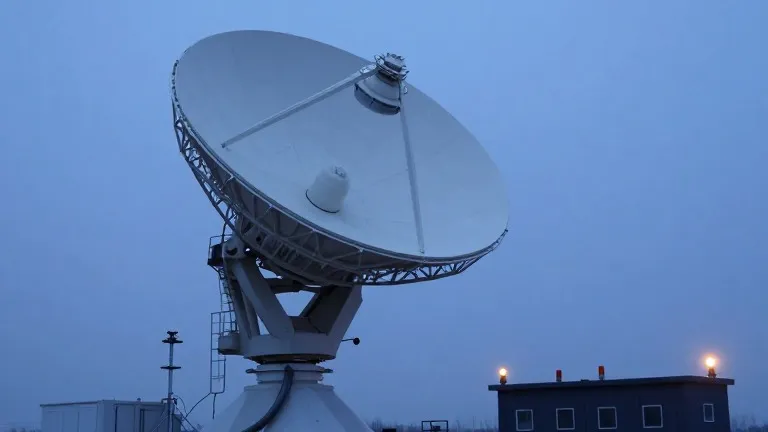
Ukrainian air defense units lost contact with Starshield terminals last week after SpaceX restricted the military network's speed, leaving interceptors unable to track Russian drones moving above a set velocity. The Ukrainian military said it received no advance warning. President Volodymyr Zelenskyy called the move a direct message from Washington as tensions rose between him and President Donald Trump. The slowdown coincided with strikes on Ukrainian energy infrastructure; two deaths and at least 17 injuries were reported.
Explanations for who ordered the change shifted over several days. Elon Musk first said SpaceX does not control Starshield and that the U.S. military makes such decisions, while the White House denied taking action. Later reports said Musk proposed the slowdown to Trump, who accepted it, and then that Musk ordered the restrictions himself. Access has since been restored in Ukraine.
Ukraine has relied on U.S. satellite connectivity throughout the war, and access has been restricted before. In 2022, coverage was not extended to support a counterattack in Crimea. The current episode has drawn attention to the concentration of launch capability in one company. Wendy Whitman Cobb of the School of Advanced Air and Space Studies at Maxwell Air Force Base said SpaceX effectively holds a monopoly on launch, noting that United Launch Alliance, Blue Origin and Rocket Lab do not match SpaceX in frequency, mass, scale or cost.
Oğuz Karasu of the Oxford Space Initiative described the monopoly as practical rather than legal. Launch accounts for about 8 percent of the space industry, he said, but the rest cannot operate without it. SpaceX has deployed more than 10,000 Starlink satellites in low Earth orbit using Falcon 9 rockets. Andrew Reddie of the University of California, Berkeley said the arrangement resembles an antitrust problem because SpaceX launches support constellations SpaceX owns, leaving little incentive to launch competing ones. SpaceX has launched some Amazon Kuiper, now named Leo, satellites. Whitman Cobb and Karasu said they have heard complaints that Falcon 9 prices for low Earth orbit are rising, and Starlink prices have climbed since its 2020 beta.
The consequences of a connectivity failure extend beyond military operations. Whitman Cobb said a GPS outage could affect fuel pumps, ATMs, financial transactions and ambulance dispatch. SpaceX is reportedly retiring the Falcon 9 and taking no new missions from 2028, leaving the Space Force searching for launch options for military satellites and raising questions about NASA's access to the Crew Dragon capsule. A Falcon 9 issue in February briefly grounded the rocket and raised concerns about the Crew-12 launch. NASA continues to back Boeing's Starliner and contract with Rocket Lab and Blue Origin.
Reddie said a non-state actor is making decisions as if it were a government, and that this episode affected Ukraine's defensive capability. Michele Scataglini of the Oxford Space Initiative said the market needs more competition, "otherwise it's not a market." Whitman Cobb said she is cautiously optimistic that the events will raise awareness of the risks of reliance on a single company, though it took people dying for the problem to be recognized.
Starshield access resumed in Ukraine after the slowdown. No date has been set for a review of how the restrictions were decided.