Democratic Wave: Midterm Results Show Historic Shift Against White House
Democrats captured control of both chambers of Congress, turning the midterm into a historic wave against the White House as voters punished the administration over the Iran war and cost of living concerns.
By Maya Bauer ·

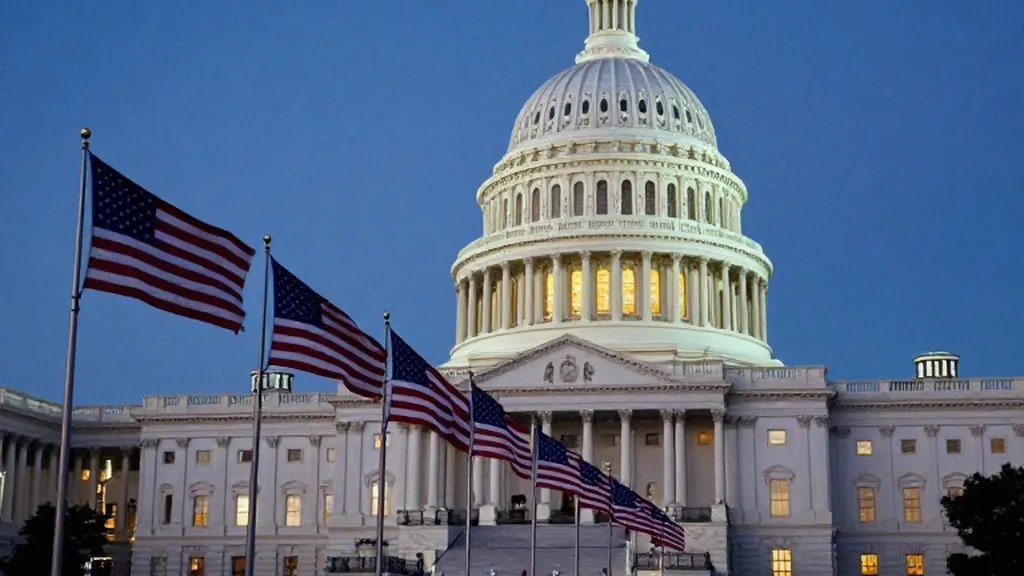
Tuesday, November 3, 2026, marked a decisive shift in American politics as midterm election results solidified Democratic majorities in both the U.S. House and Senate. According to compiled results, Democrats picked up at least 43 House seats, including 42 previously held by Republicans, and seven Senate seats, all of which were previously held by Republicans. With results reported as of 4 p.m. EST on November 6, Democrats hold at least a 250-157 majority in the House and a 54-44 majority in the Senate. This outcome represents a significant departure from the previous balance of power, granting the Democratic Party full control of the legislative branch for the first time since before the 2010 elections.
The scale of the Republican loss has been classified as a wave election, a term historically reserved for midterm cycles where the president's party suffers a net loss of at least seven Senate seats. This threshold places the 2026 results in the top 20% of election years in terms of seat swings against the incumbent party. While the House loss of 42 seats fell short of the 48 required to qualify as a wave in that chamber, the Senate results alone were sufficient to define the national mood. Democrats also won a majority of governorships and a plurality of state government trifectas, indicating that the backlash extended beyond federal offices to state-level leadership.
For Democratic voters, the cost of living and the administration's handling of the war in Iran were central drivers of the outcome. The conflict in the Middle East, which included military actions in Iran, Yemen, and Venezuela, dominated the political landscape leading up to Election Day. Many House Republicans had blamed their election wipeout on the Iran war, a sentiment that was reflected in the rapid move for impeachment in the new session. The war served as a unifying issue for Democratic candidates, who positioned their victories as a necessary check on executive power and a response to the economic anxieties felt by households across the country.
The transition of power to the Democrats sets the stage for immediate oversight of the Trump administration. Rep. Bobby Scott of Virginia, the top Democrat on the House Committee on Education and the Workforce, has already signaled an aggressive approach to investigating the dismantling of the U.S. Education Department. In a letter sent a day after the election, Scott reminded 10 federal agencies to preserve records that might become part of a congressional review. He stated his intent to leave no rock unturned, utilizing subpoena powers and hearings to examine federal student loan oversight and anti-discrimination policies.
Senate Democrats are also preparing to use their new majority to leverage federal funding. Sen. Chris Van Hollen of Maryland, a member of the Appropriations Committee, indicated that there will be an interest in using the power of the purse to establish guardrails against the administration's education agenda. Van Hollen noted that while it is harder to rebuild entities through appropriations bills, the committee aims to prevent further damage and seek to reverse harm that has already been done. This strategy contrasts with previous attempts, where Democrats failed to secure broad language in funding bills to block the dismantling of the Education Department.
The new Democratic leadership faces immediate challenges in countering the administration's policies, particularly regarding the Department of Education. Trump officials have denounced the Democratic plans, with Education Department spokesperson Savannah Newhouse accusing the party of plotting to prematurely sabotage Education Secretary Linda McMahon. White House spokesperson Liz Huston accused Democrats of failing American students with disastrous leadership before Trump returned to office. These exchanges suggest that the legislative battle will be contentious, with the White House threatening to use its veto power against any bills it deems harmful.
Beyond education, the Democrats' control of Congress allows them to push for broader accountability measures. Sen. Elizabeth Warren of Massachusetts called on her colleagues to hold the administration accountable for dismantling the Department of Education and turning its back on students. The party's platform emphasizes the need for checks and balances, particularly in areas where the administration has used executive orders to reshape federal agencies. The new majority provides Democrats with the numbers needed to override vetoes, though the political capital required for such moves remains a key consideration for the incoming leadership.
The election results also highlight the resilience of the Democratic coalition in key states. In California, Xavier Becerra won the governor's race, becoming the state's first elected Latino governor and the fifth consecutive Catholic governor. His victory was supported by Catholic voters, particularly Latino Catholics, according to the AP Voter Poll. This result underscores the complex religious and ethnic dynamics that continue to shape voting patterns in the state. Becerra's win is part of a broader trend where Democrats have expanded their presence in state governments, winning a majority of governorships for the first time in years.
The immediate aftermath of the election has already brought dramatic political moves, such as the impeachment resolution introduced by Rep. Thomas Massie of Kentucky against Defense Secretary Pete Hegseth. Massie, a Republican, moved to force a vote on impeachment, citing the secretary's role in the wars in Iran, Yemen, and Venezuela as high crimes and misdemeanors. This action puts pressure on the remaining Republican members of the House, who must decide whether to support the impeachment while the U.S. is engaged in military actions abroad. House Speaker Mike Johnson warned against impeaching a Cabinet secretary during hostilities, calling it a terrible look for allies and enemies alike.