Democrats win midterms, leaving Trump's $5,000 dividend promise in limbo
With Republicans losing control of both chambers, the costly payout Trump pledged in Dallas now faces a new Congress and a deficit that experts say is already unsustainable.
By Beatrice Gray ·
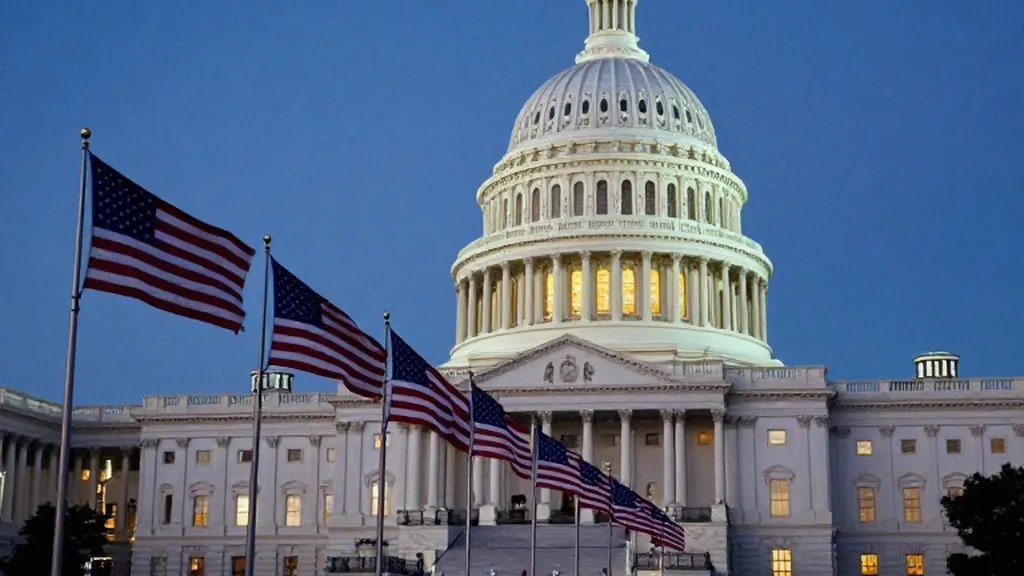
The midterm election results are in, and the political landscape has shifted decisively against the party President Donald Trump asked voters to keep in power. Democrats have won majorities in both the U.S. House and the Senate, flipping at least 43 House seats and seven Senate seats from Republican control. This outcome complicates the fate of the $5,000 "Trump dividend," a payment the president promised every adult citizen if the Republican Party maintained control of Congress. The promise, made at the Republican Midterm Convention in Dallas last week, now faces a new legislative reality where the party that pledged it no longer holds the gavel.
Trump made the announcement during a nearly two-hour speech at the Dallas convention. He told the crowd, "If the Republicans win, you win with us and you get $5,000. It will be called the Trump dividend." The president framed the payment as a reward for the country's "tremendous economic success," comparing it to corporate shareholders receiving cash distributions. He specifically noted that the dividend would go to every adult citizen in the United States, a definition that could exclude millions of American citizens living abroad, according to estimates from the Association of Americans Resident Overseas.
Speaker Mike Johnson, who served as the Republican leader in the House, stated on Sunday that the proposal requires congressional approval. "I would assume, yes, he'd need Congress to act, and that's a creative idea," Johnson said. He pledged to work toward the goal despite the party's narrow margin before the election. However, with Democrats now holding a 250 to 157 majority in the House and a 54 to 44 majority in the Senate, the path for such a bill becomes significantly more difficult. Johnson’s commitment to "find consensus" now likely refers to a new Democratic-led Congress that has already signaled an intent to scrutinize executive actions closely.
The cost of the dividend is estimated at approximately $1.2 trillion, based on the Census Bureau's figure of roughly 245 million adult U.S. citizens. Fiscal experts have raised alarms about this figure, noting that the U.S. is already running an annual budget deficit of nearly $1.8 trillion. Kenneth Rogoff, a former chief economist at the International Monetary Fund, warned that the payment would "blow up" the deficit and increase the odds of a debt crisis over the next five years. The payment would also exacerbate inflationary concerns, a key issue for voters who cited the cost of living as a primary motivation for their ballots.
Bipartisan criticism was immediate following the Dallas announcement. Texas Congressman Chip Roy, a Republican, wrote on social media that "Dependency is evil and soul-sucking in all its forms." Democratic leaders have also voiced skepticism, viewing the promise as a tactical move to energize the base. Senator Bernie Sanders, an independent who caucuses with Democrats, has warned that time is limited and the party must focus on working-class families. The new Democratic leadership, including incoming House leader Hakeem Jeffries, has prepared for an aggressive oversight agenda, which may leave little room for a trillion-dollar payout without intense debate.
PolitiFact analyzed the promise and found that the biggest payment is "far from certain." The fact-checkers noted that the administration has announced no formal plan for how the checks would be distributed or funded. Trump cited tariff revenues as a potential source, but the Tax Foundation estimated that the new tariffs would generate about $208 billion in revenue in 2026, a fraction of the $1.2 trillion needed. Erica York, a senior economist at the Tax Foundation, wrote that the cost of the checks would spend "almost all the revenue that the new tariffs are projected to bring in over a decade."
The legal basis for the promise is solid, though the political feasibility is questionable. Election law expert Rick Hasen of UCLA noted that Trump would have a strong First Amendment defense if a state attempted to prosecute him for the promise. Hasen compared it to other campaign pledges, such as promises to cut taxes or expand healthcare, which are constitutionally protected as campaign rhetoric. Richard Painter, a government ethics expert at the University of Minnesota, agreed, pointing to historical precedents where candidates made similar financial promises. The legality of the promise does not, however, guarantee its implementation, especially now that the party in charge of the purse strings has changed.
Trump has a history of promising payments that did not materialize in the same form. In February 2025, he endorsed a "DOGE dividend" proposed by Elon Musk, which was never issued. In November 2025, he promised $2,000 checks from tariff dividends, which also never went out to the general public. The most recent precedent is the $1,776 "warrior dividend" given to military service members in December, a smaller, targeted payout that did face the same scale of fiscal scrutiny. The new $5,000 promise is significantly larger and broader in scope, making it a much heavier lift for any Congress to pass.
Democrats are now positioned to use the dividend as a focal point for their oversight investigations. With the new House majority, Democrats plan to launch aggressive inquiries into the executive branch, a move President Trump has already called "extortion at the highest level." The potential for a trillion-dollar payout conditioned on an election result provides a clear target for these investigations. Lawmakers will likely question how the administration intends to fund the checks and whether the promise was a calculated risk to buy votes in a close election. The new Senate majority also means that any bill funding the dividend would require a higher threshold of bipartisan support, given the 60-vote supermajority often needed to overcome procedural hurdles.