Democrats Seize Both Chambers in Wave Election, Setting Stage for Oversight
The party picks up at least 43 House seats and seven Senate seats, ending Republican control of Congress and triggering immediate moves to investigate the administration.
By Beatrice Gray ·
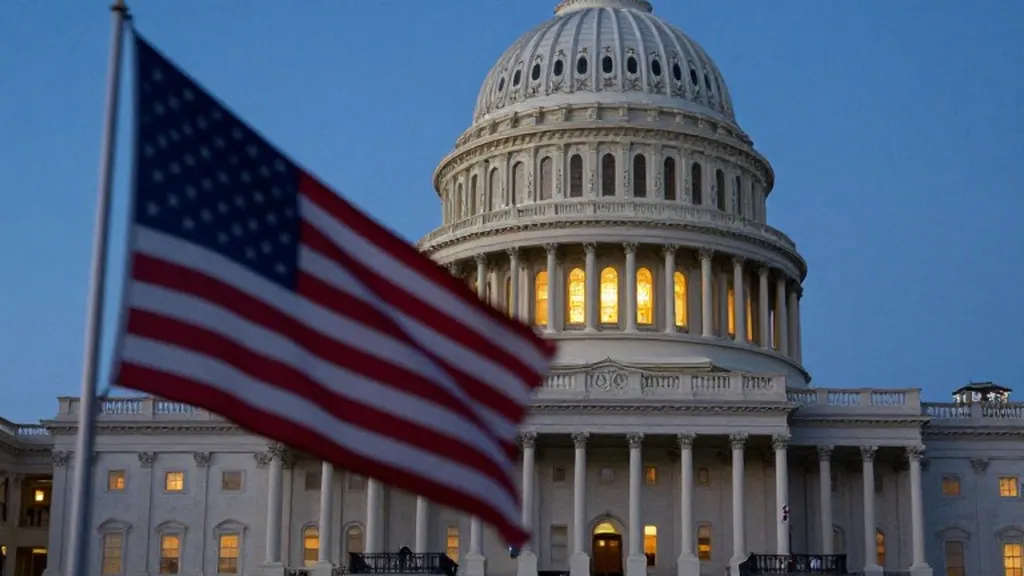
Democratic voters delivered a decisive victory on Tuesday, November 3, 2026, reclaiming majorities in both the United States House of Representatives and the United States Senate. As of 4:00 PM ET on November 6, the new congressional map shows Democrats holding at least a 250-157 majority in the House and a 54-44 majority in the Senate. This shift in power represents a significant net loss for the Republican party, which surrendered at least 43 House seats and seven Senate seats to the opposition.
The scale of the Republican defeat in the Senate places this election cycle within the top 20 percent of historical midterm years in terms of seat swings against a president’s party. This threshold is widely defined by political analysts as a wave election. While the House results do not yet meet that specific numerical benchmark, the loss of 42 seats is a substantial setback that signals strong voter dissatisfaction with the current administration.
For Democratic leaders, the immediate priority is leveraging their new standing committee chairmanships to scrutinize the Trump administration. Rep. Bobby Scott of Virginia, who is set to lead the House Committee on Education and the Workforce, has pledged to leave no rock unturned in investigating the dismantling of the U.S. Education Department. Scott, who sent a letter to federal agencies the day after the election reminding them to preserve records, intends to use subpoena power and hearings to examine how the administration has managed federal student loans and anti-discrimination policies.
Sen. Elizabeth Warren of Massachusetts has joined these efforts, calling on her colleagues to hold the administration accountable for what she described as a dismantling of the Department of Education. Warren’s remarks reflect a broader Democratic strategy to use oversight mechanisms to check executive power. However, party leaders acknowledge that investigations may apply political pressure rather than serve as a complete brake on the administration’s agenda, particularly given President Trump’s stated intention to veto Democratic bills he views as harmful.
Democrats on the Senate Appropriations Committee are exploring the power of the purse as a more robust tool for control. Sen. Chris Van Hollen of Maryland stated that there will be an interest in using budgeting processes to establish guardrails and prevent abusive practices. Van Hollen noted that while it is difficult to rebuild an entity through appropriations alone, Democrats can certainly try to prevent further damage and seek to reverse harm already done. This approach includes conditioning federal funding to rein in the administration’s efforts to reshape higher education, including previous attempts to cut funding at institutions like Harvard.
The election results also reflect a realignment in state-level politics. Democrats won a plurality of state government trifectas and state legislative chambers, marking the first time they have held a majority of governorships since before the 2010 elections. In California, Xavier Becerra won the governor’s race, becoming the state’s first elected Latino governor and the fifth consecutive Catholic governor of the state. Becerra’s victory highlights the complex voting patterns of Catholic voters, with AP Voter Poll data showing that about 6 in 10 Catholic voters supported Becerra, while white Catholics were split between him and his Republican opponent Steve Hilton.
The new Democratic majority arrives as the administration faces intense scrutiny over its handling of foreign conflicts. Rep. Thomas Massie, a Kentucky Republican, moved to force a vote to impeach Defense Secretary Pete Hegseth, citing the war in Iran as a primary factor in the election losses. Massie argued that Hegseth’s actions amounted to high crimes and misdemeanors and that he knowingly executed unlawful orders. President Trump lashed out at Massie personally, calling him a loser, but the impeachment push has gained traction with Democratic leaders like House Speaker Hakeem Jeffries and Senate Leader Chuck Schumer.
Schumer endorsed the impeachment push, stating that Hegseth must stand trial before the Senate. Republican leaders, who remain in control of the current Congress until the new session convenes in January, expressed frustration at the timing. House Speaker Mike Johnson, who had tried to prevent the vote, argued that impeachment in the middle of hostilities abroad would be a terrible look for allies and enemies alike. Senate Majority Leader John Thune indicated that the Senate would deal with the outcome of the House vote accordingly.
The financial stakes of the election are also evident in the markets and corporate sectors. The sudden emergence of allegations regarding Nvidia CEO Jensen Huang and an alleged Chinese spy has rocked the tech sector, with Nvidia shares dropping roughly 5 percent in pre-market trading. Trump suggested that Huang would be in good shape regarding the FBI investigation, emphasizing his friendly relationship with the CEO. This development adds another layer of complexity to the new Congress’s oversight role, as lawmakers prepare to examine national security implications of major technology partnerships.
With the new Congress set to convene in January, Democrats face the challenge of translating their electoral mandate into legislative action. Education advocates are pushing for appropriations language that would order the administration to reverse decisions that moved Education Department functions to other agencies. Aaron Ament, president of the advocacy group Student Defense, noted that it is becoming apparent that the administration does not have the authority to keep dismantling offices. The coming months will test whether the Democratic majority can effectively use its new tools to check the executive branch and address the cost of living concerns that drove voters to the polls.