Trump's $5,000 Dividend Promise Fades as Democrats Take Both Chambers
The payout was contingent on Republicans holding Congress, a condition that no longer exists, leaving the White House to explain how the $1.2 trillion plan survives with a Democratic majority.
By Maya Bauer ·
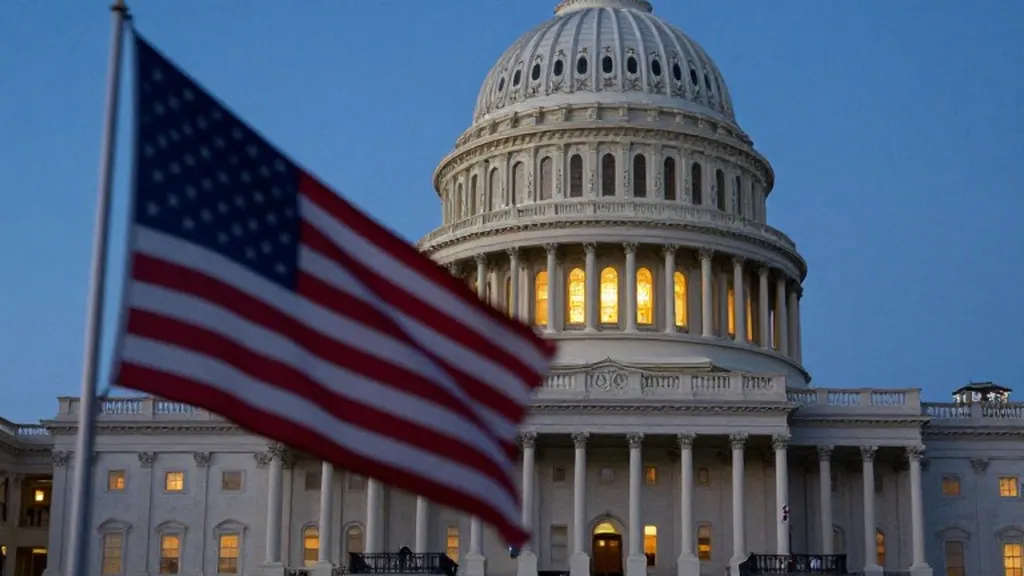
President Donald Trump’s campaign pledge to send a $5,000 check to every American adult has effectively expired as Democrats secured majorities in both the U.S. House and Senate following the November 3 elections. The promise, made at the Republican Midterm Convention in Dallas, was explicitly conditioned on the GOP retaining control of Capitol Hill. With the electorate delivering a decisive shift in power, the condition that triggered the payment is no longer met, prompting questions about the administration's next steps and the fate of the funds.
During his speech at the convention, Trump told the crowd, "If the Republicans win, you win with us and you get $5,000," naming the initiative the "Trump Dividend." He argued that the country's "tremendous economic success" made the payout possible, comparing it to corporate distributions to shareholders. The proposal was designed to reward voters who kept the president's party in power, but the subsequent election results have complicated the delivery mechanism for the check.
The financial scale of the promise is significant. The U.S. Census Bureau estimates there are approximately 245 million adult U.S. citizens, meaning the dividend would cost roughly $1.2 trillion. This sum would add substantial pressure to a federal budget already running a nearly $1.8 trillion annual deficit. For Democratic leaders now in control of Congress, the dividend represents a major spending proposal that they have not yet authorized, and one that could exacerbate inflationary concerns that drove their electoral victory.
House Speaker Mike Johnson, R-Louisiana, previously stated that the payment required congressional approval. In an interview, he said, "I would assume, yes, he'd need Congress to act, and that's a creative idea." Johnson pledged to work toward the goal, noting, "I commit that Congress will work through it and find consensus on that like they have to do everything else." Now that Democrats hold the majority in both chambers, the path to passing such legislation is steeper, requiring a new level of bipartisan cooperation or a significant shift in the White House's strategy.
Trump himself had downplayed the need for legislative action, telling CBS News Texas that he did not think Congress would need to authorize the payments. He did not specify how the administration could spend more than $1 trillion without lawmakers' authorization. Later, before boarding Air Force One in Ireland, he reaffirmed his commitment, telling reporters, "The 5,000's going to happen, 100%." This confidence contrasts with the structural reality of a divided government where the legislative branch is controlled by the opposing party.
Election law experts have noted that while the promise is likely legal under the First Amendment, the mechanism of delivery is where the friction lies. Rick Hasen, a professor at UCLA Law, observed that politicians are allowed to make such campaign promises, comparing them to historical pledges like George McGovern’s 1972 proposal. However, Hasen also acknowledged that the president does not have the power to execute the payment on his own and must rely on Congress to appropriate the funds.
The funding source for the dividend was a point of contention even before the election. Trump cited tariff revenues as a potential source, but the administration has not announced a formal plan for the checks. Erica York, a senior economist at the Tax Foundation, wrote that the cost of the checks would spend almost all the revenue that new tariffs are projected to bring in over a decade. This analysis comes after the Supreme Court struck down most of Trump’s earlier tariffs, leading to a global 10% tariff that generates less revenue than initially projected.
Democrats, who campaigned heavily on the cost of living and inflation, are now positioned to scrutinize the dividend. The AP Voter Poll indicated that three-quarters of voters felt the economy was "not so good" or "poor," and about 8 in 10 said inflation had caused financial hardship. With these concerns central to their victory, Democratic leaders may view the $1.2 trillion payout as a risky move that could increase the national debt and interest rates, potentially undermining the economic stability they sought to restore.
The loss of the midterms marks a significant shift for the administration, which had hoped to use the dividend as a symbol of economic prosperity. The check was intended to be a one-time bonus for adults, excluding U.S. citizens living abroad. With the new Congress set to convene in January, the White House must now decide whether to formally introduce legislation for the dividend or pivot to a different messaging strategy to maintain public support.
The situation mirrors past presidential promises that faced legislative hurdles. In 2020, stimulus checks were sent to Americans, but they were part of a broader emergency response. The "Trump Dividend" is more akin to a targeted political reward that now requires the approval of the very lawmakers who criticized the administration's spending record. As the new Democratic majority begins its term, the fate of the $5,000 check will depend on whether the White House can build a coalition or if the promise will be shelved as a casualty of the election results.
The dividend was part of a broader set of promises Trump made during the campaign, including a $90 payment for some Medicare enrollees and a $500 refund for certain Affordable Care Act participants. While the smaller payments have already been issued or are in process, the $5,000 dividend remains the most ambitious and the most politically charged. Its resolution will be a key test of how the new Congress manages the relationship with the White House in its first year.