Sudan Transport Union Raises Fares as Fuel Lines Stretch
Commuters in Port Sudan face a 30% minibus fare increase while drivers report five-hour waits for petrol and shrinking daily incomes.
By Maya Bauer ·
Sudanese workers are facing higher transportation costs this month as fuel scarcity drives up the price of daily travel. The Sudan Transport Chambers Union, which regulates public and private transport, implemented new rates on October 1, 2026. Intercity bus fares rose by 40%, while minibus fares increased by 30%.
The fare hikes follow a period of intense strain on drivers who rely on consistent fuel access to earn a living. In Port Sudan, a 60-year-old minibus driver named Azhari Mohamed works seven round trips a day between the Shagar neighborhood and the city center. His vehicle consumes 11 liters of petrol daily, costing approximately 105,000 Sudanese pounds, or $11.30, at the parallel-market rate.
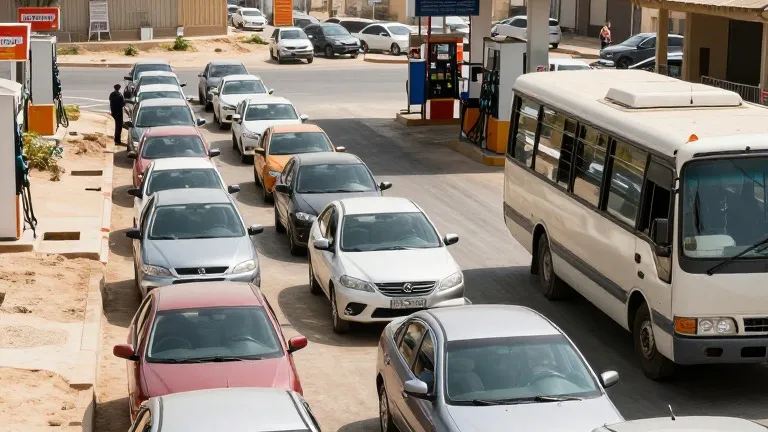
Mohamed now spends one day in three waiting in line for fuel. A single wait can exceed five hours, and if the petrol runs out before he reaches the pump, he must rejoin the queue. After covering operating costs, he is left with about 50,000 pounds, or $5.40, to support his wife and a daughter in university. He told Al Jazeera that his primary need is simply for fuel to be available so he can work.
For passengers, the cost increase is reducing their ability to work and support families. Aziza Ibrahim, a 38-year-old cleaner in Port Sudan, now works only three days a week because travel costs have become prohibitive. Before the war, her round trip to the main city-center station cost 700 pounds, or $0.08. Current fares range from 2,000 to 2,500 pounds depending on the route. She requires 11,000 pounds, or $1.18, for a daily round trip.
Transportation consumes nearly half of Ibrahim's monthly salary, which is 400,000 pounds, or $43. She also manages expensive diabetes treatment. When her cash runs short, she borrows money to get to work and repays the loan once she is paid. The United Nations Development Programme reports that the war has pushed average incomes in Sudan back to levels last seen in the 1990s.
The fuel shortage stems from a combination of domestic production losses and global market pressures. Fighting between the Sudanese Armed Forces and the Rapid Support Forces began on April 15, 2023. The Ministry of Energy and Petroleum estimated war-related losses at $20 billion last year. The World Bank noted that attacks on the Balila oil field disrupted supplies to the Khartoum refinery, which previously met about 60% of the national demand for petrol and liquefied petroleum gas.
Sudan now relies heavily on imports while global fuel prices remain high. Economic analyst Sidi Ohaj stated that government rules for importers have worsened the situation. Importers are required to deposit 200kg of gold in the Central Bank and own fuel storage facilities. Some businesses left the market because they could not meet these requirements. Ohaj said this reduced supply relative to demand and urged the government to ease import procedures. He also cited drone attacks on infrastructure and the war between the United States and Iran as factors disrupting global energy markets.
Local businesses are also absorbing the rising costs. Ahmed al-Haj, a trader in Omdurman market who packages skincare products, said higher diesel and petrol prices have increased the cost of moving a tonne of goods by 30% to 50%. These increases are passed directly to consumers in product prices. Power cuts force him to use a fuel-powered generator, which raises his daily operating costs further.
Delivery costs in Omdurman have doubled. Local deliveries that once cost 5,000 pounds, or $0.70, now range from 10,000 to 12,000 pounds, or $1.07 to $1.29. Reaching customers in other states has become impossible for many traders. Al-Haj reported that transport and distribution workers are making fewer trips, causing goods to pile up at traders' premises.