Ukrainian front lines regain full Starlink speeds after week of cuts
Elon Musk admitted SpaceX slowed the satellite service, a move that disrupted drone logistics and strained Kyiv-Washington ties.
By Bianca Ruiz ·
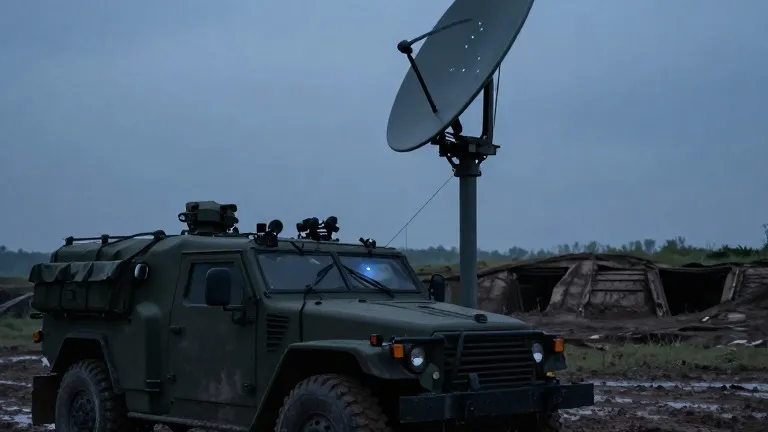
For seven days, soldiers on the Ukrainian front operated with a degraded internet connection. The restriction, which limited the bandwidth of the Starlink satellite service, created bottlenecks in logistics and hampered the defense against Russian jet-powered Shahed drones. On Saturday morning, the speeds returned to their previous levels, ending a period of uncertainty that had left military commanders reporting lost drones and disrupted missions.
Ukrainian President Volodymyr Zelenskyy confirmed the restoration on social media. "The speeds are now where they need to be," he wrote. He stated that the fix began overnight and was sufficient by Saturday morning, directly improving front-line logistics. The admission from the service provider followed Zelenskyy's announcement that access to both Starlink and the military-grade Starshield system had been restored.
Elon Musk accepted responsibility for the initial slowdown in a post on X. He argued that the Ukrainian military had violated the terms of service by using the civilian commercial service for offensive drone strikes. "Using Starlink, a civilian commercial service, for offensive drone strikes to kill people has never been allowed, nor should it be," Musk wrote. He claimed that the loophole allowing such usage was closed last week, which necessitated the temporary speed limits.
Musk maintained that the U.S. government controlled any changes to Starshield, the military version of the system. He defended SpaceX's broader role in strengthening Ukraine's defenses since Russia's full-scale invasion in February 2022. The restrictions on the military-grade link had alarmed Ukrainian government officials, who viewed the system as a critical pillar of their defense infrastructure.
The resolution of the speed issue lands during a fresh U.S. diplomatic push to end the war. Russia agreed on Wednesday to resume three-way talks with Washington and Kyiv next month. On Friday, Kyiv and Moscow agreed to a localized ceasefire around Oleshky, a Russian-occupied town in the southern Kherson region. That ceasefire was brokered by U.S. First Lady Melania Trump.
The episode added strain to relations between Kyiv and Washington. Those ties were already tested by a reported deal between President Donald Trump and Moscow regarding Russian diesel imports, a move Ukraine viewed as a betrayal. Ukrainian Defence Minister Yevhenii Khmara credited direct dialogue and Zelenskyy's diplomacy with Washington for the resolution. He said the outcome mattered most for the military, drone work, logistics, and communications.
While internet speeds were restored, fighting continued across the region. Local officials reported that a man was killed and two others wounded in a missile attack on Lozova in the Kharkiv region. Moscow-installed authorities in Crimea reported blackouts following overnight Ukrainian attacks. Ukraine's General Staff said it hit a chemical plant in Tolyatti that produces materials for rocket fuel, and an electronics plant in Oryol that makes missile components. Three people died in the Oryol attack. Ukrainian drones also reached Russia's Omsk region, more than 2,000 kilometers from the border, where online retailer Ozon said a drone struck its logistics centre with no casualties.