Trump's $5,000 dividend faces reality check after GOP loses Congress
Democrats control both chambers despite the President's campaign promise, raising questions about the funding and legality of the planned checks.
By Beatrice Gray ·
President Donald Trump promised a $5,000 payment to every adult American citizen if the Republican Party retained control of both the House of Representatives and the Senate in the November midterm elections. The pledge, which the President branded the Trump Dividend, was delivered during a speech at the Republican Midterm Convention in Dallas. The offer was explicitly tied to the election outcome, with Trump telling the crowd that if the Republicans won, voters would win with them and receive the check.
The promise came with significant conditions and limited details. Trump stated that the payment would go to every adult citizen in the United States, a definition that could exclude U.S. citizens living abroad. The U.S. Census Bureau estimates there are about 245 million adult citizens, meaning the payout would cost approximately $1.2 trillion. The White House did not provide a formal plan for how the checks would be distributed or when recipients would receive them, leaving the logistics of the largest proposed payment in recent history largely undefined.
Speaker Mike Johnson of Louisiana addressed the constitutional requirements for the payment shortly after the promise was made. Johnson stated that congressional approval is needed for the checks to become law. He described the proposal as a creative idea and committed to working through it in Congress, despite the slim Republican margin in the House. Johnson said he would assume the President would need Congress to act, noting that the legislative body would have to find consensus on the measure.
The President initially expressed doubt about the need for legislative action, telling CBS News Texas that he did not think Congress would need to authorize the payments. He did not specify how the administration could spend more than $1 trillion without lawmakers' authorization. Hours later, Trump reaffirmed his commitment to the plan, telling reporters before boarding Air Force One in Ireland that the $5,000 payment was going to happen 100%. He argued that the strong economy and high tariff revenues would make the payments easy to handle.
Bipartisan criticism emerged immediately regarding the cost and the timing of the announcement. Texas Congressman Chip Roy, a Republican, wrote on social media that dependency is evil and soul-sucking in all its forms, questioning the price tag of the proposal. Democratic leaders emphasized that the promise was made in the context of an election where voters were concerned about the cost of living and government corruption. The timing of the pledge, just before Election Day, led some observers to suggest it was an attempt to buy votes, though election law experts noted that such campaign promises are generally protected by the First Amendment.
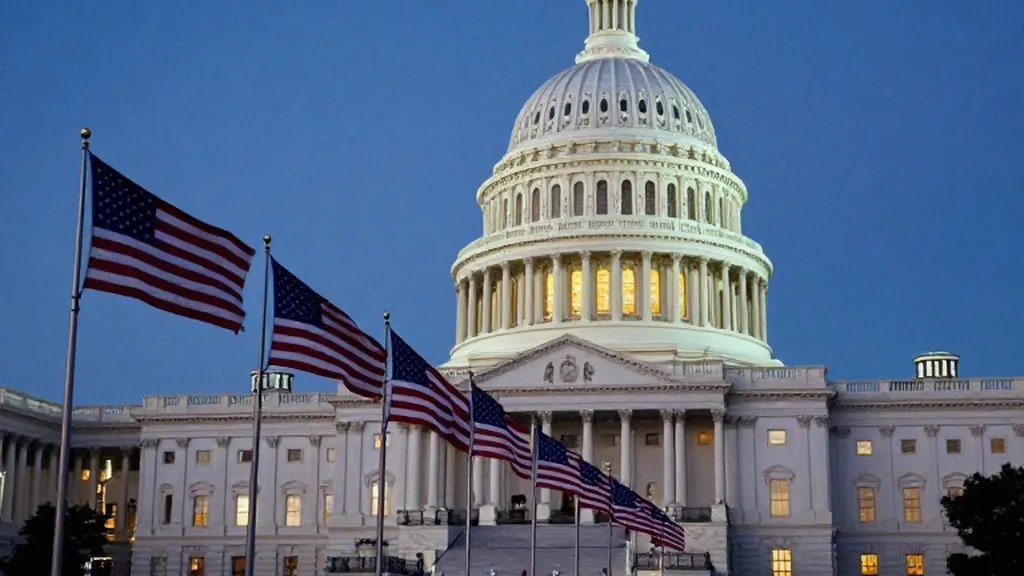
The election results have now put the promise in a more complex position. Democrats won majorities in both the U.S. House and Senate, picking up at least 43 House seats and seven Senate seats from the Republicans. With Democrats now controlling both chambers, the legislative path for the Trump Dividend has changed. Speaker Johnson had pledged to try to implement the idea, but he will now face a Democratic Congress that is preparing aggressive investigations into the executive branch. The shift in power means the President will need to negotiate with a chamber that has signaled a combative stance toward his administration.
Fiscal experts have raised doubts about the feasibility of the payments given the current economic landscape. The United States is running a nearly $1.8 trillion annual budget deficit, and the economy is confronted by persistent inflation. Trump cited tariff revenues as a potential funding source, but the administration did not include a separate tariff dividend in the One Big Beautiful Bill Act that became law in 2025. Erica York, a senior economist at the Tax Foundation, noted that the cost of the checks would spend almost all the revenue that the new tariffs are projected to bring in over a decade.
Senator Bernie Moreno of Ohio, a Republican, said he would introduce legislation to fund the proposal. However, political analysts indicated that such legislation would be unlikely to attain the required 60-vote supermajority in the Senate, a hurdle that is now even higher with Democratic control. Kenneth Rogoff, a former chief economist at the International Monetary Fund, warned that the U.S. is already running an unsustainable deficit and that the payments would only blow up the debt and increase the odds of a debt crisis. The White House responded by stating that President Trump has consistently proven his doubters wrong, contrasting his record with the Democrats' history of inflation.
The promise of the Trump Dividend is part of a pattern of similar pledges that have not always materialized. In February 2025, Trump and Elon Musk endorsed a proposal to give Americans DOGE dividend checks based on savings from the Department of Government Efficiency. Those checks did not materialize, and the agency's claimed savings were later scrutinized by a government watchdog. Trump also promised $2,000 tariff dividend checks in November 2025, which also never went out. The new $5,000 pledge follows this trajectory of high-profile financial incentives that have faced significant legal and economic barriers.
As the new Congress prepares to convene, the focus will shift from campaign rhetoric to legislative action. Democrats, who won the election with a mandate to provide checks and balances on the presidency, will now decide whether to engage with the President's proposal or use it as a point of contention in their oversight efforts. The President's administration faces the task of delivering on a promise that was central to his midterm campaign, even as his party has lost control of the legislative branches necessary to authorize the spending. The outcome of the Trump Dividend will be a key test of the working relationship between the White House and the new Democratic Congress.